News

Exclusivity and Contracts: How to Detect and record unfair clauses with brands

For years, many beer and soft drink distributors have been forced to sign exclusivity contracts with manufacturers. There was no option: if you wanted to represent the brand in your area, you had to accept their conditions.

The problem is that, over time, these contracts have proven to be deeply unbalanced. While the distributor is tied hand and foot, the manufacturer retains the freedom to sell in the same area through supermarkets, cash & carry outlets, or restaurant chains. And not only that: in many cases, the manufacturer shifts financial risks to the distributor that do not belong to them.

Common examples

Fake exclusivity: the contract prohibits the distributor from working with other brands, but the manufacturer still sells in the area through parallel channels.
Forced below-cost sales: the distributor must apply discounts to certain clients and advance the money, waiting for the manufacturer to reimburse them later.
Unequal pricing: the distributor pays more for goods than what the manufacturer charges large chains directly.
Risk with large groups: the manufacturer forces the distributor to serve national chains without offering payment guarantees, meaning the distributor finances operations with long and uncertain payment terms.

All this turns exclusivity into a burden rather than an advantage. And although changing the contract overnight may not be realistic, there is a way forward: detect and record every abuse.

Checklist: What to Review and How to Record It

Definition of exclusivity
Check if your contract properly defines the area and sales channels. Record each case where the manufacturer sells in your area through alternative channels (supermarkets, chains, cash & carry).

Financial obligations
Identify if you are required to sell below cost or advance discounts. Keep invoices, credit notes, and refund dates to prove actual timelines.

Price differences
Compare your invoices with market prices in your area. Document cases where you pay more than what a large final client pays.

Risky receivables
If you are forced to serve national chains, record the actual payment terms. Document delays and their impact on your cash flow compared to what you have already paid the manufacturer.

Termination clauses and penalties
Check if penalties fall only on you. Note breaches by the other party that could help balance the situation in a future claim.

Why It’s Worth Doing

Even if nothing changes today, this documentation is your insurance. Tomorrow it may help you claim compensation if you can prove clear breaches, negotiate better terms at renewal, defend yourself legally if the relationship breaks down, or even free yourself from the contract if there is evidence of repeated abuses.

The key is not to resign yourself. A signed contract is not immovable if the other party breaches it or imposes abusive conditions. What makes the difference is having solid and well-organized evidence.

Impact of automation and digital transformation: how to measure efficiency and cost reduction

Automation and digital transformation are no longer futuristic concepts: they are the foundation of today’s competitiveness. For HORECA distributors and many SMEs, adopting technologies and automated processes means working with fewer frictions, reducing costs, and gaining agility.

But the big question is: how can their impact really be measured?

1. Operational efficiency: key indicators

Efficiency is not a perception; it is measured with data. Some useful KPIs are:

  • Process time → how many minutes are reduced in repetitive tasks (orders, invoicing, route management…).
  • Operational errors → incidents before and after automation.
  • Fulfillment rate → percentage of orders delivered on time and in full.
  • Productivity per employee → number of operations each person manages after digitalization.

2. Cost reduction: where to look for savings

The most direct impact is usually found in:

  • Labor costs: fewer hours dedicated to manual tasks.
  • Logistics costs: more efficient routes, lower fuel consumption.
  • Inventory costs: fewer stockouts or excess merchandise.
  • Administrative costs: electronic invoicing, automatic reconciliation.

3. Return on investment (ROI)

The initial cost of implementing technology is only part of the equation. What really matters is:

  • Payback period: time needed to recover the investment thanks to the savings generated.
  • Estimated annual savings: comparison of costs before and after.
  • Indirect benefit: customer satisfaction, loyalty, and new business opportunities.

4. Measurement tools

  • Real-time dashboards integrating sales, logistics, and finance.
  • Internal benchmarking: comparing quarters before and after each implementation.
  • Satisfaction surveys for employees and customers to measure perception of agility and quality.

In conclusion, automation is not just a trend but a real lever for savings and efficiency. The key is to accompany each initiative with clear metrics that allow its impact on the bottom line to be verified. Sometimes it is enough to start measuring to realize how much room for improvement still lies ahead.

Complying with the law isn’t optional: the difference between a trusted supplier and a risk to your business

In the world of buying and selling first-brand stock—especially between wholesalers and importers—one reality that few mention is clear: not everyone complies with food regulations. And when that happens, the risk doesn’t just fall on the importer—it also falls on the buyer.
As responsible importers, our priority is not just moving product, but ensuring that every batch leaving our warehouse complies with all the laws and regulations that protect consumer health and our clients’ reputation.

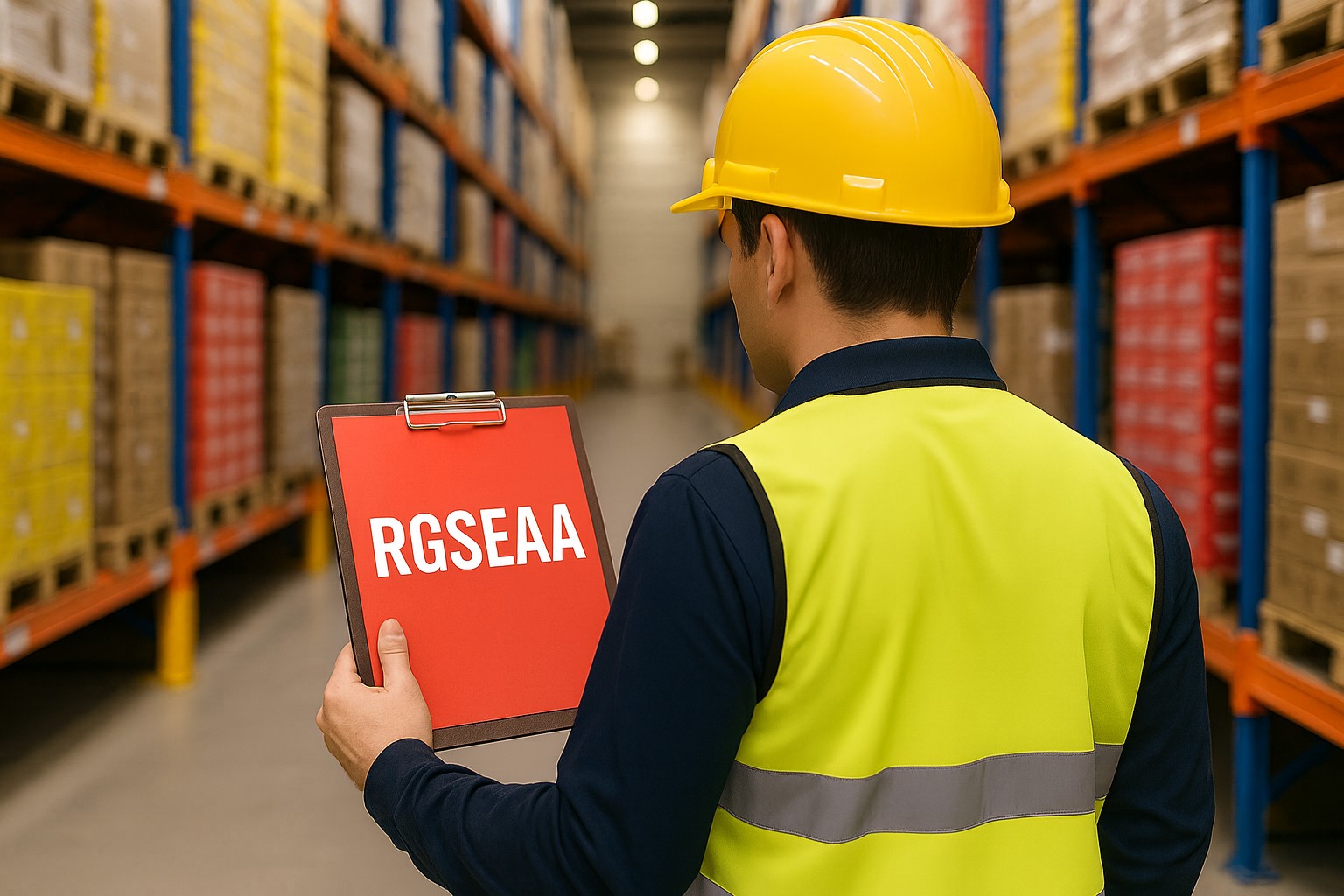
The cornerstone: RGSEAA

At the foundation is the Registro General Sanitario de Empresas Alimentarias y Alimentos (RGSEAA), regulated by Real Decreto 191/2011. Without this registration, it is not legal to operate as a food importer or wholesaler in Spain. This document proves that the company is supervised by health authorities and meets the necessary conditions to store, handle, or distribute food.
A wholesaler should always request this document from their supplier.

More than just a number on paper

Beyond RGSEAA, we fully comply with all the European and Spanish regulations that guarantee product safety, traceability, and quality:

  • Regulation (EC) 852/2004 and (EU) 2021/382 – Food hygiene and allergen control.
  • Regulation (EC) 1935/2004 and (EU) 2022/1616 – Food contact materials and packaging.
  • Regulation (EC) 2073/2005 – Microbiological criteria.
  • Regulation (EC) 1333/2008 – Approved food additives.
  • Regulation (EC) 1169/2011 – Labelling and consumer information.
  • Regulation (EU) 2023/915 – Maximum limits for contaminants.
  • Law 17/2011 – Food safety and nutrition.

(In our internal file, we also comply with the rest of the specific regulations included in the quality commitment that our clients require: Regulation (EC) 853/2004, Regulation (EC) 1935/2004, Regulation (EC) 2073/2005, Regulation (EC) 1333/2008, Regulation (EC) 450/2009, Regulation (EC) 37/2010, Law 17/2011, Regulation (EC) 10/2011, Regulation (EU) 2021/77, Regulation (EU) 2022/1616, Regulation (EU) 2023/915, Royal Decree 773/2023, Regulation (EU) 2023/648, Regulation (EU) 2018/848 and Royal Decree 833/2014.)

What happens when compliance fails

Working with an importer who doesn’t respect these laws can have serious consequences:

  • Administrative sanctions and fines.
  • Product withdrawal from the market.
  • Damage to your business’s reputation.
  • Economic losses due to retained or destroyed merchandise.

Our commitment

While the goods are in our warehouse, it’s our responsibility that they arrive in perfect condition and in compliance with all regulations. When we hand them over to the transporter, the customer receives a product with guaranteed traceability, labelling and safety.
That’s the difference between working with a reliable importer and one who just moves boxes without assuming responsibility.

In summary

At Red Paralela, we believe that complying with the law isn’t a burden—it’s a competitive advantage. Because whenever we protect the consumer, we also protect our clients’ business.

The KPIs every HORECA distributor should track (and how to improve them)

In a business like HORECA distribution, what you don’t measure, you can’t improve. And what you measure poorly can lead to the wrong decisions.

What are KPIs?
KPIs (Key Performance Indicators) are key metrics that help you understand how your business is evolving and allow you to make decisions based on facts — not just intuition.

📊 1. Stock turnover

What it measures: the speed at which you sell your inventory.
Why it matters: the faster your stock moves, the less capital is tied up, and the lower the risk of expiry or deterioration. But be careful: if you discount too aggressively, you might lose more margin than the liquidity you gain.

What matters more? It depends on the product and your financial situation. Holding onto slow-moving stock comes with hidden costs: space, expiry risk, devaluation, and lost opportunities to sell faster-moving items. In most cases, sacrificing some margin is better than letting stock become unsellable.

How to improve it:

  • Set up automated alerts to detect slow-moving items.
  • Anticipate packaging or format changes and cut purchases early to avoid getting stuck with obsolete stock.
  • Run targeted or cross-promotions to clear slow stock before it’s too late.

💶 2. Gross margin per customer

What it measures: the actual profit you make from each customer, after product and service-related costs.
Why it matters: some customers buy a lot but barely leave you any profit.

But be careful: some low-margin customers can bring volume and visibility — especially if they’re key accounts in your area. It’s worth considering their strategic value, not just their numbers. If they help you consolidate routes or attract other clients, they might still be worth it.

How to improve it:

  • Calculate margin per order, not just per product.
  • Factor in discounts, rush orders, returns, and logistics costs.
  • Adjust service conditions or delivery frequency if a customer isn’t profitable — unless their strategic value justifies it.

🚚 3. Logistics cost per delivery and per route

What it measures: the real cost of delivering an order and the overall performance of each delivery route.
Why it matters: an individual delivery may seem profitable, but the entire route could be losing money.

How to improve cost per delivery:

  • Group deliveries by zones and days.
  • Raise the minimum order size for low-margin drops.
  • Use route optimization tools to minimize distance and time.

How to improve cost per route:

  • Treat each route as a unit: total cost, total margin, and order density.
  • Identify consistently unprofitable routes.
  • Increase sales efforts in low-density areas to gain volume.
  • Adjust delivery frequencies or combine routes with insufficient volume.

📞 4. Customer satisfaction (automated and actionable)

What it measures: the customer’s experience right after delivery, focusing on key service moments.
Why it matters: if you don’t catch dissatisfaction early, you risk losing the customer without knowing why.

How to improve it:

  • Send a short survey after each delivery, with just 3 questions:
    1. How do you rate the order handling?
    2. How do you rate the delivery?
    3. Any comments or suggestions?
  • Integrate responses into your CRM for proper follow-up.
  • Act within 24 hours if a customer gives negative feedback.
  • Use positive comments to build loyalty or strengthen relationships.

📆 5. Customer order frequency

What it measures: changes in how regularly a customer places orders within a profitable ticket size.
Why it matters: tracking whether frequency is increasing or decreasing helps you anticipate churn or double down on loyalty-building efforts.

How to improve it:

  • Define a “healthy” frequency range based on customer type and order size.
  • Set alerts for significant changes in buying patterns.
  • Reach out proactively if a customer is ordering less — ideally with a special offer or better terms. If they’re ordering more, reward their loyalty with exclusive perks.

⚠️ BONUS: Don’t track everything

More data doesn’t always mean more insight. What really matters is tracking KPIs that help you make decisions. If a KPI doesn’t lead to action, drop it.

💡 What now?

Ask yourself:

  1. Am I tracking what really matters?
  2. Am I making decisions based on these KPIs?
  3. Is my follow-up automated, or am I relying on Excel and luck?

If you have any questions about what we’ve explained, email us at info@redparalela.eu — we’ll be happy to help.

Pressure is mounting on HORECA distribution: evolve or vanish

The COVID-19 pandemic marked a turning point for HORECA distribution. What seemed like a temporary disruption has triggered a deep and ongoing transformation. Inflation, geopolitical tensions, and evolving consumer habits have further accelerated the shift.

In this new environment, digitalization and sustainability are no longer optional—they are essential for survival.

Digitalization is no longer a choice

Bars, restaurants, and hotels demand agility, transparency, and seamless processes. Distributors must automate orders, improve commercial communication, optimize routes, and access real-time data.

Digitalization is not about complexity—it’s about simplifying operations and freeing up resources to focus on what really matters: selling better.

Sustainability: from added value to purchasing requirement

Sustainability is now a purchasing criterion. Clients value local products, reduced packaging, and efficient logistics. However, some regulations—such as axle load limits or blanket emissions tolls—are making transportation more expensive without reducing environmental impact.

Being forced to use more vehicles to move the same goods, or facing rising costs without accounting for operational efficiency, can have the opposite effect. Zoning policies like Low Emission Zones can work—if they come with fair access conditions and realistic timeframes.

That’s why distributor associations must step up and ensure that new transport and mobility regulations are technically sound, economically viable, and operationally coherent. The sector must be part of the solution—not a passive recipient of poorly designed policies.

A more informed and demanding customer

Today’s hospitality professionals are more informed than ever. They compare, expect immediacy, and value personalized attention. Distributors must offer more than just products—they need to provide service, advice, and real value.

Margins under pressure

With shrinking margins and rising costs, operational efficiency is a must. Tight financial control, product mix optimization, process automation, and smart route planning are no longer optional—they are vital for profitability.

Companies that base their decisions on data are the ones that endure—and grow.

So, what now?

This is not just another crisis. It is the beginning of a new phase in HORECA distribution. And those who understand this change—and act accordingly—will lead the way.

At Red Paralela, we saw this coming and continue to grow by helping distributors adapt without losing control. If you want to evolve, we can support you with our experience and solutions.

Just reply to this message and one of our team members will get in touch. In a changing environment, having the right partner makes all the difference.

The Escalating Costs in HORECA Distribution: Data, Trends, Legislation, and Accounting Control

In recent years, distributors in the HORECA channel (Hotels, Restaurants, and Catering) have faced a growing challenge: the sustained increase in operating costs. Transportation, energy, labor, and environmental regulations are some of the factors putting pressure on margins and reducing competitiveness.

In this article, we analyze the most relevant data, the trends for the coming years, the legislation affecting the sector, and how to design a control system based on accounting data to help you anticipate and maintain profitability.

1. How Much Have Costs Risen in Recent Years?

Transportation and Fuel

Transportation costs have risen significantly, driven by fuel prices, tolls, and the shortage of drivers. Since 2020, the cumulative increase is around 25–30%, with peaks in 2022 due to the energy crisis.

Energy

The cost of electricity and gas for industrial use nearly doubled between 2021 and 2022, significantly increasing expenses for refrigeration, storage, and preservation. Although prices have stabilized, they remain well above pre-pandemic levels.

Labor

Spain’s Minimum Wage (SMI) has risen by more than 50% since 2018. This translates into higher labor costs and social contributions for distribution companies. The impact has been especially significant for warehouse staff and delivery drivers, while more qualified positions (office staff, sales representatives) have experienced smaller increases, although proportionate to updated agreements.

2. Trends for 2025 and Beyond

  • Mandatory Digitalization: Real-time control of inventory, sales, and margins using ERP (Enterprise Resource Planning) and BI (Business Intelligence) tools.
  • Logistics Optimization: Route planning and predictive data to reduce mileage and fuel consumption.
  • Supplier Consolidation: Fewer, more reliable suppliers with long-term agreements to ensure stability.
  • Dynamic Pricing Policies: More frequent price adjustments to adapt to changes in variable costs.

3. Legislation Driving Up Costs

The regulatory framework continues to add pressure:

  • Waste and Soil Contamination Law: Requires packaging management and compliance with recycling objectives.
  • Minimum Wage Increases: Directly impact payroll costs.
  • European Emission Regulations: Will affect vehicle fleets and logistics, requiring medium-term adaptations.

4. The Hidden Cost: More Taxes, More Paperwork, Less Productivity

In addition to direct increases in raw materials, transportation, and energy, there is a silent cost that grows every year: the administrative burden. Each new regulation means:

  • Extra office hours to prepare reports and filings.
  • Implementation or upgrading of ERP systems to comply with reporting requirements.
  • Continuous training for administrative staff.
  • Adaptation to more frequent inspections.
    These tasks do not add direct value to the customer, but they are mandatory. The result: more work, more resources, and higher fixed costs, reducing the distributor’s agility.

5. How to Design a Control System Based on Accounting Data

An accounting control system allows you to move from reaction to anticipation. Here are the key steps:

Step 1. Classify Costs by Responsibility Centers

Group expenses by area: transportation, warehouse, purchasing, sales, personnel, and administration. This will show where cost increases are concentrated.

Step 2. Define Key Performance Indicators (KPIs)

  • Margin by product line.
  • Average delivery cost.
  • Logistics ratio: (Transport + warehouse costs) divided by revenue.
  • Administrative hours per processed order.

Step 3. Automate Data Capture

Integrate invoice, logistics, and sales data into an ERP or BI system that generates automatic reports.

Step 4. Analyze Trends and Set Alerts

Compare key indicators month by month. Set alerts when delivery costs rise more than 10% compared to the previous quarter.

Step 5. Simulate Scenarios

What happens if fuel prices rise by 10%? What if a key customer is lost? Simulation helps you prepare action plans and avoid surprises.

Conclusion

The escalation of costs in HORECA distribution will not stop in the short term. However, a distributor who works with accurate data can anticipate changes, negotiate better with suppliers, and maintain profitability. The key is not just saving, but making informed decisions.

How Can We Help You?

Our mission at RED PARALELA is to be your trusted partner: offering competitive prices and impeccable service all year round, without legal complications or risks from mismanagement that could further increase your indirect costs.

Are Our Business Hours Not Enough for You?

We know it’s not always easy to reach us during regular business hours. Sometimes you need to get answers after hours, request a quote, check your order status, or even share an offer with us.

Don’t worry! Now you can do it anytime, 24/7, thanks to our website chatbot.

✅ What can our chatbot do for you?

  • Check current offers in real time.

  • Request a personalized online quote.

  • Share your products or services with us easily.

  • Track your order status instantly.

All of this directly from our website—no calls, no emails, no waiting.


🤖 Smart support, always available

Our chatbot doesn’t just send automated replies—it’s designed to understand your needs and provide the best solution at any time. And if you need human assistance, you can easily escalate your request.


💬 Try it now: visit our website and start chatting with us. Your time is valuable, and we want to help you make the most of it.

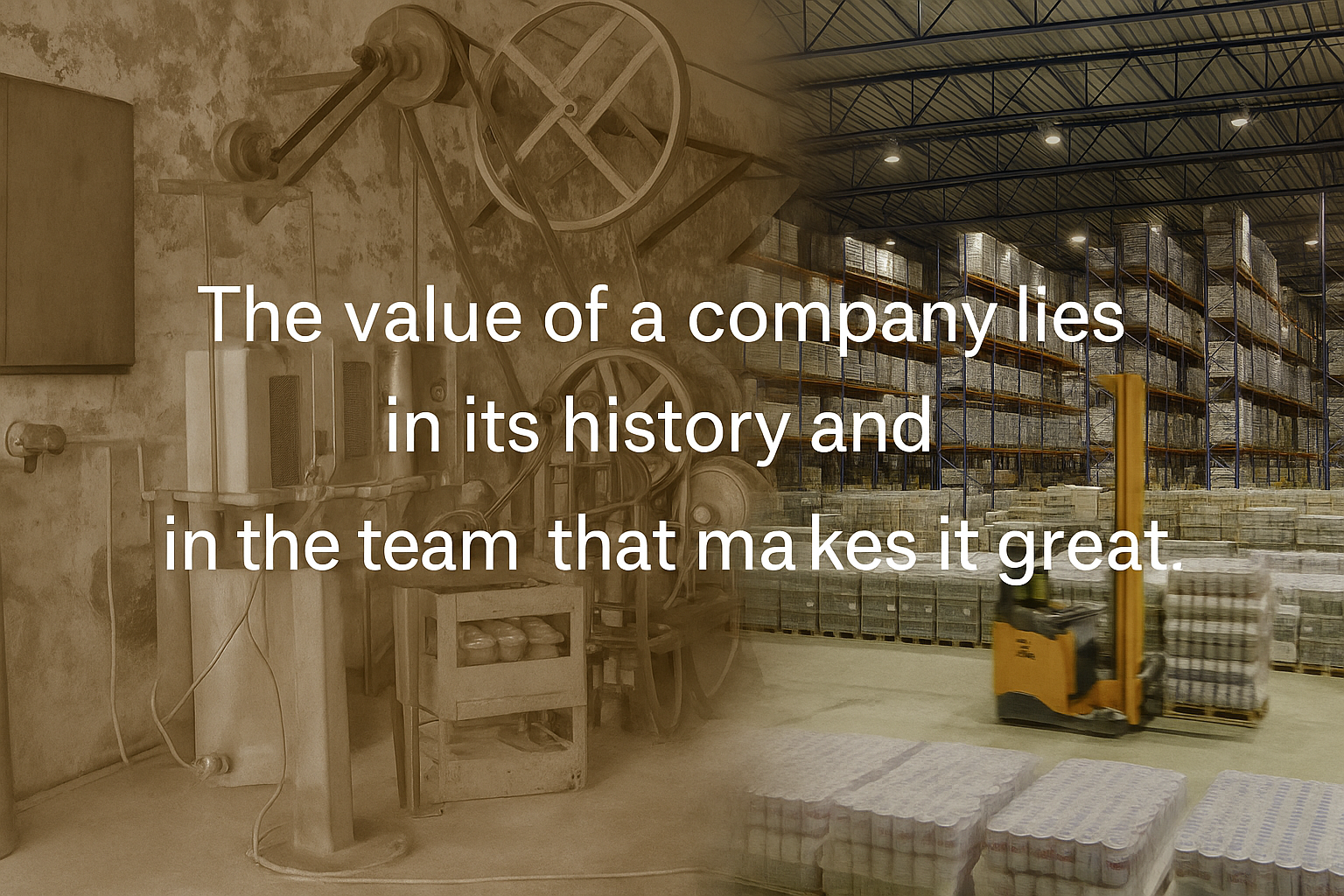
The value of a company lies in its history… and in the team that makes it great

At Red Paralela we don’t just sell. We create lasting relationships based on trust, deep knowledge of the sector, and a team that has spent years —many years— committed to improving every detail of our operations.

A story that comes from afar

Our story begins in the 1930s in Sitges, with a family soda factory. That artisan and constant spirit continues to beat today. In 1991 we were born as Carbòniques Montaner SL, a small horeca distributor with a vocation for service. Since then we have evolved, opening new lines of business and adapting to the rhythm of the market until becoming a specialized distributor with a presence throughout Spain and connections in Europe. In 2019, we adopted the name Red Paralela BCN SL to reflect our new dimension and international projection.

The key: a team that has grown with the company

Our greatest asset is not a machine, a software, or a process. It is our team. With an average of more than 15 years within the company, many of our professionals have directly participated in the creation of our systems, from logistics and administrative flows to the automations that today allow us to be more agile and competitive.

They know every corner of the business because they have built it from the inside. That continuity generates efficiency, coherence, and trust. And that, in an increasingly changing environment, is a real competitive advantage.

Solid systems, key people

We have an administrative platform based on Sage 200 and a custom-developed extranet that allows our clients to operate quickly, transparently, and securely. But these systems would be nothing without the people who make them work: from those who update prices and supervise documentation to those who solve incidents or advise clients in real time.

Not everything is seen from the outside… but it is noticed

Many of these things are not seen. They don’t appear on the website, nor in the product sheets. But our clients notice them: in punctuality, in the clarity of the answers, in the way of solving any problem. And that’s why they stay with us year after year.

Because a company is not only what it sells. It is how it does it and with whom it does it. In our case, with history, with people and with a very specific way of doing things: professional, close and efficient.


Would you like to get to know us better? Contact us and let’s schedule a video call, or visit our offices by appointment. Because sometimes, understanding the value of a company only requires a good conversation.

From data to decision: how at Red Paralela we use dashboards, AI and daily reports to sell better, grow more and make smarter decisions

Making good decisions isn’t about intuition. At Red Paralela, we’ve known that since 2003: when data is well-organized, the path becomes much clearer. From creating the first B2B platform between wholesalers to opening a new chapter with artificial intelligence, our way of growing has always been driven by information — not just in administration and accounting, but especially in sales and business development.

Here are our cornerstones:

1. It all starts with well-organized data

From day one, we understood that to scale, we needed to fully understand what was happening in our business. Properly classifying all inputs allowed us to identify what worked, what didn’t, and where we could improve. This clean database gave us the agility to optimize and automate countless processes, helping us stay ahead of the market.

2. Custom CRM and dashboard: dull control in real time

Today, thanks to that foundation, we have our own CRM and a dashboard that updates daily. Every salesperson can see how their sales are evolving, the real-time profitability they’re generating, and their progress toward monthly targets through key KPIs. This clear and accessible information allows us to react quickly, correct deviations, and double down on what’s working.

3. Artificial intelligence: the next step is already here

The new stage we’ve launched alongside grau.ad —a company within our group— is allowing us to explore the full potential of artificial intelligence. Thanks to how easily we can export our data, we now apply predictive models, automate analyses, and uncover patterns that previously went unnoticed. And this is just the beginning.


At Red Paralela, data isn’t just stored — it works. It helps us sell better, buy smarter, and make decisions that drive growth.

If you’re looking for inspiration, collaboration, or want to know how Red Paralela can help you improve liquidity, inventory turnover, and purchasing power — let’s talk!

🚀 Introducing our new 24/7 Customer Support Agent! 🤖

Discover how it’s transforming our processes, enhancing our customers’ experience and streamlining our sales team’s workflow:

  • Automatic Lead Capture: Gathers potential customer data in real time.

  • Direct Database Connection: Quickly finalizes order proposals using available stock and coordinates supplier offers without delay.

  • Intelligent Inbox for Sales: Purchase-and-sale deal requests land straight in your sales team’s inbox, ready to act on—no manual intervention required!

  • Instant Notifications: Keeps customers updated on their order status the moment there’s news.

  • Billing & Finance Support: Handles inquiries about billing, accounting, and finance, then emails each question—clearly summarized—to the right person on our team.

  • Personalized Customer Assistant: Answers any question about our company and services in an instant.

✨ This is just the beginning! Very soon we’ll roll out new features that will take our customer support and your team’s efficiency to the next level.

Want a 24/7 agent for your business?
📩 Get in touch with grau.ad (company in our group) and find out how they can help.

🔜 Stay tuned for what’s coming next!