FMCG Parallel Market: How to Buy Safely and Protect Your Margins

Mercado paralelo FMCG: cómo comprar con seguridad y margen

From the Perfect Deal to the Perfect Disaster: Why Buying Well Starts Long Before Negotiating the Price

Some deals seem impossible to turn down.

A distributor finds a fast-moving consumer goods (FMCG) stocklot at an exceptional price. The numbers make sense. The margin is excellent. The supplier appears trustworthy, and everything suggests this will be one of those purchases that makes weeks of searching worthwhile.

The deal is closed.

A few days later, the phone starts ringing.

The payment is put on hold because concerns arise about the seller’s company. When the goods finally arrive, the labeling does not comply with the destination country’s regulations, and distribution comes to a standstill.

Suddenly, what looked like the perfect bargain doesn’t seem like such a great deal anymore.

And the worst part is that this story is far from unusual.

Problems Rarely Appear During the Negotiation

The FMCG parallel market offers opportunities with margins that are difficult to achieve through traditional channels.

But it is also an environment where risks are rarely obvious.

Most of them appear only after the money has changed hands or the goods are already in transit.

Over the years, we have seen the same patterns repeat themselves time and again:

      • Companies whose financial reliability was not what it seemed.
      • Documentation issues that delay payments or deliveries.
      • Labeling problems that force an operation to stop at the last minute.
      • Tax authority inquiries resulting from unknowingly trading with companies involved in VAT fraud.

None of these situations starts out as a major problem.

They all begin as a small detail that nobody noticed in time.

The Cost That Almost Nobody Calculates

When people talk about the cost of a transaction, they usually think about the purchase price, transport costs or the expected margin.

However, there is another cost that is far less visible: the cost of a deal that goes wrong.

Hours spent resolving unexpected issues.

Payments frozen.

Customers waiting for goods that never arrive.

Difficult conversations.

Documentation that has to be reviewed months later.

And above all, opportunities that are never pursued again because nobody wants to repeat the same experience.

That is why many distributors prefer to walk away from an attractive opportunity rather than take on uncertainty they cannot control.

And that is a perfectly rational decision.

The Value of Good Intermediation

When a transaction involves tens or even hundreds of thousands of euros, the real question is not how much professional intermediation costs.

The real question is how much it can cost to do without it.

Good intermediation does not exist simply to introduce buyers and sellers.

It exists to reduce uncertainty.

To identify risks before they become losses.

To make sure that a deal which looked profitable at the beginning still looks profitable after the truck has unloaded the goods and the payment has safely reached its destination.

Most of this work goes unnoticed.

Precisely because, when it is done properly, problems never have the chance to appear.

Our Way of Understanding Red Paralela

At Red Paralela, we do not want to become just another marketplace where companies meet.

We want to be the partner that brings confidence and peace of mind to every transaction.

We act as an intermediary because we believe trust is an essential part of doing business.

We support every transaction because we know that real value lies not only in finding the right opportunity, but in making sure it reaches a successful conclusion.

It may sound like a subtle difference.

For anyone who has experienced a defaulted payment, a documentation issue or a blocked transaction, it is anything but.

Because the best deals are not the ones that promise the highest margins.

They are the ones that, weeks later, are still remembered as successful ones.
The Dangers of Imported Coca-Cola: What You Need to Know

Inspección sanitaria Coca-cola

The “bargain” that stayed at the port: Why words can save (or sink) your business

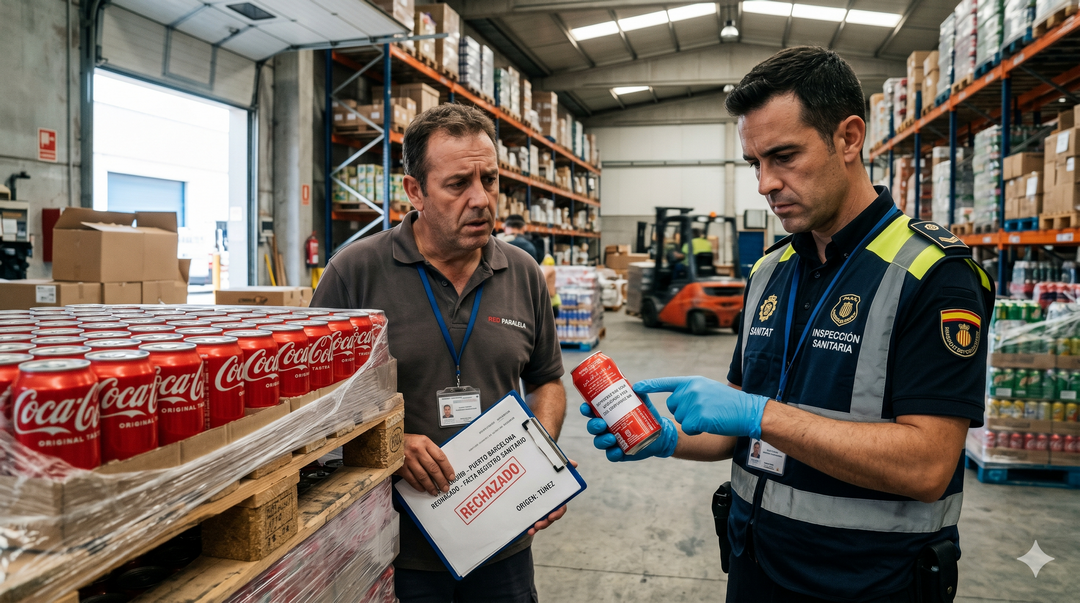
Imagine the scene: a distributor receives an offer that seems unbeatable. Trucks of Coca-Cola at a price that pulverizes the competition. The word “Import” is written on the invoice. The order is confirmed, paid for, and… suddenly, the merchandise is blocked at the Port of Barcelona. Or even worse: you receive an inspection visit at your warehouse and they ask for the importer’s health registry on the labeling.

What seemed like the deal of the year turns into a nightmare of lawyers, fines, and sealed pallets. At Red Paralela, we know this story well, because we have spent decades defending the difference between doing things right and playing with fire.

The myth of “foreign” Coca-Cola

Many speak of imported Coca-Cola as if it were an exotic product brought from far-off lands. But here is the first legal reality: If it comes from the European Union, it is not an import. It is, quite simply, the exercise of your right to buy within a single market.

Bringing products from France, Poland, or Germany is legal, safe, and transparent. At Red Paralela, we do not “import”; we operate within the intra-community space. The difference? The full weight of European law supports every move we make.

When cheap comes very, very expensive

True “importing” is that which comes from outside the EU (like that famous batch of Tunisian cans that ended up paralyzed at Barcelona customs). This is where the story takes a turn on two fronts:

  1. Blocking due to industrial property: Coca-Cola has ironclad contracts with its manufacturers outside Europe. If you try to bring product from Egypt or Tunisia into the EU without authorization, the brand has the legal right to stop you in your tracks. The product may be “original,” but its commercialization here is illegal, and the stock will end up destroyed or blocked.

  2. The health risk: The law requires the label to show the name and health registry number of the importer. Without this, in the event of any inspection or public health issue, you are the one legally responsible. Buying outside the EU without these guarantees is, literally, putting your company at risk.

A victory with a name and surname: Red Paralela

We are not speaking from hearsay. At Red Paralela, we have led the battle so that you can enjoy the benefits of the common market without fear.

After 10 years of litigation and enormous legal costs, we achieved a definitive judicial victory in the Supreme Court (September 2023). It wasn’t someone else’s victory; it was our own fight that set a legal precedent. The justice system agreed with us: once the brand puts the product on sale in Europe, it cannot prevent it from circulating freely.

We have invested a decade of resources to shield your right to free competition.

The moral of this story is clear:

Do not gamble with “bargains” that cross dangerous borders outside the EU. At Red Paralela, we offer you the efficiency of the European market with the peace of mind that every can complies with the law and is backed by a legal struggle that we already won for you.

Because a good operation is not the one that saves you a few cents today, but the one that allows you to sleep peacefully tomorrow.

Liquidity to negotiate better with suppliers at year-end

Negociación de compra a fin de año

Liquidity is power: how to use a strategic purchase to renegotiate terms with your suppliers before year-end

If your cash position is tight right now, don’t rule out this approach. Further down, we explain how to generate quick liquidity so you can play this card.

At year-end, many suppliers and their sales reps have a very clear objective: to close volume and invoice now. Not in January. Now.

That’s where distributor liquidity becomes real leverage.

This is not about asking for discounts in abstract terms. It’s about using your purchasing capacity and fast payment ability to help the supplier meet their annual targets — and negotiating from that position.

Step 1. Identify which purchase you can bring forward

The first step is not calling the supplier. It’s deciding which purchase you can bring forward that you would normally make later.

For example:
– Replenishment of fast-moving SKUs.
– Additional volume on stable products.
– Bringing forward part of Q1 purchases.

The key is twofold: it must make sense for you and be meaningful for the supplier at this point in the year.

Step 2. Understand what the supplier (and the sales rep) needs

At year-end, suppliers usually need one or more of the following:
– Immediate invoicing.
– To close volume targets.
– To improve year-end figures.
– To help sales reps reach their bonus.

Your liquidity fits perfectly into that need.

Don’t talk about “improving terms” in general. Talk about a specific transaction that helps them close the year.

Step 3. Present the deal clearly and directly

The right approach is simple:

“I can bring this purchase forward and pay immediately. In return, I need these conditions to improve.”

At that point, the conversation changes. You’re no longer asking. You’re proposing a solution.

Step 4. Which conditions make sense to renegotiate

When the purchase helps year-end closure, there is real room to negotiate:
– Better pricing on that specific order.
– An additional rebate linked to the advanced purchase.
– Improved terms for future orders.
– Extra commercial or logistics support.
– Preferential commitments for the coming year.

Focus on conditions linked to that purchase, not on general reviews without a clear trade-off.

Step 5. Fast payment as a key lever

This is one of the most underused competitive advantages.

Selling through Red Paralela generates immediate liquidity because we pay very fast. This allows distributors to:
– Get paid sooner.
– Buy sooner.
– Negotiate better.

For suppliers, volume matters. For sales reps, speed of payment matters even more. If you can pay fast, say it clearly. At year-end, it’s a powerful lever.

Step 6. What if your cash position is tight right now?

This is the point many overlook.

If you can turn stock into liquidity by selling through Red Paralela, you can:
– Free up cash in a matter of days.
– Use that cash for a strategic purchase.
– Improve terms with your supplier.

This is not financial theory. It’s a very concrete chain:
sell fast → get paid fast → buy better → negotiate better.

Step 7. Close the deal and set the basis for next year

Once the purchase is closed:
– Get the agreed conditions in writing.
– Define whether the scheme can be repeated.
– Open the conversation for the start of next year.

A well-structured year-end purchase doesn’t just improve one order. It positions you better for the entire following year.

The most common mistake

Waiting until you need better terms to call the supplier.

When you call out of necessity, your leverage is minimal. When you call with liquidity and a concrete purchase on the table, the negotiation changes.

Key takeaway

Liquidity is not there to “negotiate better”.
It’s there to buy at the right moment and help the supplier close the year.

And when you help close the year, conditions improve.

Overstock

Como solucionar el sobre stock

How to clear overstock without devaluing the brand in your own area

Many distributors and sales reps face the same problem: they need to move product, but they can’t afford visible discounts that might damage the brand or create tension with nearby points of sale.

The concern is valid: a badly placed discount can hurt product perception, trigger unwanted comparisons, and—at worst—undermine relationships within the distribution network.

The key is to find a discreet, controlled and profitable channel.

Move overstock without public discounts

With Red Paralela, you can release product without exposing reduced prices in your direct market. This helps you recover liquidity, free up space and protect the brand image in your own area.

This approach is especially useful when you face:

  • Accumulation of slow-moving SKUs
  • Packaging or seasonal changes
  • A need to generate cash quickly without impacting your territory

In summary

Clearing overstock doesn’t have to mean discounting or damaging the brand. You just need a parallel channel—discreet, safe and profitable.

10 Key Adjustments to Close the Year with Liquidity, Achieve Bonuses, and Secure Better Purchases for 2026

The end of the year is approaching, and for distributors selling to the HORECA channel, this is the perfect time to fine-tune operations, optimize performance, and prepare the ground to start 2026 strong.

We’re not talking about aggressive discounts or clearing stock at any cost. We’re talking about strategy, foresight, and concrete actions that can improve your liquidity, help you achieve your year-end bonuses, and strengthen your purchasing power for the year ahead.

1. Prioritize products with expected price increases
Do you have items that are likely to increase in price in 2026? Move them before the year closes. This boosts stock rotation, generates liquidity, and lets your customers benefit from buying ahead of price hikes.

2. Reduce stock strategically (without eroding margins)
Avoid internal promotions that hurt your market positioning. Use B2B channels like Red Paralela to sell part of your inventory without visible discounts or brand devaluation.

3. Clean up pending collections
Liquidity isn’t just about selling—it’s also about collecting on time. Review outstanding invoices and negotiate early. Better now than in January, when cash flow tightens for everyone.

4. Prepare your 2026 price lists and catalogs
Take the time to review margins, include new products, and finalize your commercial materials. This will give you agility and a competitive advantage at the start of the year.

5. Close negotiation frameworks with key customers
Don’t wait until the last minute. Agreeing on framework conditions now (volumes, prices, exclusivities) provides predictability for both sides and positions you more strongly against competitors.

6. Remove dead or slow-moving items
Do a quick analysis: which products have been sitting too long in your warehouse? Free up space and capital to focus on the items that truly drive your business.

7. Review conditions with your suppliers
If you’re ending the year with good liquidity, use it to your advantage—negotiate better payment terms, bonuses, or exclusivity agreements for 2026.

8. Spot buying opportunities with a long-term view
Many distributors liquidate stock in December. If you buy smart now, you can start 2026 with branded products at 2025 prices, improving your margins from day one.

9. Sell stock to reach your year-end bonuses
Are you just a few thousand euros short of your annual bonus target? Selling that stock through Red Paralela can give you the final push without stressing your usual sales channels or cutting prices publicly.

10. Buy on Red Paralela with a strategic mindset
Red Paralela is also a channel for opportunity purchases: access branded lots with genuine discounts and full security. What’s a good purchase today will be an even better margin tomorrow.

Conclusion: Closing the year well means starting the next one stronger

These adjustments aren’t just administrative tasks—they’re strategic decisions that make the difference between a tight year-end and a commercially solid one with strong liquidity.

If you want to sell part of your stock to meet your year-end goals, or spot great buying opportunities to start 2026 with an advantage, Red Paralela is your commercial ally.

Want to close the year with liquidity and stronger purchasing power?

Do it the smart way.
🔗 Start selling or buying on Red Paralela
Or contact us—we’ll help you prepare your year-end operation.

Complying with the law isn’t optional: the difference between a trusted supplier and a risk to your business

In the world of buying and selling first-brand stock—especially between wholesalers and importers—one reality that few mention is clear: not everyone complies with food regulations. And when that happens, the risk doesn’t just fall on the importer—it also falls on the buyer.
As responsible importers, our priority is not just moving product, but ensuring that every batch leaving our warehouse complies with all the laws and regulations that protect consumer health and our clients’ reputation.

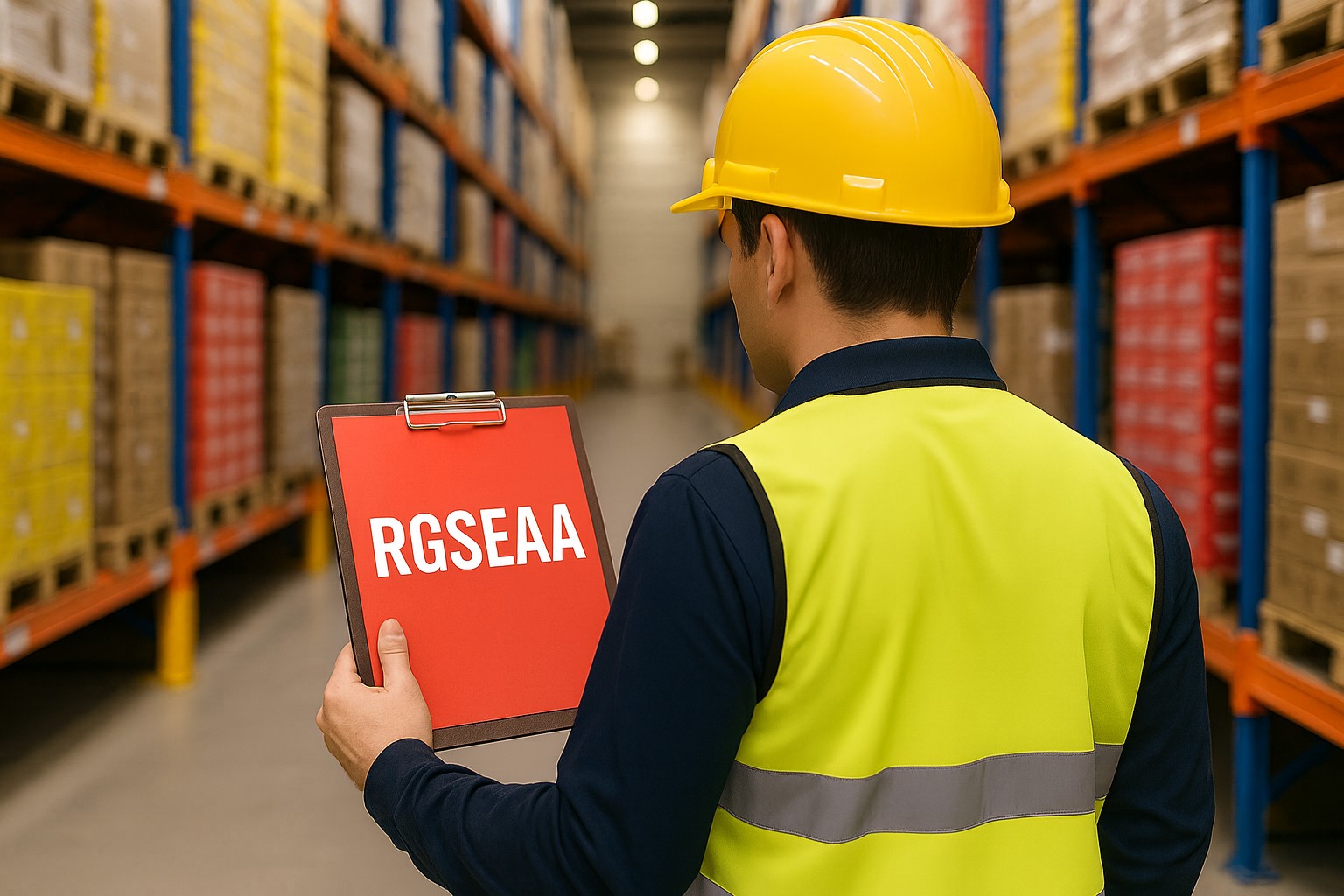
The cornerstone: RGSEAA

At the foundation is the Registro General Sanitario de Empresas Alimentarias y Alimentos (RGSEAA), regulated by Real Decreto 191/2011. Without this registration, it is not legal to operate as a food importer or wholesaler in Spain. This document proves that the company is supervised by health authorities and meets the necessary conditions to store, handle, or distribute food.
A wholesaler should always request this document from their supplier.

More than just a number on paper

Beyond RGSEAA, we fully comply with all the European and Spanish regulations that guarantee product safety, traceability, and quality:

  • Regulation (EC) 852/2004 and (EU) 2021/382 – Food hygiene and allergen control.
  • Regulation (EC) 1935/2004 and (EU) 2022/1616 – Food contact materials and packaging.
  • Regulation (EC) 2073/2005 – Microbiological criteria.
  • Regulation (EC) 1333/2008 – Approved food additives.
  • Regulation (EC) 1169/2011 – Labelling and consumer information.
  • Regulation (EU) 2023/915 – Maximum limits for contaminants.
  • Law 17/2011 – Food safety and nutrition.

(In our internal file, we also comply with the rest of the specific regulations included in the quality commitment that our clients require: Regulation (EC) 853/2004, Regulation (EC) 1935/2004, Regulation (EC) 2073/2005, Regulation (EC) 1333/2008, Regulation (EC) 450/2009, Regulation (EC) 37/2010, Law 17/2011, Regulation (EC) 10/2011, Regulation (EU) 2021/77, Regulation (EU) 2022/1616, Regulation (EU) 2023/915, Royal Decree 773/2023, Regulation (EU) 2023/648, Regulation (EU) 2018/848 and Royal Decree 833/2014.)

What happens when compliance fails

Working with an importer who doesn’t respect these laws can have serious consequences:

  • Administrative sanctions and fines.
  • Product withdrawal from the market.
  • Damage to your business’s reputation.
  • Economic losses due to retained or destroyed merchandise.

Our commitment

While the goods are in our warehouse, it’s our responsibility that they arrive in perfect condition and in compliance with all regulations. When we hand them over to the transporter, the customer receives a product with guaranteed traceability, labelling and safety.
That’s the difference between working with a reliable importer and one who just moves boxes without assuming responsibility.

In summary

At Red Paralela, we believe that complying with the law isn’t a burden—it’s a competitive advantage. Because whenever we protect the consumer, we also protect our clients’ business.

Key products and exclusivity: don’t let them tie your hands

When key products draw a fine line between strategy and conflict

In the HORECA distribution world, some products change everything. We’re talking about key products—high-turnover items, easily recognized by consumers, that can make the difference between winning or losing a client.

These products help you:

✅ Break into new accounts with an irresistible offer
✅ Protect your existing clients from competitor distributors
✅ Offer a complete service to clients who already buy almost everything from you… except that one product they find cheaper elsewhere

the problem: exclusivity that ties your hands 🚧

Many distributors sign exclusive agreements with brands that later become a trap:

  • The manufacturer itself leaks the product through unofficial channels and breaks the price

  • That same product shows up on platforms like RED PARALELA at lower prices

  • If you buy it elsewhere to protect your margin, the brand may accuse you of breaching the contract

is it legal for an exclusive deal to make you lose money? ⚖️

Spain’s Competition Authority (CNMC) and the courts have said it clearly: exclusivity is only valid if it actually benefits the market, not if it restricts it.

  • Spanish Competition Law (art. 1): bans agreements that limit or distort competition (like forcing you to buy expensive while others sell cheap)

  • EU Regulation 2022/720 (art. 4): if market share exceeds 30%, blocking sales outside your territory is no longer allowed

  • Spanish Civil Code (art. 1255): contracts are valid only if they don’t violate the law or public interest

Plain English: if a brand forces you to buy high and at the same time floods the market with lower prices, that clause is likely invalid—or at least renegotiable.

real cases where courts sided with the distributor 📜

  • STS 317/2017 (Spain’s Supreme Court): the supplier ended deliveries without fair notice; the court granted compensation and forced them to buy back unsold stock

  • STS 305/2007: the manufacturer sold through cheaper, parallel channels; the court ruled in favor of the distributor for lost profits and client base

  • CNMC resolution, 6 Feb 2020 (Case S/DC/0630/18): Adidas was forced to remove restrictions that blocked online sales outside the official store

client base compensation: money to cover the value of customers you generated for the brand.

what can you do as a distributor? 🧠

  1. Review your contracts: watch for clauses that restrict you without real benefit

  2. Document leaks: take screenshots, save unofficial offers, collect proof

  3. Track prices: alternative prices can help you show the harm

  4. Negotiate with facts: share the legal precedents and possible risks with the brand

And if you need access to key products without breaking your structure, RED PARALELA offers you a secure and confidential way to do it—backed by legal support.

conclusion: strategy, not submission 🎯

An exclusive agreement should not become a prison.
A brand that plays in multiple markets can’t demand blind loyalty.
Protect your margins, your client base, and your reputation—with the tools and legal backing already in your corner.

If this situation sounds familiar or you want to discuss your case, get in touch. We’re here to help.

CIPS vs. SWIFT: the new financial showdown that could redraw international trade

China is quietly advancing with a powerful alternative: the CIPS system

While much of global trade still revolves around the U.S. dollar and the SWIFT system, China is quietly advancing with a powerful alternative: the CIPS system. With near-instant transfer times, minimal fees, and a network that now connects almost 5,000 banks in 186 countries, CIPS is no longer a promise—it’s becoming a strategic reality.

And this isn’t about some distant future. In recent months, key countries have joined, a new version has been launched with digital yuan integration, and the signals are clear: if China decides to require its use for exports, many companies and governments will have to adapt—or be left out.

This article doesn’t aim to cause alarm, but to offer a clear view of what is unfolding. It’s not something that directly affects Red Paralela or most HORECA distributors, except for those who import from or export to Asia. But it is a shift that could redefine the ecosystem in which we all operate.

📊 Clear comparison: CIPS vs. SWIFT

Feature CIPS (China) SWIFT (Western consortium)
Year of creation 2015 1973
Main currency Chinese yuan (RMB) U.S. dollar (USD) and others
Transfer speed Near-instant (seconds to minutes) 1 to 3 business days
Costs Low or symbolic High, especially with intermediaries
Connected banks ≈ 4,900 in 186 countries ≈ 11,000 in over 200 countries
Messaging system ISO 20022 (from the start) ISO 20022 (transition in progress)
Intermediaries Few or none Several intermediaries
Geopolitical control People’s Bank of China West (U.S. and allies)
Digital currency integration Yes (digital yuan already tested) No (still under development)
Strategic goal Internationalize the yuan Maintain dollar dominance

🔮 What could happen if CIPS keeps gaining ground?

1. Changes in the way trade works
More international contracts in yuan, more pressure to work with Chinese or Asian banks.
👉 Especially relevant for companies importing from China.

2. Adjustment of international reserves
Central banks will start to diversify: fewer dollars, more yuan.
👉 This could affect the dollar’s value and stability.

3. Pressure on banks and payment platforms
Financial entities that don’t operate with CIPS could be excluded from some operations.
👉 Opportunity for fintechs, risk for slower traditional banks.

4. New economic alliances
CIPS opens the door to trade routes outside the dollar-SWIFT circuit.
👉 Sanctioned countries and China’s partners can boost their independence.

5. Possible Western countermeasures
The U.S. and EU could impose barriers on the use of CIPS or fast-track their own systems.
👉 A financial “cold war” may begin, with global implications.

⚠️ What does this mean for you as a distributor?

At this point, if you don’t work directly with China, there’s no immediate concern. This article is not an operational alert—it’s a global perspective on how the game board is shifting.

But it’s worth keeping on your radar. Because if the dollar loses dominance or trade routes change, the rules of the game may shift for you as well—even indirectly.

🧭 Conclusion

CIPS is not just a payment system. It’s a strategic move to redesign how money flows across the world.
And if it keeps expanding at this pace, we could soon see a fragmented global financial landscape, with two parallel circuits: the dollar-SWIFT system and the yuan-CIPS system.

At Red Paralela, we’ll keep a close eye on these developments. Because even if we don’t export to China, the global economy is a chessboard we all play on… whether we realize it or not.

Is Your New Supplier Trustworthy? Common scams and how to avoid them

Bringing in a new supplier can open doors… or become a major risk. In this article, we highlight the key points to help you determine whether you’re dealing with a reliable business partner—or heading straight into trouble.

⚠️ The Most Common Scams

In recent years, many distributors have fallen victim to scams of all kinds. Let’s name a few:

THE SMALL ADVANCE:
A supplier asks you for a “small” upfront payment (say, €2,000) to “guarantee transport” or make sure you won’t back out. Then they vanish. No delivery, no response to calls, emails, or WhatsApp messages. All you’re left with is a bruised ego and the loss of your money.

THE MASTER NEGOTIATOR:
A new supplier offers an amazing price for goods that are supposedly in the warehouse of a well-known supplier you may already work with. You send your truck, the goods are there, and you pay the new supplier. But the warehouse doesn’t release the goods—because they haven’t been paid. Complex? Yes. But it’s happened. Twice. In one case, over €30,000 was lost—by a lifelong client who was also upset because we offered a lower price to the scammer than to him. These people know how to play the system.

THE SUPER IMPORTER:
Importers or wholesalers with only a couple of days of history offer better prices than seasoned professionals with 25 years in the business. They often cause you tax problems due to VAT fraud, and tax authorities apply the subsidiary liability rule—which affects you, not them. They shut down one company and open another. Some even return to the market after a few years as if nothing ever happened.

THE GREAT EXPERT:
Others are more sophisticated, operating fraudulent triangular transactions or misusing customs/fiscal warehouses—especially with excise goods. These operations are much riskier legally. If you’re curious, we’re happy to share real examples privately.

🔍 Tools to Evaluate a New Supplier

If you decide to vet a new supplier, here are tools you should always use:

Start with basic checks to see if the supplier is even worth your time:

  • A presentable website with a professional domain.

  • Email addresses using that domain.

  • A landline number (not just mobile), with different people answering each.

  • A Google Maps business listing—verify the address and that it’s a real company.

If they pass these checks, continue with:

  • VIES: to confirm they’re registered as an EU VAT operator (especially for imports).

  • D&B (international) or Informa (Spain): for solid, detailed commercial reports.

  • Form 036 in Spain: to verify fiscal activity and address.

  • Certificate of Good Standing with the Tax Office: essential for confirming they’re current on obligations.

⚠️ You should perform VIES checks and request tax certificates before every transaction if you’re unsure about the supplier’s legitimacy.

📊 What to Look For in a Commercial Report (e.g. D & B)

  • Incorporation Year: Age suggests stability, but beware—companies can be sold to less trustworthy people.

  • Credit Opinion: A guideline for your exposure. (We suggest halving the limit, just to be safe.)

  • Recent Changes in Management: These can signal instability or the transfer of liability to an administrator who may vanish.

These checks require time, access to the right sources, and expertise to interpret.

✅ What RED PARALELA Does for You

At RED PARALELA, we’ve built a network where every supplier is validated. We handle:

✔ Solvency and background checks on every provider.
✔ Detection of risk patterns and red flags.
✔ A secure, legal, and confidential buying environment.

You can operate with peace of mind—because we do the heavy lifting for you.

🧠 Final Thought: Is It Worth Playing a Game with Unknown Rules?

A deal that looks too good can cost you dearly. And when your business and reputation are at stake, the risk is rarely worth it.

If you can access similar products—maybe at the same price, maybe slightly higher—with full guarantees, is it really worth gambling on a supplier who doesn’t play by the rules?

At RED PARALELA, we give you access to real opportunities, without putting your company at risk.

👉 Speak to your agent or access the platform to buy with confidence—risk free.

Access Key Products Outside the Official Channel

In the HORECA sector, every client matters. And keeping their loyalty often depends on one key factor: being able to supply the products that end consumers demand.

If you can’t, another distributor will. It’s that simple.

At RED PARALELA, we understand this reality. That’s why we offer a practical, secure, and legal solution that allows you to access top-brand products, even if you’re not part of the brand’s official distribution network.

🧲 Why is this crucial for protecting your territory?

Because while these products are technically available on the market, not all distributors can access them on competitive terms. And when you can’t offer them, your competitors can enter your client base, exploiting that gap to gain ground in their regular orders.

RED PARALELA gives you access to a controlled and safe parallel market, allowing you to:

🔐 Secure your existing clients – if you can supply what they need, they won’t need to look elsewhere.
🚫 Prevent your competitors from slipping in the back door, simply because you lack official access.
📈 Strengthen your position as a full-service supplier and solidify relationships with every venue.

💡 How does it work?

Through RED PARALELA, you can:

✔️ Buy top-brand products without going through the official channel
✔️ Access prices lower than the traditional route
✔️ Operate with absolute confidentiality, without exposing your name or compromising your supplier relationships

Our network of over 600 trusted operators allows you to buy with full legality and total discretion.

🎯 Advantages that make the difference

Keep your clients protected from competitors
Respond to real consumer demand, without delays
Maintain control over your zone and customer base
Secure key products that keep you commercially relevant

📢 Have you ever lost a client because you couldn’t offer a specific product?

👉 Discover how RED PARALELA can help you protect your business.
Get in touch with your agent or log in to the platform.