

- Shipped
- Reading
- 4 min
The escalating costs in HORECA distribution: data, trends, legislation and accounting control
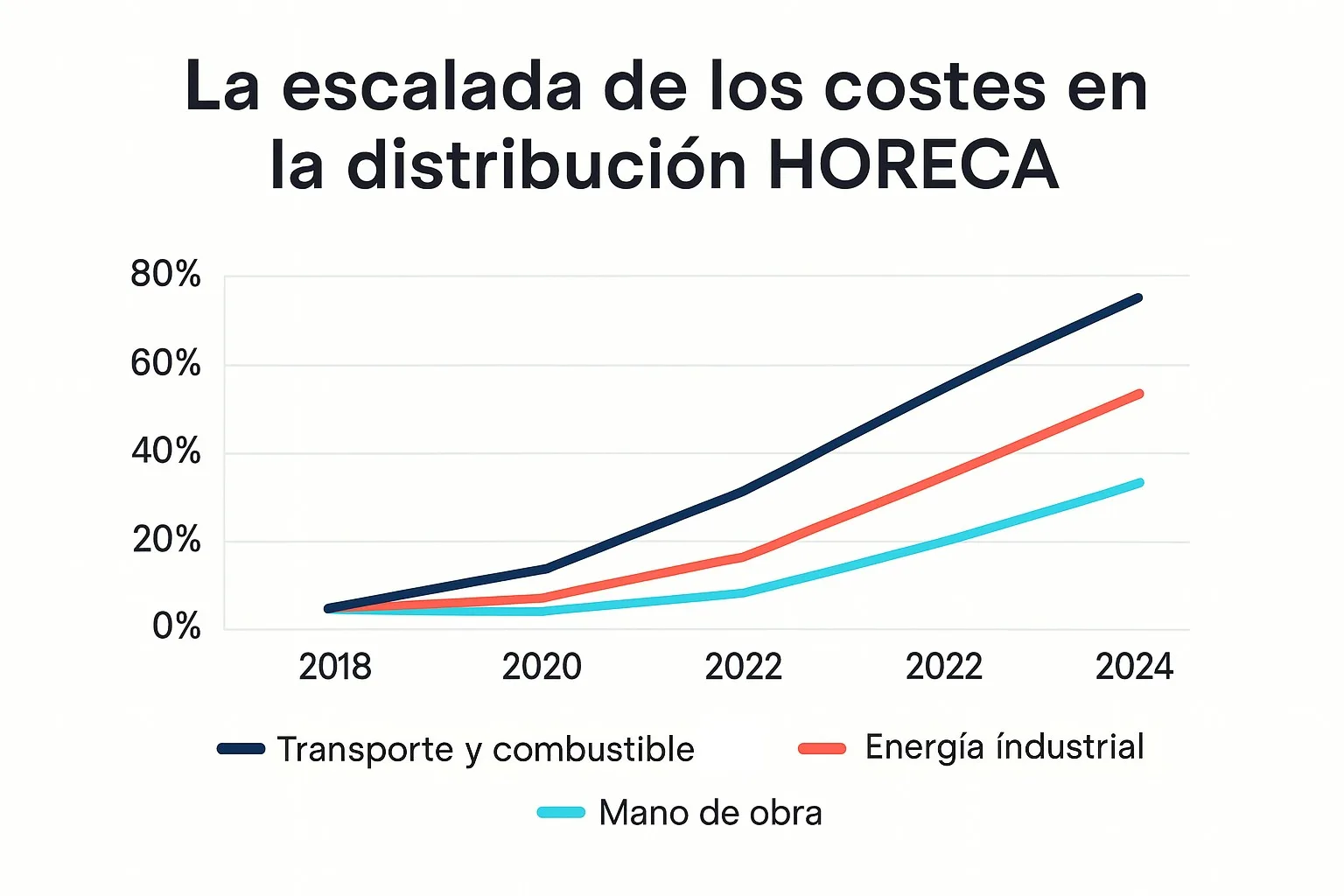
In recent years, distributors serving the HORECA channel have faced a growing challenge: a sustained rise in operating costs. Transport, energy, labour and environmental regulation are some of the factors squeezing margins and eroding competitiveness.
In this article we look at the most relevant data, the trends for the coming years, the legislation affecting the sector and how to design a control system based on accounting data that helps you anticipate change and stay profitable.
1. How much have costs risen in recent years?
Transport and fuel
Transport costs have risen significantly, driven by fuel prices, tolls and a shortage of hauliers. Since 2020 the cumulative increase is around 25-30 %, with peaks in 2022 due to the energy crisis.
Energy
The cost of electricity and gas for industrial use doubled between 2021 and 2022, pushing up the cost of refrigeration, storage and warehouse operations. Although prices have stabilised, they remain well above pre-pandemic levels.
Labour
Spain's statutory minimum wage, the SMI (Salario Mínimo Interprofesional), has risen by more than 50 % since 2018. This means higher labour costs and social security contributions for distribution companies. The impact has been especially strong for warehouse staff and delivery drivers, while for more qualified roles (office staff, sales reps) the increase has been smaller, though in line with collective agreement adjustments.
2. Trends for 2025 and the years ahead
- Digitalisation becomes a must: real-time control of stock, sales and margins using ERP (Enterprise Resource Planning) and BI (Business Intelligence) tools.
- Logistics optimisation: more efficient route planning and the use of predictive data to cut mileage and fuel consumption.
- Supplier consolidation: working with fewer but more reliable suppliers and securing long-term agreements.
- Dynamic pricing policy: more frequent adjustments to keep pace with changes in variable costs.
3. Legislation affecting costs
The regulatory framework adds constant pressure:
- Ley de residuos y suelos contaminados (Spain's Waste and Contaminated Soils Act): requires companies to manage and declare packaging and to meet recycling targets.
- Minimum wage (SMI) increases: these have a direct impact on payroll costs.
- European emissions regulations: these will shape fleets and logistics, requiring adaptation over the medium term.
4. The hidden cost: more taxes, more paperwork, less productivity
On top of the direct increases in raw materials, transport and energy, there is a silent cost that grows every year: the administrative burden. Every new regulation means:
- Overtime for office staff to prepare reports and returns.
- Implementing or upgrading ERP systems to meet record-keeping requirements.
- Ongoing training for administrative staff.
- Adapting to more frequent inspections.
These tasks add no direct value for the customer, but they are mandatory. The result: more work, more resources and higher fixed costs, which reduce the distributor's agility.
5. How to design a control system based on accounting data
An accounting control system lets you move from reacting to anticipating. Here are the key steps:
Step 1. Classify costs by responsibility centre
Group expenses by area: transport, warehouse, purchasing, sales, staff and administration. That way you will know where the increases are concentrated.
Step 2. Define key performance indicators (KPIs)
- Margin per product line.
- Average cost per delivery.
- Logistics ratio: (transport + warehouse costs) divided by turnover.
- Administrative hours per order processed.
Step 3. Automate data capture
Bring together invoice, logistics and sales information in an ERP or BI system that produces automatic reports.
Step 4. Analyse trends and set up alerts
Compare the key indicators month by month. Set alerts for when the cost per delivery rises more than 10 % compared with the previous quarter.
Step 5. Run scenarios
What happens if fuel goes up by 10 %? What if you lose a key customer? Running simulations lets you prepare action plans and avoid surprises.
Conclusion
The escalation of costs in HORECA distribution won't stop in the short term. However, a distributor that works with real data can anticipate, renegotiate better with suppliers and stay profitable. The key isn't just saving money, it's making decisions based on accurate information.
How can we help?
Our mission at RED PARALELA is to be your trusted supplier: offering you good prices and impeccable service all year round, with no legal complications and no risks from poorly handled transactions that would push your indirect costs up even further.
Write to us if you have any questions about this article; we'll be happy to help.