

- Shipped
- Reading
- 2 min
Pressure is mounting on HORECA distribution: evolve or vanish
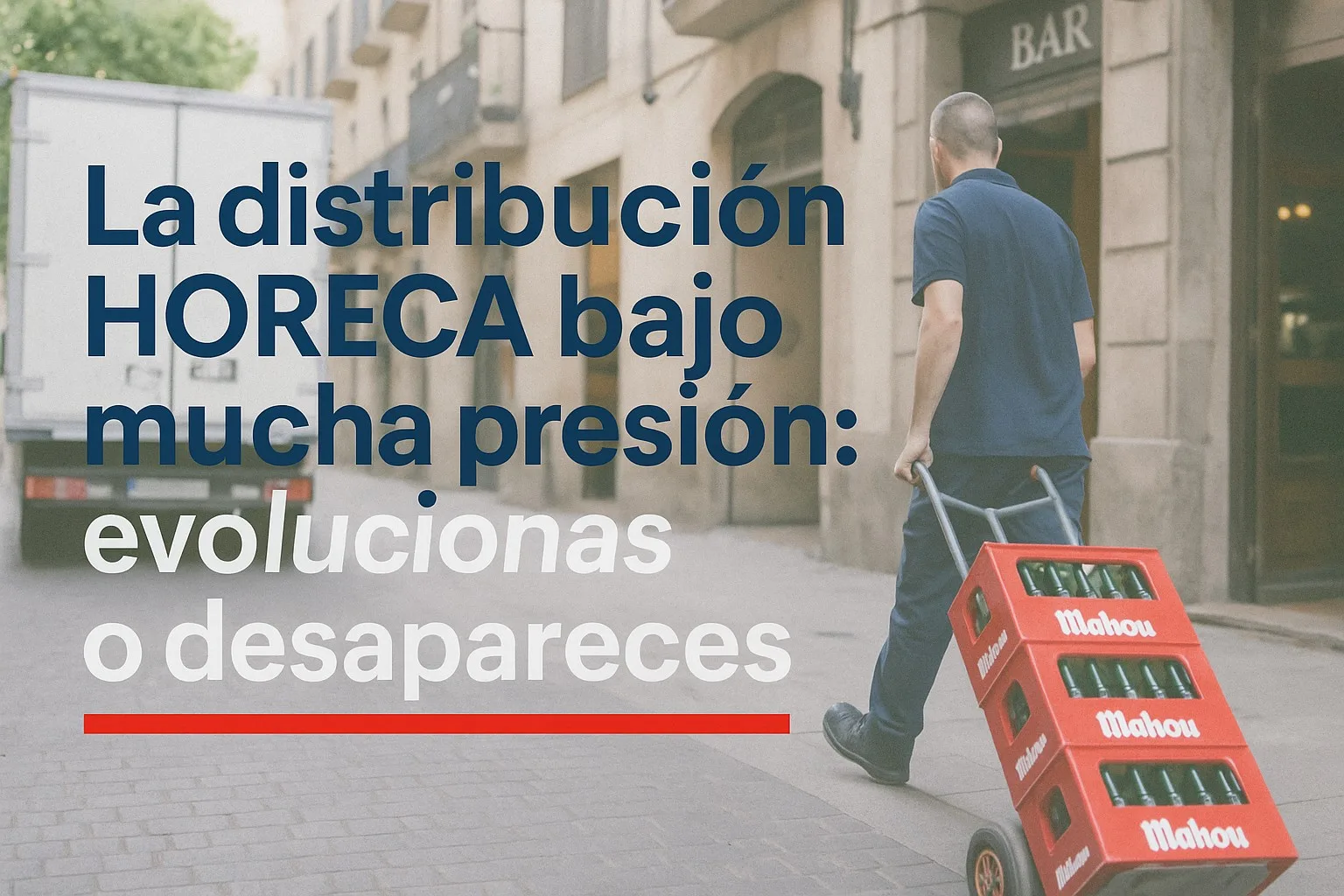
The COVID-19 pandemic marked a turning point for the HORECA channel. What looked like a one-off crisis set off a deep transformation that continues to this day. On top of that came inflation, geopolitical instability and a lasting shift in consumer habits.
In this new environment, digitalisation and sustainability are no longer a competitive advantage: they have become essential conditions for staying relevant.
Digitalisation is no longer optional
It's no longer about "modernising", but about continuing to operate efficiently. Bars, restaurants and hotels expect agility, clear information and simple processes. To meet those expectations, distributors need to digitalise their operations: automate orders, improve sales communication, optimise routes and access relevant data in real time.
Digitalising doesn't mean making things more complicated. It means simplifying the complex so you can make better decisions and free up operational time.
Sustainability as a requirement, not an option
Consumers demand responsible practices, and the HORECA channel increasingly treats this as a purchasing criterion. Proximity, logistics efficiency and the responsible use of packaging are all valued. However, some recent regulations, such as axle load limits or certain blanket emissions-based tolls, are making transport more expensive without delivering any real improvement in environmental impact.
Forcing operators to use more vehicles to carry the same load, or imposing additional costs without taking each operator's efficiency into account, can have the opposite effect to the one intended. Sustainability must be based on technical and operational criteria, not just theoretical measures.
Low-emission zones, for example, can improve urban delivery if they are introduced with common sense, especially regarding delivery times and access conditions. The problem arises when they are designed without dialogue with the sectors affected.
That's why it is essential for distributor associations to take a firm stand to make sure these new regulations are workable, logical and sustainable from an economic point of view too. The aim isn't to slow down change, but to make sure it is viable and efficient for everyone.
A better-informed, more demanding customer
Hospitality professionals are better informed: they compare options, expect immediacy and value personalised service. Faced with this reality, distributors can no longer simply deliver product: they must offer service, advice and real added value.
Loyalty isn't built on discounts alone. It's built by supporting customers and understanding their day-to-day business.
Profitability under the spotlight
With tight margins and rising costs, efficiency becomes essential. Rigorous accounting control, range optimisation, process automation and redesigned logistics routes are all necessary steps to stay profitable without sacrificing service levels.
Making data-driven decisions is what separates the companies that survive from the ones that grow.
So what now?
These are not easy times, but they are a clear opportunity for those who understand that this isn't a one-off crisis but a new chapter for the sector.
At Red Paralela we anticipated this transformation and we are growing strongly. If you need support to adapt, we'll be delighted to put our knowledge and solutions at your disposal.