

- Dock
- Parallel market
- Shipped
- Reading
- 3 min
FMCG parallel market: how to buy safely and protect your margin
From the perfect bargain to the perfect problem: why buying well starts long before you negotiate the price
Some deals seem impossible to turn down.
A distributor comes across a lot of fast-moving consumer goods at an extraordinary price. The numbers add up. The margin is excellent. The supplier inspires confidence, and everything suggests this will be one of those purchases that justify weeks of searching.
The deal is closed.
A few days later, the phone calls start.
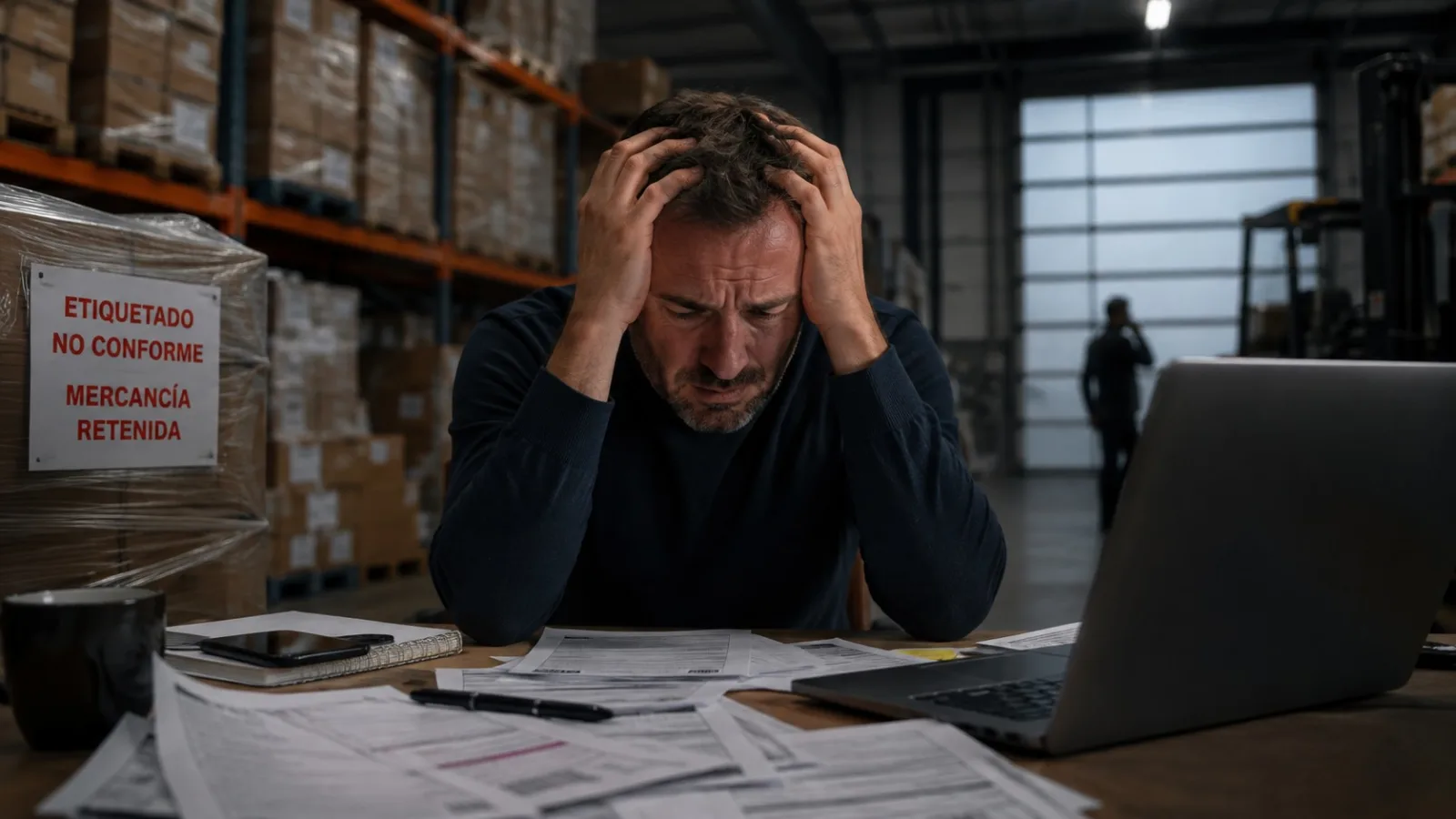
The payment is held up because doubts emerge about the selling company. When the goods arrive, the labelling does not comply with the regulations of the destination country and distribution comes to a halt.
Suddenly, the so-called "bargain" no longer looks like such a good idea.
And the worst part is that there is nothing exceptional about this story.
Problems almost never appear during the negotiation
In the FMCG parallel market, deals are closed with margins that are very hard to achieve through other channels.
But it is also an environment where the risks are rarely obvious.
Most of them surface once the money has already changed hands or the goods are in transit.
Over the years we have seen the same patterns repeat themselves again and again:
- Companies that were not as solvent as they appeared.
- Documentation issues that block payments or deliveries.
- Labelling that forces a deal to be stopped at the last minute.
- Demands from Hacienda (the Spanish tax authority) for having unknowingly traded with companies involved in IVA (Spanish VAT) fraud.
None of these situations starts out as a big problem.
They start out as a small detail that nobody checked in time.
The cost hardly anyone calculates
When people talk about the cost of a deal, almost everyone thinks of the purchase price, transport or the expected margin.
However, there is another, far less visible cost: the cost of a deal that goes wrong.
Hours spent resolving incidents.
Blocked payments.
Customers waiting for goods that never arrive.
Explanations to give.
Paperwork to review months later.
And, above all, opportunities that are passed up for fear of going through the same thing again.
That is why many distributors would rather walk away from a good deal than take on uncertainty they cannot control.
And it is a perfectly logical decision.
The value of good intermediation
When a deal involves tens or hundreds of thousands of euros, the question should not be how much intermediation costs.
The question should be how much it could cost to do without it.
Good intermediation does not exist simply to put buyers and sellers in touch.
It exists to reduce uncertainty.
To spot risks before they turn into losses.
To make sure that a deal that looked good is still good once the lorry has unloaded the goods and the money is where it should be.
That work is rarely seen.
Precisely because, when it is done well, the problems never appear.
That is how we see Red Paralela
At Red Paralela we do not want to be just a meeting point between companies.
We want to be the party that brings peace of mind to every deal.
We act as intermediaries because we believe trust is also part of the business.
We support every purchase and sale because we know that the real value lies not only in finding an opportunity, but in seeing it through to a successful conclusion.
It may seem like a subtle distinction.
For anyone who has suffered a non-payment, a documentation problem or a blocked deal, it is not.
Because the best deals are not the ones that promise the biggest margin.
They are the ones that, weeks later, are still a good memory.