Incentives and Responsibility: A System for Real Profitability

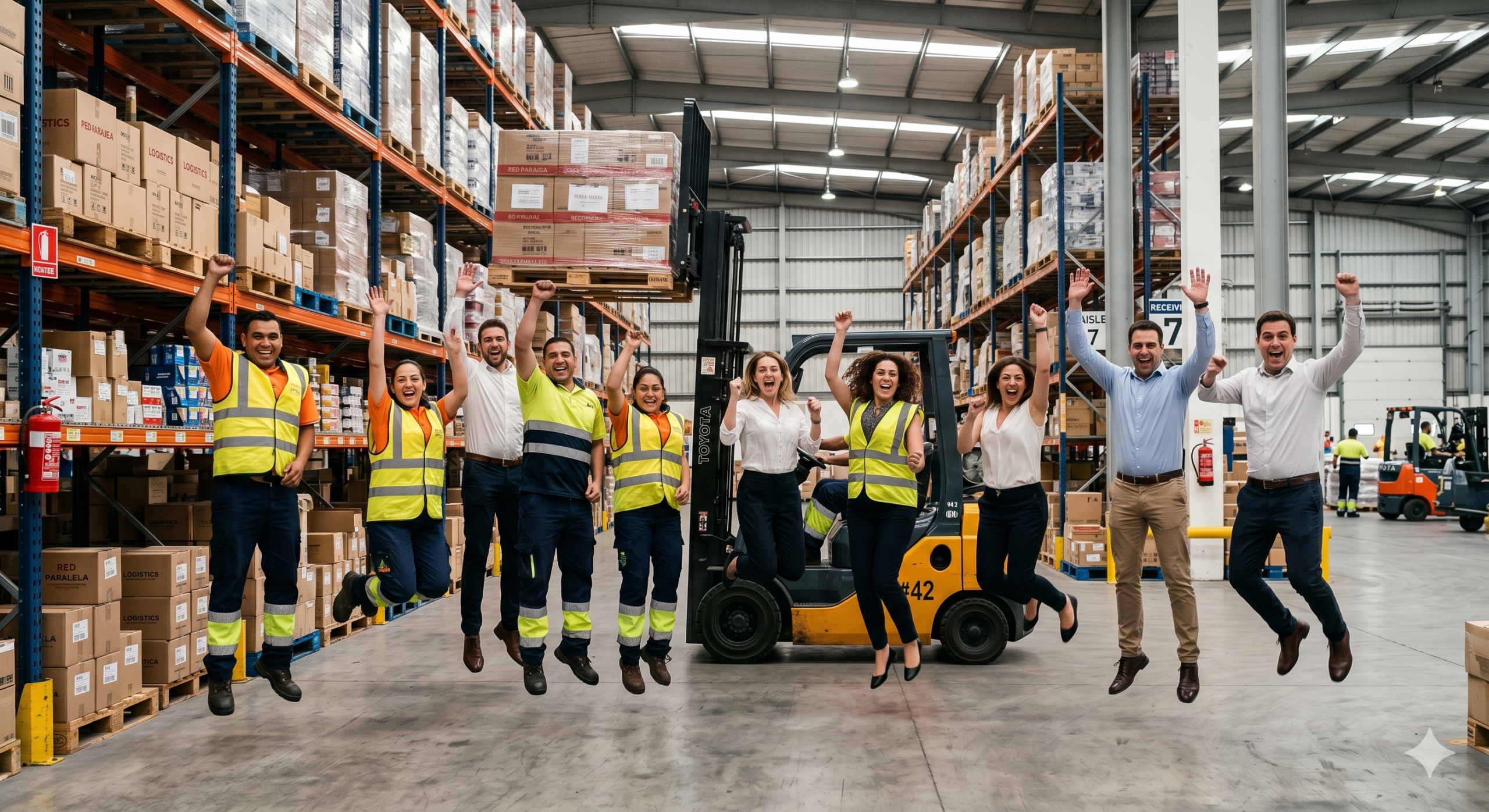
Oficinistas y mozos de almacén saltando de alegría en un almacén tras haber alcanzado sus objetivos.

The Delicate Balance of Incentives: Where Entitlement Ends and Responsibility Begins

In contemporary business culture, the pendulum seems to have swung heavily toward the side of rights and entitlements. While this is an undeniable social advancement, for a manager, it poses a critical challenge: how to recover a culture of responsibility without falling into authoritarian models?

The answer lies not in “what,” but in “how much” and “when.” The most honest way to reintroduce individual responsibility is through an incentive system that is fair, transparent, and, above all, real.

1. The Whole Ship or None: Why Incentivize Everyone?

A common mistake is segmenting incentives only for “key employees” or sales departments. However, a company’s efficiency is a transmission chain.

Consider the freight metaphor: if everyone rows and the ship reaches port early, everyone should share in the fuel savings or the freight profit. If we only reward the captain, the rest of the crew will have no reason to care about speed or the condition of the cargo. Collective responsibility is born when collective success has a direct impact on each person’s pocket.

2. KPIs Felt in the Day-to-Day

For an incentive to inspire, it cannot be an abstract formula calculated behind closed doors. It must be based on tangible values that the worker can influence through their daily behavior:

  • Quantifiable Productivity: In departments with measurable tasks, the incentive should reward agility without errors.

  • Monthly Net Commercial Margin: This is the true thermometer. When the team understands that protecting the margin (avoiding unnecessary discounts or billing errors) increases their variable pay, they become guardians of the business.

  • The Cost of Error: Real responsibility means that mistakes (shrinkage, breakages, or unpaid invoices) affect the result. An incentive is a reward for profit; if an unpaid invoice eats that profit, it is logical for the incentive to be affected. It is not a punishment; it is the reality of the market.

3. Rewarding Production, Not Just Presence

There is a fundamental concept that often gets blurred: no one can be paid for results they have not produced. A balanced incentive system must be linked to actual attendance. Sick leave or vacations, although consolidated labor rights, imply that the worker has not been present to generate that extra margin or monthly productivity. Therefore, it is natural for those periods to be deducted from the variable portion. An incentive is not an acquired right; it is a reward for the value contributed during effective working time.

4. The Golden Rule: The Cumulative System

Perhaps the most important point for a company’s survival is understanding that months are not isolated compartments. A bold incentive system must be cumulative.

If a month is exceptional but the year-to-date total shows a loss, distributing incentives would decapitalize the company and jeopardize everyone’s future. The incentive must guarantee that the company reaches the end of the year with profits. Only when the cumulative result is positive does the distribution make sense. This turns every employee into a strategic partner who watches over long-term financial health, not just the fleeting success of a single day.

Epilogue: Red Paralela’s DNA

This management model is not just a business school theory; it is our roadmap. At Red Paralela, we apply this cumulative and transversal system because we believe it is the only way to build a healthy company where rights are sustained on the foundation of shared responsibility. Because when everyone wins, the company grows; and when the company grows responsibly, we all win.

Beverage Distribution in Spain: How to Survive the Administrative Stranglehold in 2026

Un camión de reparto en la plaza de una ciudad aplastado por un mazo gigantesco

Administrative suffocation in wholesale beverage distribution: Comply with laws or sell product?

The wholesale beverage distribution sector in Spain is going through a critical phase. What was traditionally a business based on logistical efficiency and commercial relationships is becoming a race through bureaucratic obstacles. The convergence of new environmental regulations, digitized fiscal controls and market regulations is forcing qualified staff to spend more time filling out forms than optimizing routes or visiting clients.

In this article we analyze the regulations that, although with commendable objectives, are reducing the competitiveness of our companies by imposing tasks that add no real value for the customer.

1. The environmental maze: From RD 1055/2022 to the new European Regulation (PPWR)

Packaging management has become a massive statistical task for distributors. Royal Decree 1055/2022 already requires a detailed breakdown of weights and materials for every product reference placed on the market. But the challenge does not end there.

Starting on August 12, 2026, the new European Packaging Regulation (PPWR) will come into effect. This regulation introduces even stricter obligations:

      • Space minimization: Empty space inside grouping and transport boxes may not exceed 50%.

      • Supplier auditing: Wholesalers must request and archive certificates of conformity from each manufacturer to ensure packaging complies with the new recyclability standards.

      • ERP data registration: Management systems must be adapted to record the exact composition and recyclability class of each package.

Obligation Administrative Task Impact on Staff
Producer Registration Annual reporting of units, weights and materials. Very High (Months of data collection).
PPWR Certification Audit and archiving of supplier certificates. High (Technical and documentation workload).
Empty Space Control Physical and documentary verification of packaging. Medium (New warehouse protocols).

2. The Plastic Tax: A persistent “operational chaos”

Since its implementation, the tax of €0.45/kg on non-reusable plastic has been described by associations such as ANAIP as a source of legal uncertainty. The problem is not only the cost, but also traceability:

      • Impossible certifications: Getting international suppliers to provide the Spanish standard UNE-EN 15343:2008 is a titanic task that often ends with the company assuming the full tax cost due to lack of documentation.

      • Refund management: The procedure before the AEAT to recover the tax on exports is so complex that many SMEs give up, losing commercial margin.

3. Food Chain Law and the RECA Register

The reform of Law 12/2013 sought to balance the chain, but it has introduced contractual rigidity that clashes with the day-to-day dynamism of the sector.

      • RECA registration: Requires each contract and its modifications to be registered in the AICA digital registry before delivery takes place.

      • Destruction of agility: In a sector where offers change daily and volumes fluctuate, this constant “data entry” prevents quick deals and forces sales staff to act as data administrators.

4. Total fiscal surveillance: SILICIE, EMCS and VeriFactu

For those distributing alcohol, the digital tax burden is permanent. In addition to the already known SILICIE system (immediate reporting of special tax accounting books) and the EMCS system for the circulation of goods , new requirements are now being added:

      • VeriFactu (January/July 2026): All companies and self-employed professionals must implement systems for the immediate transmission of invoicing records to the AEAT.

      • Fiscal Stamps: Starting January 1, 2026, the commercialization of spirits with old fiscal stamps will be prohibited, requiring rigorous physical and documentary stock control to avoid serious penalties.

System Function Administrative Burden
SILICIE Real-time electronic accounting of alcohol. Very High (Reporting for every movement).
VeriFactu Immediate transmission of invoices to the tax authority. High (Investment in software and processes).
EMCS Control of the movement of excise goods. High (ARC code management).

5. The challenge of Urban Logistics (DUM-H)

Not all bureaucracy is in offices. Municipal regulations on Urban Goods Distribution (DUM-H) are suffocating delivery drivers:

      • Low Emission Zones (LEZ): Require specific authorizations for each vehicle in each municipality, with platforms that do not communicate with each other.

      • Insufficient loading times: The standard 30 minutes are unfeasible for reverse beverage logistics (collection of empty containers and kegs), generating an avalanche of fines that administrative staff must contest daily.

Conclusion: Toward a digitalization that frees rather than chains

The sum of these tasks —environmental, fiscal, contractual and logistical— consumes more than 1,500 hours per year in bureaucratic procedures for companies in our sector. That is time not spent finding new clients or improving our catalog.

What is the solution?

      1. Automation: Integrating the ERP with public systems (RECA, SILICIE, VeriFactu) is now a survival requirement, not an option.

      2. Administrative unification: Authorities must urgently apply the “only once” principle so companies do not have to report the same data to different ministries.

At RED PARALELA, we believe the value of a wholesaler lies in its service capacity and its knowledge of the market, not in its ability to fill out forms. We also believe it is time to rationalize the legislative ecosystem so those who truly move the economy can focus on their work.

What to do when a delivery route is not profitable

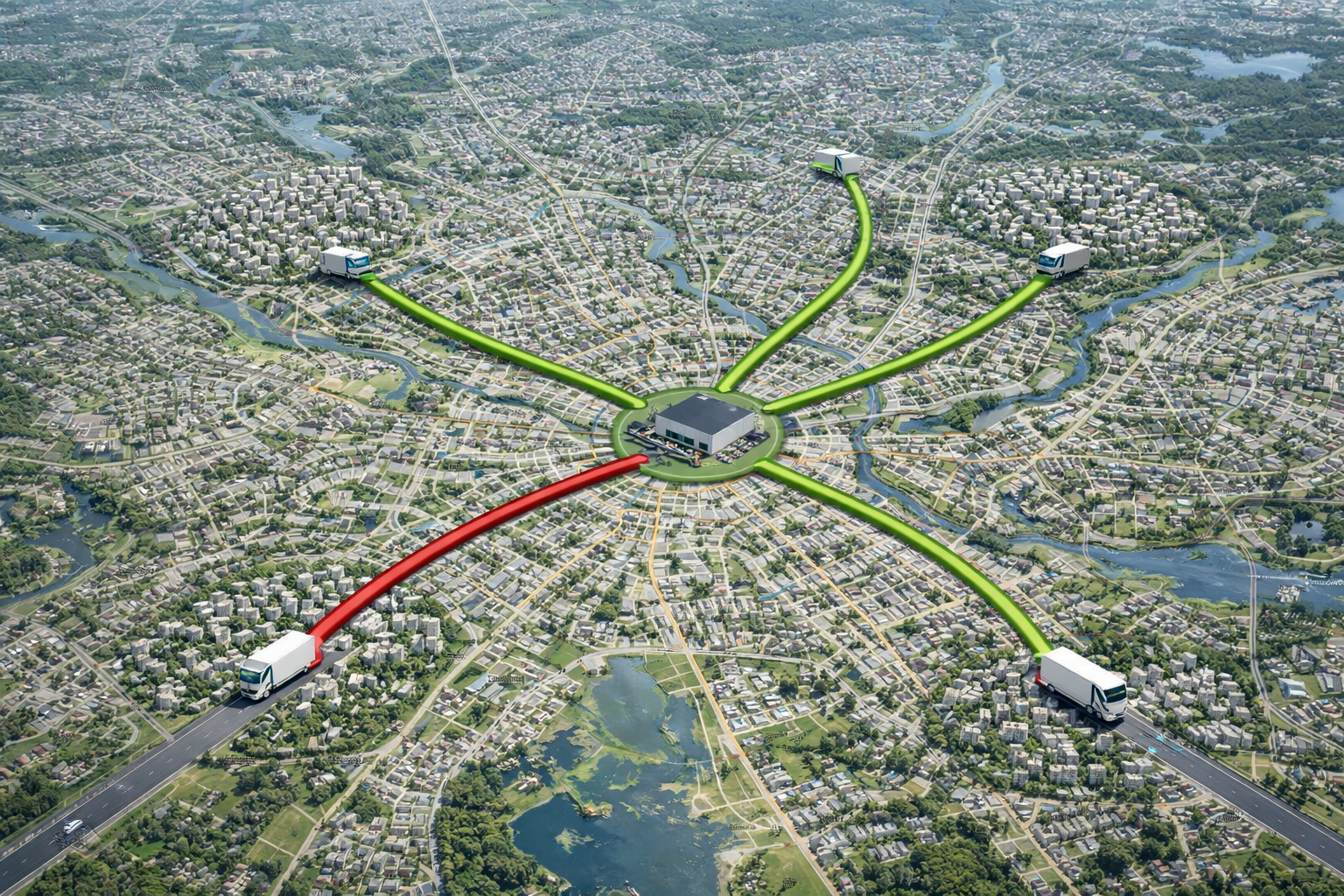
Ruta de reparto deficitaria

When a delivery route is not profitable, execute these 8 steps

In the previous article we saw how to measure the real profitability of a route. Not revenue. Not volume. The real margin after costs.

Now we start from a fact: you have already calculated it and that route is losing money. In addition, you are clear that logistically it is well organized.

Therefore,

the problem is not the map,

it is the model.

Here is the action plan.

1. Accept the diagnosis

The first step is not technical. It is mental.

If the numbers say it is losing money, it is losing money.

It is not compensated by:

      • high billing volume
      • having long-standing customers
      • “building image”
      • helping to fill the truck

A loss-making route does not become profitable out of pride.

2. Define your red line

If you do not define minimums, everything becomes negotiable.

Put in writing:

      • minimum margin per stop
      • minimum order per delivery
      • minimum viable frequency
      • minimum billing per route

What is not defined ends up being flexible.

And what is flexible ends up in losses.

3. Identify the real source of the problem

Rarely is the entire route the issue.

Usually there is a small group of customers who:

      • buy little
      • order too frequently
      • demand urgent deliveries
      • operate on very tight margins

Put names and numbers on it.
Profitability is not managed in the abstract.

4. Make one decision per customer

There are only three real options:

      1. Raise conditions (price, minimums, delivery charges)
      2. Change the service model (less frequency, fixed day, no urgencies)
      3. Stop serving

Everything else is postponing losses.

5. Execute the uncomfortable conversations

This is where most people hesitate.

It is not an emotional negotiation.
It is a model adjustment.

Clear and simple message:

“To maintain the sustainability of the service, we are applying these new conditions.”

Do not ask for permission. Communicate the conditions.

Those who value the service will adapt.
Those who only value price were probably not profitable.

6. Eliminate exceptions

Profitability dies in the exceptions:

      • “just this once”
      • “they are a long-standing customer”
      • “it makes up for it in high season”

Especially in seasonal areas, summer hides what winter destroys.

If you allow exceptions, you will return to the same point.

7. Align the sales team

If your salesperson keeps selling volume without a margin criterion, the problem will reappear.

Routes are not a logistics problem. They are the direct reflection of how you sell. If you do not change the commercial criteria, you will fill the route again with small, scattered and low-margin customers.

And you will repeat the cycle.

8. Measure the impact and decide

After applying changes, review at 30 and 60 days:

      • margin per stop
      • average ticket
      • actual frequency
      • logistics cost per order

If it improves, consolidate.

If it does not improve, the decision is structural: redesign or close.

Keeping a route in the red to “maintain presence” is financing losses with your good margin.

Conclusion

A non-profitable route is not a logistics failure.
It is a decision you are tolerating.

And every week that passes, you are financing it with your good margin.

Profitability of delivery routes in HORECA distribution

Camión en una ruta de reparto que pierde dinero

The route that invoices the most can make you lose money (and you don’t even know it)

There’s a question that almost no HORECA wholesaler asks themselves honestly:

Do I really know how much money each of my routes makes or loses?

Most answer quickly: “Yes, of course. That route sells a lot”.
But selling a lot doesn’t mean making money.

And this is where the problem starts.

In many distributors, routes are analysed by turnover. As if volume were a guarantee of profitability. It isn’t. Especially in coastal areas, where seasonality masks reality for several months a year.

The only serious way to measure a route is to calculate its real net margin. Every month.

What is a route’s profitability, really?

It’s not the commercial margin.
It’s not growth.
It’s not the number of customers.

The formula is this:

Real net invoicing
– real cost of goods
– direct route costs
– allocated indirect costs
= real net margin

If this calculation doesn’t exist, the business is making decisions blind.

the first common mistake: using gross invoicing

Profitability is calculated using real net invoicing minus:

– discounts
– rebates
– credit notes
– returns

the second mistake: forgetting what it costs to serve

A route doesn’t only cost fuel.

It costs:

– driver’s salary
– social security contributions
– maintenance
– vehicle lease or depreciation
– insurance
– tolls
– per diems

And it also consumes overhead:

– warehouse
– picking
– traffic / warehouse manager
– administration
– sales organisation
– inventory financing cost
– shrinkage

If these costs aren’t allocated, profitability is accounting fiction.

Seasonality distorts everything

For coastal distributors (very typical in Spain), it’s even more critical.

In summer:

      • invoicing spikes
      • frequency increases
      • urgent orders multiply
      • fuel consumption rises

In winter:

      • density drops
      • many kilometres remain the same
      • average ticket falls
      • cost per order spikes

A route can look excellent in August and be loss-making for six months a year. That’s why it’s not enough to analyse a good month. You have to look at:

      • monthly profitability
      • annual average
      • the difference between high and low season

The indicators that separate those who make money from those who merely survive

If a wholesaler wants to control real profitability, they should start measuring:

      • euros invoiced per kilometre
      • euros invoiced per stop
      • average gross margin per order
      • logistics cost per order
      • number of orders per customer per month

When the average gross margin per order is lower than the logistics cost per order, every delivery destroys value.

And this happens more often than it seems.

The real levers to make a route profitable

It’s not just about selling more. It’s about selling better.

    1. Increase density
      More invoicing per kilometre.
      More customers concentrated.
      Eliminate scattered customers that consume time and overhead.

    2. Increase the average ticket
      Set minimum order values.
      Reduce micro-orders.
      Bundle purchases.

    3. Adjust frequencies
      Many distributors deliver too often.
      Cutting one delivery per week can change the profitability of the entire route.

    4. Segment conditions
      Not all customers can have the same frequency or the same terms.

    5. Adapt structure to seasonality
      On the coast, you can’t have the same structure in January as you do in August.

Final reflection

In today’s HORECA environment, the wholesaler who invoices the most doesn’t win.
The winner is the one who knows exactly which routes generate net margin and which ones destroy it.

Because an unprofitable route isn’t fixed by selling more.
It’s fixed by measuring better and making uncomfortable decisions.

And that’s where the difference begins between surviving and building a solid business.

The intergenerational shift in HoReCa distribution: when growth is no longer about accumulation

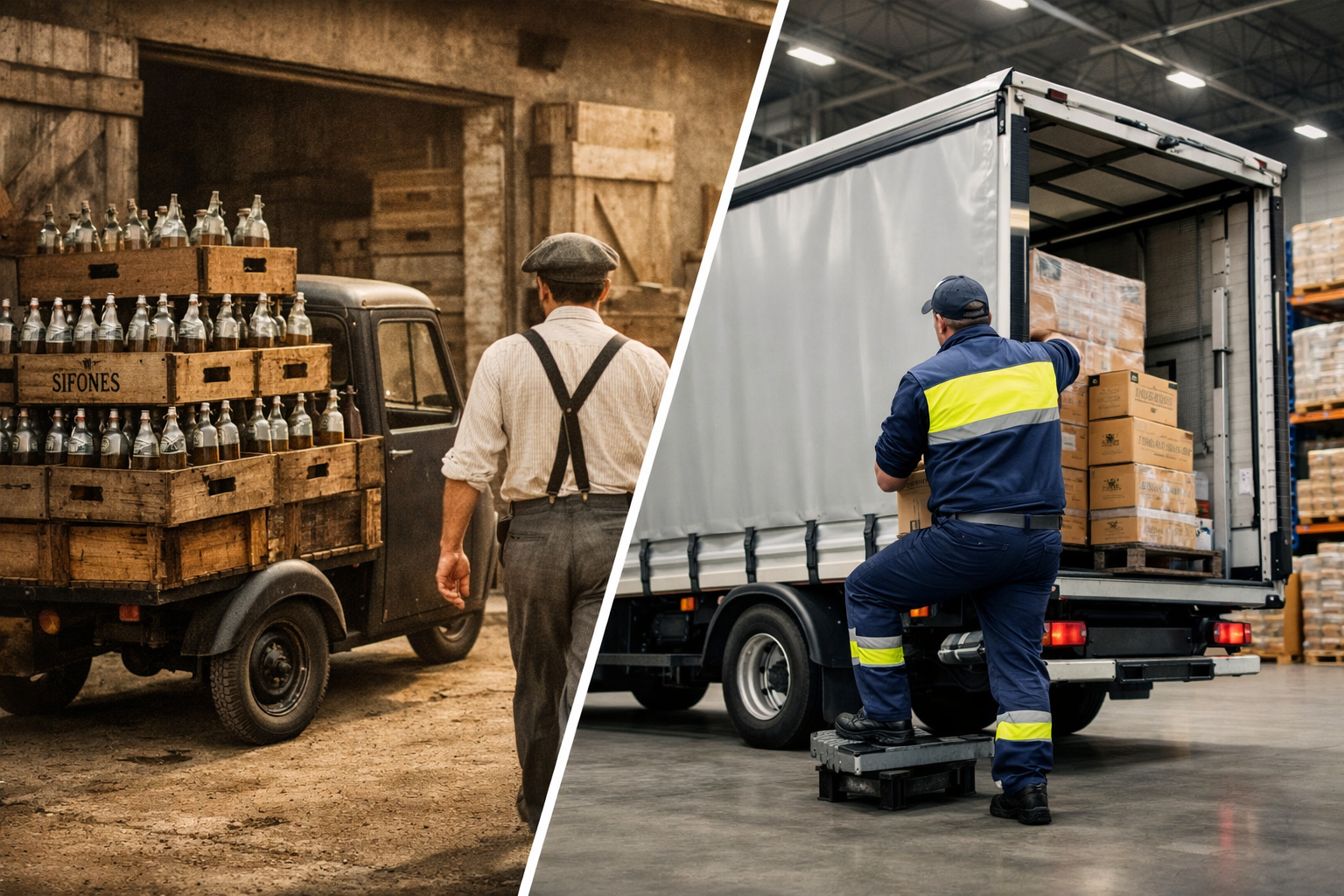
De la distribución artesanal al modelo logístico actual: una evolución que invita a reflexionar.

Where We Come From — and Why the Model Is Starting to Weigh Us Down.

Many beverage and soft drink distribution companies did not start out as distributors. They began as small local producers of soda water, siphon bottles, or soft drinks. Family businesses, closely tied to their territory, that grew by solving a simple problem: supplying drinks to the bars in their area.

Carbòniques Montaner is a clear example of that journey. It went from manufacturing siphon bottles in the 1930s to distributing water, then beer, and later soft drinks. The next step was a logical one: together with other distributors in the region, it created a buying group to better manage that growth, add more product lines, and gain autonomy and independence from manufacturers who put pressure on our company, fully aware of the leverage they held over it. Over time, it continued expanding the catalogue until it was distributing around 1,000 SKUs.

That model worked. And it worked well for many years. Until, gradually, we became Red Paralela, leaving behind the capillary, local delivery model that had accompanied us for so many decades.

Technology followed that evolution too: from the fax machine to the first IT systems, and from there to what Red Paralela is today—an extranet designed to organise and manage distributors’ parallel operations.

Three generations along this path.

Today, many distributors still build their business around one or two official brands that are the true backbone of their revenue. In many cases, more than 50% of the business depends on them. Around that core, there is a very broad range of brands and product families that “tag along”, but are not strategic.

And that “tag-along” range comes at a cost:

      • A growing labour cost: more sick leave and lower productivity than ever.
      • An ever-increasing financial cost.
        A logistics cost that is hard to justify.
      • And a management cost that never stops rising.
      • While the core brand sustains the business, everything else starts to weigh it down. More SKUs, more stock, more breakages, more errors, and more resources spent on products that do not create real value

On top of that, the current context is especially challenging. Labour costs rising out of control. A suffocating regulatory environment. New laws, procedures, and obligations piling up—and instead of helping, they make day-to-day operations harder and reduce the ability to be efficient.

      • More rules every day.
      • Less margin every day.

And that is where uncomfortable questions begin to appear:

      • Does it make sense to maintain structures designed for massive catalogues when the real business rests on three or four key manufacturers?
      • Wouldn’t it be more sensible to simplify, focus efforts, and be extremely efficient by representing only those manufacturers that truly support the distributor (now and in the future) and that the distributor can genuinely defend?
      • Could it be time to stop and rethink the model before the structural weight makes it unviable?

Rethinking the model is not always comfortable, but it is almost always necessary.

The Escalating Costs in HORECA Distribution: Data, Trends, Legislation, and Accounting Control

In recent years, distributors in the HORECA channel (Hotels, Restaurants, and Catering) have faced a growing challenge: the sustained increase in operating costs. Transportation, energy, labor, and environmental regulations are some of the factors putting pressure on margins and reducing competitiveness.

In this article, we analyze the most relevant data, the trends for the coming years, the legislation affecting the sector, and how to design a control system based on accounting data to help you anticipate and maintain profitability.

1. How Much Have Costs Risen in Recent Years?

Transportation and Fuel

Transportation costs have risen significantly, driven by fuel prices, tolls, and the shortage of drivers. Since 2020, the cumulative increase is around 25–30%, with peaks in 2022 due to the energy crisis.

Energy

The cost of electricity and gas for industrial use nearly doubled between 2021 and 2022, significantly increasing expenses for refrigeration, storage, and preservation. Although prices have stabilized, they remain well above pre-pandemic levels.

Labor

Spain’s Minimum Wage (SMI) has risen by more than 50% since 2018. This translates into higher labor costs and social contributions for distribution companies. The impact has been especially significant for warehouse staff and delivery drivers, while more qualified positions (office staff, sales representatives) have experienced smaller increases, although proportionate to updated agreements.

2. Trends for 2025 and Beyond

  • Mandatory Digitalization: Real-time control of inventory, sales, and margins using ERP (Enterprise Resource Planning) and BI (Business Intelligence) tools.
  • Logistics Optimization: Route planning and predictive data to reduce mileage and fuel consumption.
  • Supplier Consolidation: Fewer, more reliable suppliers with long-term agreements to ensure stability.
  • Dynamic Pricing Policies: More frequent price adjustments to adapt to changes in variable costs.

3. Legislation Driving Up Costs

The regulatory framework continues to add pressure:

  • Waste and Soil Contamination Law: Requires packaging management and compliance with recycling objectives.
  • Minimum Wage Increases: Directly impact payroll costs.
  • European Emission Regulations: Will affect vehicle fleets and logistics, requiring medium-term adaptations.

4. The Hidden Cost: More Taxes, More Paperwork, Less Productivity

In addition to direct increases in raw materials, transportation, and energy, there is a silent cost that grows every year: the administrative burden. Each new regulation means:

  • Extra office hours to prepare reports and filings.
  • Implementation or upgrading of ERP systems to comply with reporting requirements.
  • Continuous training for administrative staff.
  • Adaptation to more frequent inspections.
    These tasks do not add direct value to the customer, but they are mandatory. The result: more work, more resources, and higher fixed costs, reducing the distributor’s agility.

5. How to Design a Control System Based on Accounting Data

An accounting control system allows you to move from reaction to anticipation. Here are the key steps:

Step 1. Classify Costs by Responsibility Centers

Group expenses by area: transportation, warehouse, purchasing, sales, personnel, and administration. This will show where cost increases are concentrated.

Step 2. Define Key Performance Indicators (KPIs)

  • Margin by product line.
  • Average delivery cost.
  • Logistics ratio: (Transport + warehouse costs) divided by revenue.
  • Administrative hours per processed order.

Step 3. Automate Data Capture

Integrate invoice, logistics, and sales data into an ERP or BI system that generates automatic reports.

Step 4. Analyze Trends and Set Alerts

Compare key indicators month by month. Set alerts when delivery costs rise more than 10% compared to the previous quarter.

Step 5. Simulate Scenarios

What happens if fuel prices rise by 10%? What if a key customer is lost? Simulation helps you prepare action plans and avoid surprises.

Conclusion

The escalation of costs in HORECA distribution will not stop in the short term. However, a distributor who works with accurate data can anticipate changes, negotiate better with suppliers, and maintain profitability. The key is not just saving, but making informed decisions.

How Can We Help You?

Our mission at RED PARALELA is to be your trusted partner: offering competitive prices and impeccable service all year round, without legal complications or risks from mismanagement that could further increase your indirect costs.