News

The Dangers of Imported Coca-Cola: What You Need to Know

Inspección sanitaria Coca-cola

The “bargain” that stayed at the port: Why words can save (or sink) your business

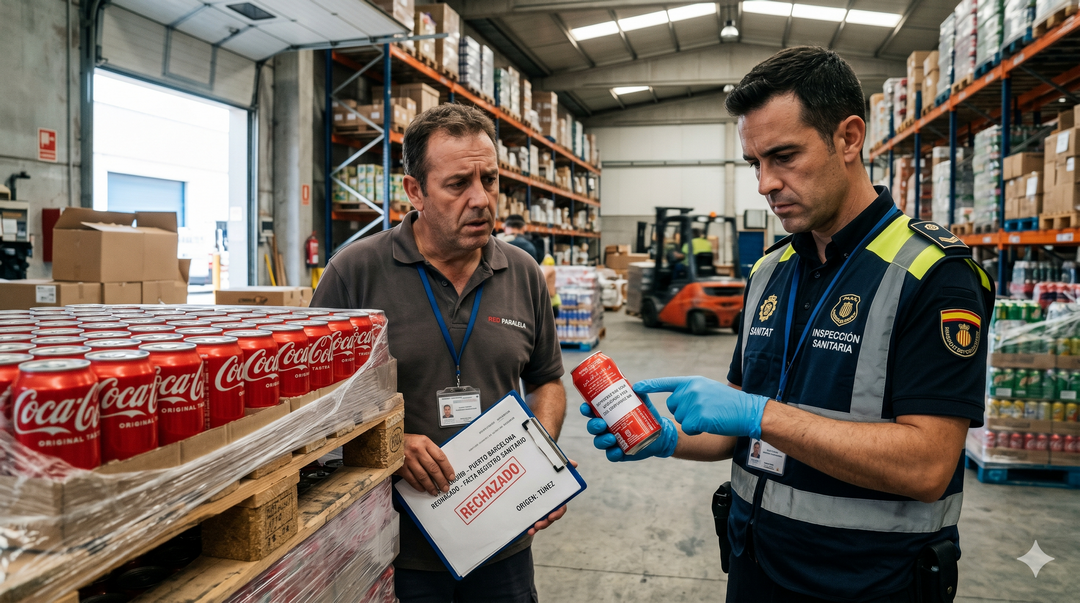
Imagine the scene: a distributor receives an offer that seems unbeatable. Trucks of Coca-Cola at a price that pulverizes the competition. The word “Import” is written on the invoice. The order is confirmed, paid for, and… suddenly, the merchandise is blocked at the Port of Barcelona. Or even worse: you receive an inspection visit at your warehouse and they ask for the importer’s health registry on the labeling.

What seemed like the deal of the year turns into a nightmare of lawyers, fines, and sealed pallets. At Red Paralela, we know this story well, because we have spent decades defending the difference between doing things right and playing with fire.

The myth of “foreign” Coca-Cola

Many speak of imported Coca-Cola as if it were an exotic product brought from far-off lands. But here is the first legal reality: If it comes from the European Union, it is not an import. It is, quite simply, the exercise of your right to buy within a single market.

Bringing products from France, Poland, or Germany is legal, safe, and transparent. At Red Paralela, we do not “import”; we operate within the intra-community space. The difference? The full weight of European law supports every move we make.

When cheap comes very, very expensive

True “importing” is that which comes from outside the EU (like that famous batch of Tunisian cans that ended up paralyzed at Barcelona customs). This is where the story takes a turn on two fronts:

  1. Blocking due to industrial property: Coca-Cola has ironclad contracts with its manufacturers outside Europe. If you try to bring product from Egypt or Tunisia into the EU without authorization, the brand has the legal right to stop you in your tracks. The product may be “original,” but its commercialization here is illegal, and the stock will end up destroyed or blocked.

  2. The health risk: The law requires the label to show the name and health registry number of the importer. Without this, in the event of any inspection or public health issue, you are the one legally responsible. Buying outside the EU without these guarantees is, literally, putting your company at risk.

A victory with a name and surname: Red Paralela

We are not speaking from hearsay. At Red Paralela, we have led the battle so that you can enjoy the benefits of the common market without fear.

After 10 years of litigation and enormous legal costs, we achieved a definitive judicial victory in the Supreme Court (September 2023). It wasn’t someone else’s victory; it was our own fight that set a legal precedent. The justice system agreed with us: once the brand puts the product on sale in Europe, it cannot prevent it from circulating freely.

We have invested a decade of resources to shield your right to free competition.

The moral of this story is clear:

Do not gamble with “bargains” that cross dangerous borders outside the EU. At Red Paralela, we offer you the efficiency of the European market with the peace of mind that every can complies with the law and is backed by a legal struggle that we already won for you.

Because a good operation is not the one that saves you a few cents today, but the one that allows you to sleep peacefully tomorrow.

Incentives and Responsibility: A System for Real Profitability

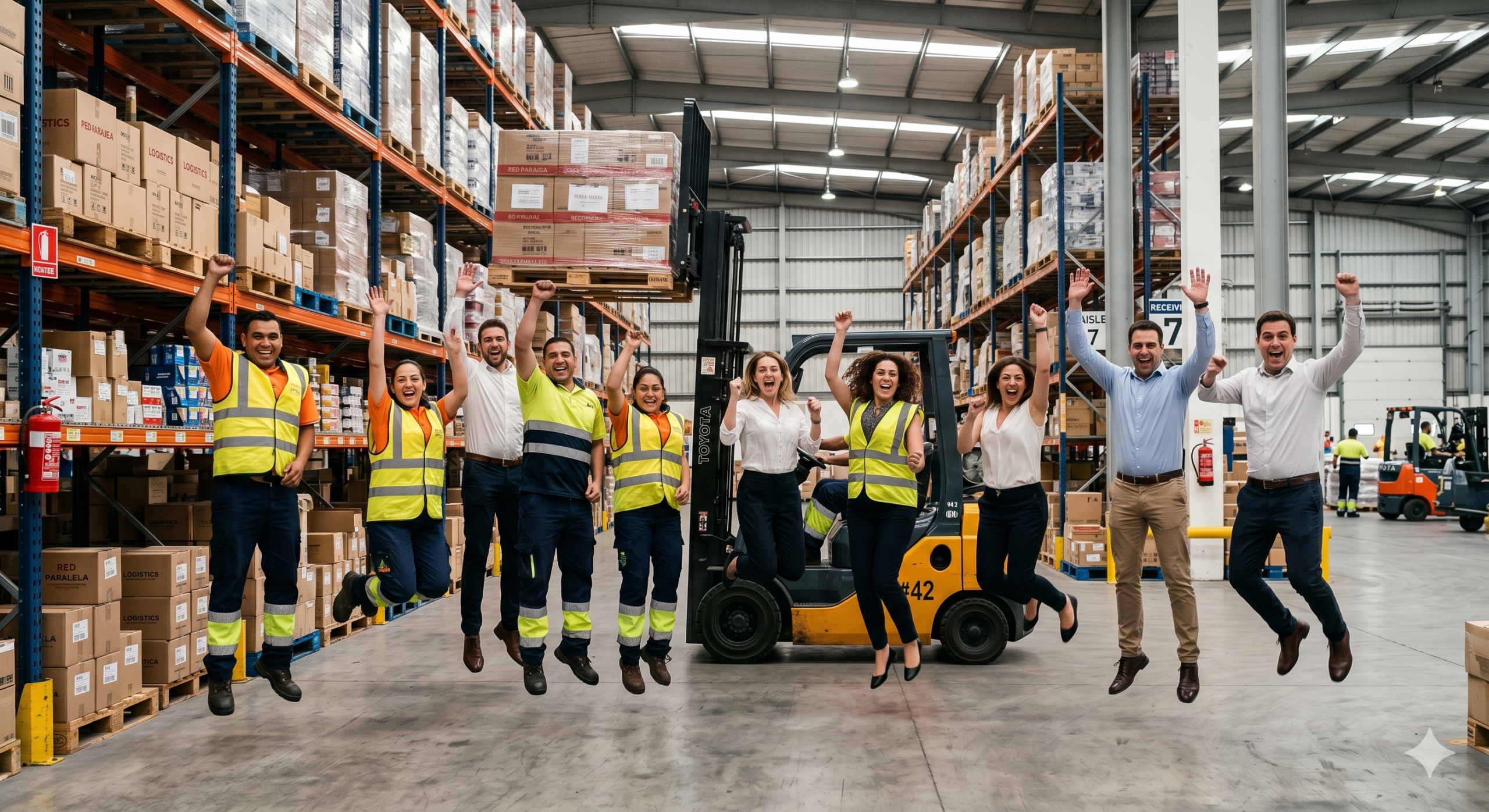
Oficinistas y mozos de almacén saltando de alegría en un almacén tras haber alcanzado sus objetivos.

The Delicate Balance of Incentives: Where Entitlement Ends and Responsibility Begins

In contemporary business culture, the pendulum seems to have swung heavily toward the side of rights and entitlements. While this is an undeniable social advancement, for a manager, it poses a critical challenge: how to recover a culture of responsibility without falling into authoritarian models?

The answer lies not in “what,” but in “how much” and “when.” The most honest way to reintroduce individual responsibility is through an incentive system that is fair, transparent, and, above all, real.

1. The Whole Ship or None: Why Incentivize Everyone?

A common mistake is segmenting incentives only for “key employees” or sales departments. However, a company’s efficiency is a transmission chain.

Consider the freight metaphor: if everyone rows and the ship reaches port early, everyone should share in the fuel savings or the freight profit. If we only reward the captain, the rest of the crew will have no reason to care about speed or the condition of the cargo. Collective responsibility is born when collective success has a direct impact on each person’s pocket.

2. KPIs Felt in the Day-to-Day

For an incentive to inspire, it cannot be an abstract formula calculated behind closed doors. It must be based on tangible values that the worker can influence through their daily behavior:

  • Quantifiable Productivity: In departments with measurable tasks, the incentive should reward agility without errors.

  • Monthly Net Commercial Margin: This is the true thermometer. When the team understands that protecting the margin (avoiding unnecessary discounts or billing errors) increases their variable pay, they become guardians of the business.

  • The Cost of Error: Real responsibility means that mistakes (shrinkage, breakages, or unpaid invoices) affect the result. An incentive is a reward for profit; if an unpaid invoice eats that profit, it is logical for the incentive to be affected. It is not a punishment; it is the reality of the market.

3. Rewarding Production, Not Just Presence

There is a fundamental concept that often gets blurred: no one can be paid for results they have not produced. A balanced incentive system must be linked to actual attendance. Sick leave or vacations, although consolidated labor rights, imply that the worker has not been present to generate that extra margin or monthly productivity. Therefore, it is natural for those periods to be deducted from the variable portion. An incentive is not an acquired right; it is a reward for the value contributed during effective working time.

4. The Golden Rule: The Cumulative System

Perhaps the most important point for a company’s survival is understanding that months are not isolated compartments. A bold incentive system must be cumulative.

If a month is exceptional but the year-to-date total shows a loss, distributing incentives would decapitalize the company and jeopardize everyone’s future. The incentive must guarantee that the company reaches the end of the year with profits. Only when the cumulative result is positive does the distribution make sense. This turns every employee into a strategic partner who watches over long-term financial health, not just the fleeting success of a single day.

Epilogue: Red Paralela’s DNA

This management model is not just a business school theory; it is our roadmap. At Red Paralela, we apply this cumulative and transversal system because we believe it is the only way to build a healthy company where rights are sustained on the foundation of shared responsibility. Because when everyone wins, the company grows; and when the company grows responsibly, we all win.

Solutions for Rising Fuel Costs

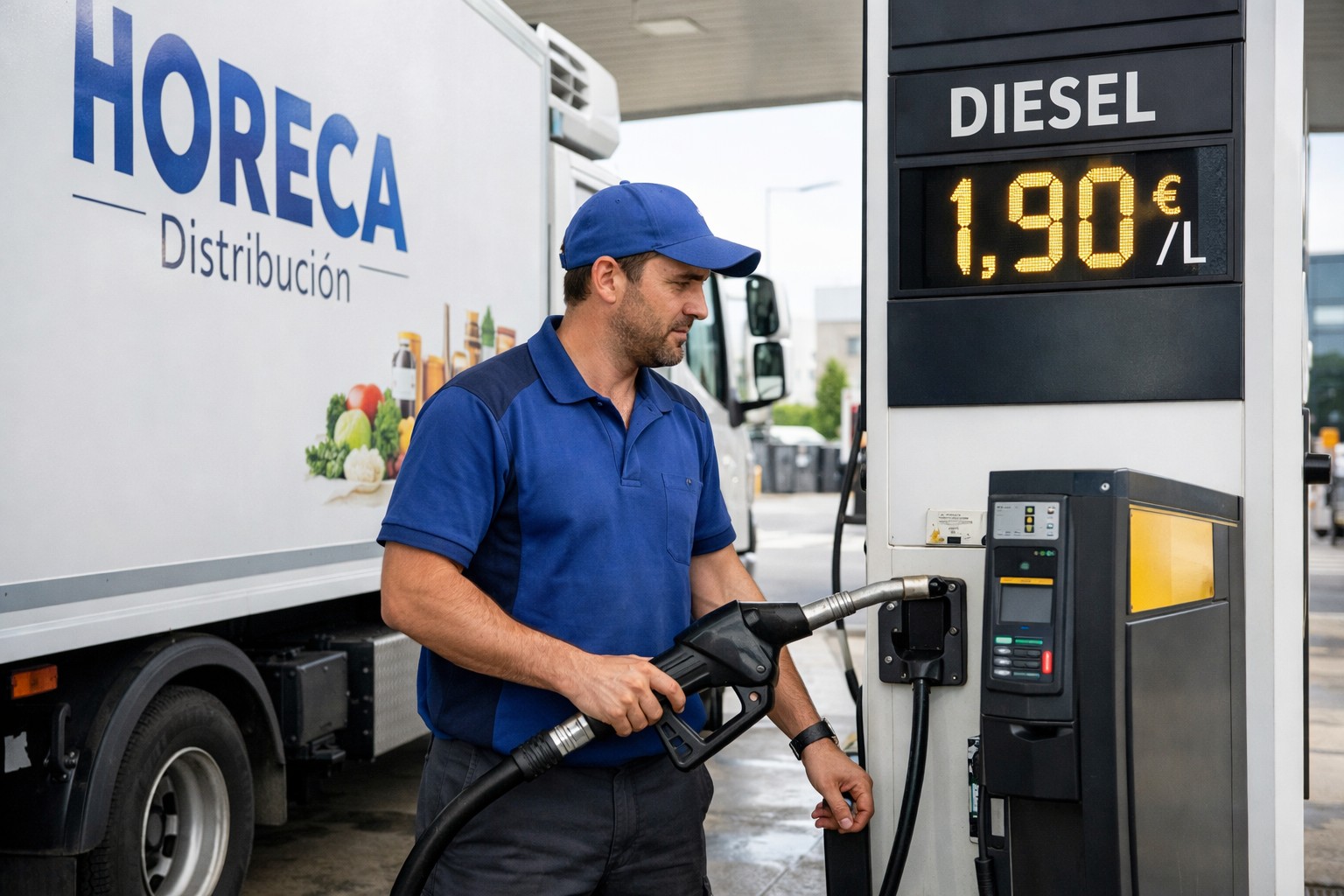
repartidor repostando diesel caro

Solutions for Rising Fuel Costs

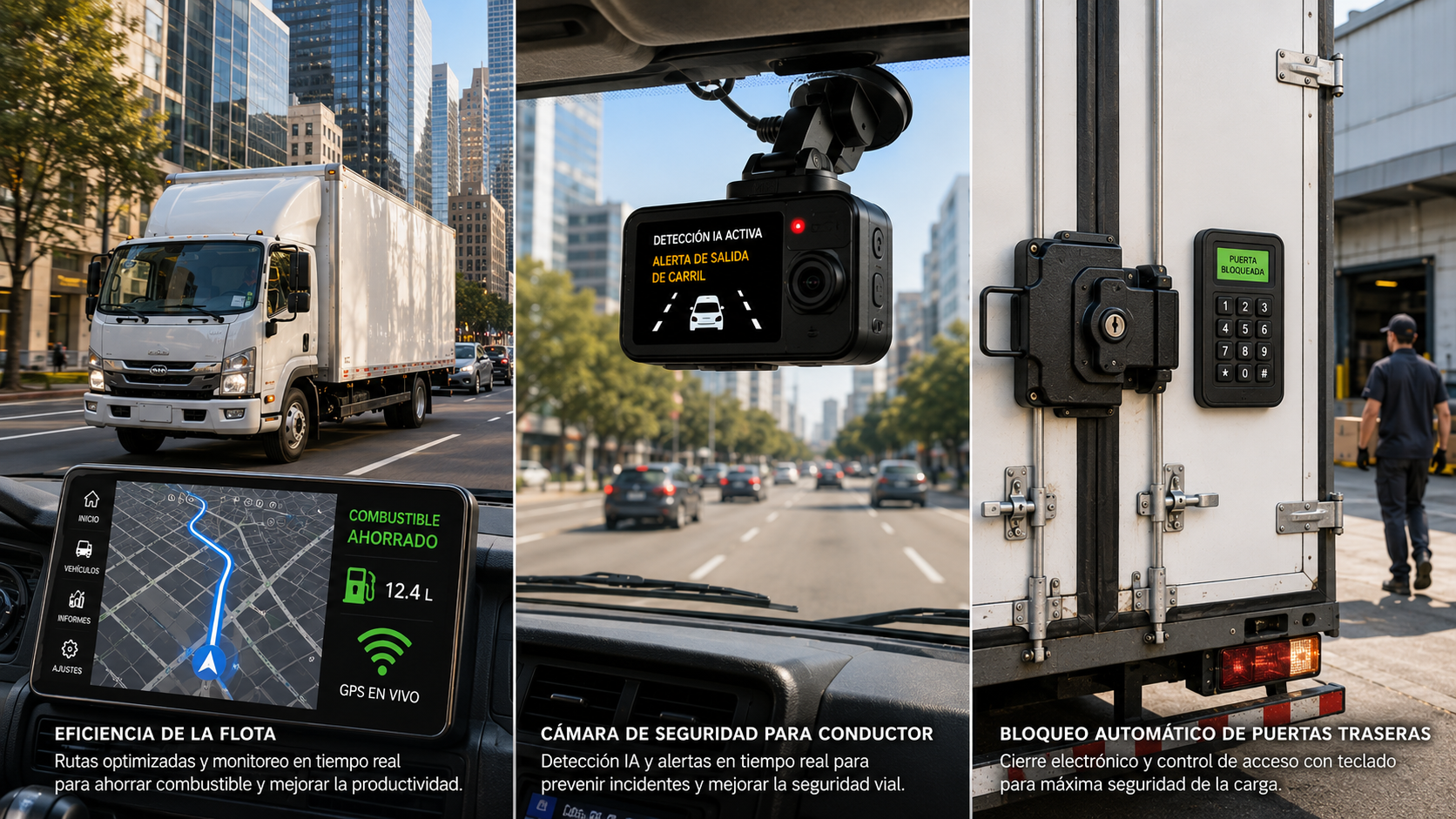
It’s six in the morning. Your delivery driver starts the vehicle and the first thing he does is check the fuel gauge. Yesterday he filled it at €1.90/l (Source: Average Fuel Prices, April 2026). That gesture, which used to be pure routine, is now the start of a countdown: every kilometer that vehicle travels through the city center costs 20.4% more than just a year ago (Source: MITMA Cost Variation Index).

The problem is that while costs are taking the elevator up, Horeca distribution profitability seems to be stuck in the basement. If you don’t want your fleet’s fuel tank to swallow up the entire year’s profit, these are the cards you have on the table:

1. Escaping the Labyrinth of Urban Inefficiencies

Urban delivery has always been complex, but new restrictions and Low Emission Zones (LEZ) have changed the rules. Your vehicles can no longer easily enter certain streets, they have to take detours, and they waste an average of 20 minutes looking for a loading and unloading zone that is almost never free.

According to the DUM-H 2025 study by Fedis Horeca, commercial speed in urban centers has dropped by 15%. This means your driver makes fewer stops per hour, but your engine consumes much more fuel being stuck in traffic or idling. The first option is clear: renegotiate routes not by proximity, but by energy efficiency windows.

2. The “Taboo” of Law 15/2009: Your Legal Shield

Many distributors fear that applying price increases will drive away hospitality clients, but the law is your best ally. Article 38 of Law 15/2009 mandates a review of the transport price when diesel rises by more than 5%. It is not a suggestion; it is a legal right.

Distributors who will make it to 2027 are those who have stopped being afraid and have started breaking down the energy surcharge on every delivery note transparently. They have understood that transport can no longer be a “gift” included in the price of the case.

3. The JBP: Bringing the Manufacturer to the Table

If you have a partnership agreement with a major brand, you have a JBP (Joint Business Plan). Basically, it is the Joint Business Plan where you agree on how to grow together. Traditionally, this agreement served to set how many cases you were going to sell, but in 2026, the JBP must be a pact for logistical survival.

You cannot continue to assume the same level of service if the manufacturer does not take shared responsibility. The real options here are:


  • Demand minimum orders: If the delivery is not profitable due to fuel costs, the order should not leave the warehouse.

  •  

  • Capillarity compensation: The manufacturer must financially support delivery in critical zones or accept a reduction in visiting days to consolidate cargo.

What is the sector really doing?

The market has already split into three very defined groups (Source: Horeca Distribution Barometer Q1-2026):


  • The “Resistant” (60%): They are taking the hit by cutting commercial offers. They have stopped aggressive promotions to try and let that extra margin cover the diesel gap. This is a temporary measure that doesn’t solve the core problem.

  •  

  • The “Strategic” (25%): They have implemented service fees by zone. If the client is in a historic center or a high-restriction zone, they pay a surcharge for the logistical difficulty of the delivery.

  •  

  • The “Efficient” (15%): They have connected their ERP to smart routing systems, reducing kilometers traveled by 12%. They know exactly what each stop costs them and, if a client is losing money due to their location, they renegotiate terms immediately.

Conclusion

Diesel at €1.90/l has arrived to remind us that the “courtesy delivery” model is dead. Survival doesn’t depend on selling more cases, but on delivering each one of them intelligently.

The end of delivery as we know it

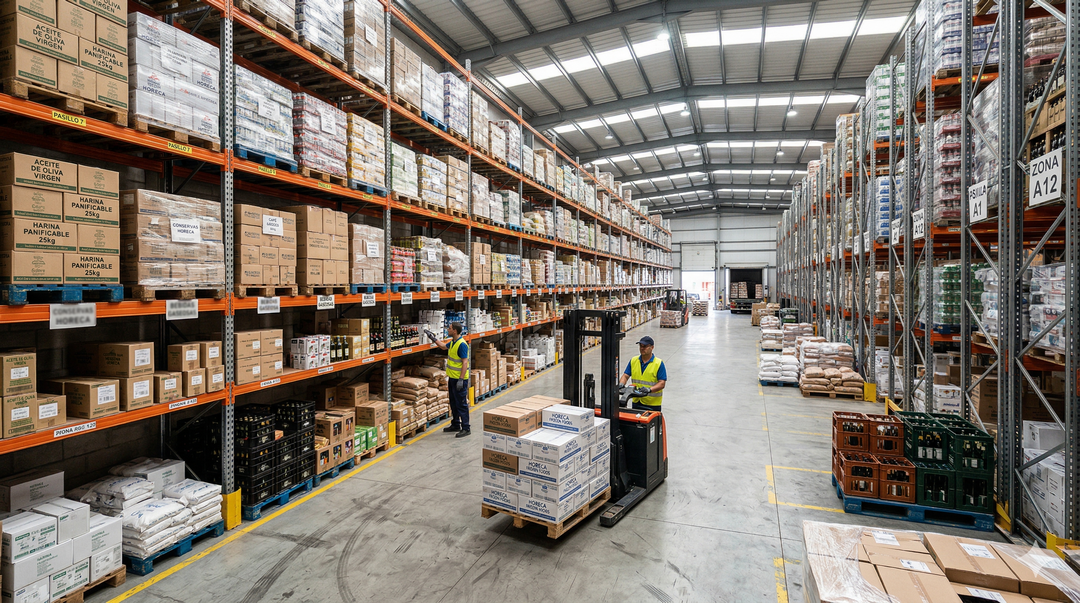
Un almacén logístico con todo tipo de mercancías y dos operarios trabajando

Towards the “Single Operator”? A Hypothesis on the End of Goods Distribution as We Know It

If you step out onto any busy street in a major city at ten in the morning, you’ll witness a scene that would be almost comical if it weren’t so inefficient: five vans from five different companies, double-parked, delivering five orders to the same building.

In other sectors, the trend has been clear: consolidate or perish. Yet last-mile logistics has remained a stronghold of individualism… until now. The question we raise today at Red Paralela is not whether the model will change, but how much time the current model has left before it collapses.

The Wall Ahead: The Triple Threat

Traditional delivery is colliding with three realities that can no longer be avoided:

  1. Runaway cost escalation: Fuel, fleet maintenance and, above all, labour costs are making the margin per delivery increasingly negligible.

  2. Legislative pressure and Low Emission Zones (LEZ): Municipal regulations are no longer suggestions; they are physical barriers. Entering city centres is (and will be) an expensive and restricted privilege.

  3. Customer expectations: We want everything “yesterday”, but we don’t want to see vans blocking our streets or breathe their fumes.

Logistics Integration: Utopia or Necessity?

The idea we put forward is ambitious: a unified distribution network. Imagine that, instead of each distributor maintaining its own infrastructure as today, there are shared facilities where goods are consolidated before entering the urban environment.

What would we gain from this “shared logistics” model?

  • Real load optimisation: vans and trucks with fewer, fuller loads.

  • Drastic reduction in emissions: fewer vehicles on the road means cleaner cities and companies that finally meet their sustainability targets without going bankrupt.

  • Savings on operating costs: by sharing infrastructure and transport, fixed costs are spread. There is strength in unity, but in logistics, there is also profitability.

From Competition to “Coopetition”

We know what you’re thinking: “How am I supposed to hand my goods over to a competitor or an integrated third party?”. This is where the shift in mindset comes in.

In a globalised world, competitive advantage should no longer be about who has the fastest van, but about who manages information and customer service better. Logistics must move from being a war of physical assets to a pursuit of excellence in data management.

The future of distribution does not lie in having more vehicles on the street, but in having fewer, better utilised and fully integrated into a common ecosystem.

Are We Ready?

At Red Paralela we believe that integration is not merely a possibility — it is the only viable path forward. The current model is exhausting its last reserves of efficiency. The transition towards shared urban hubs and integrated fleets will be painful for those who resist, but a golden opportunity for those who choose to lead it.

What do you think? Do you see a future where you and your competitors share the same delivery vehicle to protect your margins?


AI in HORECA Distribution: Transforming Customer Service

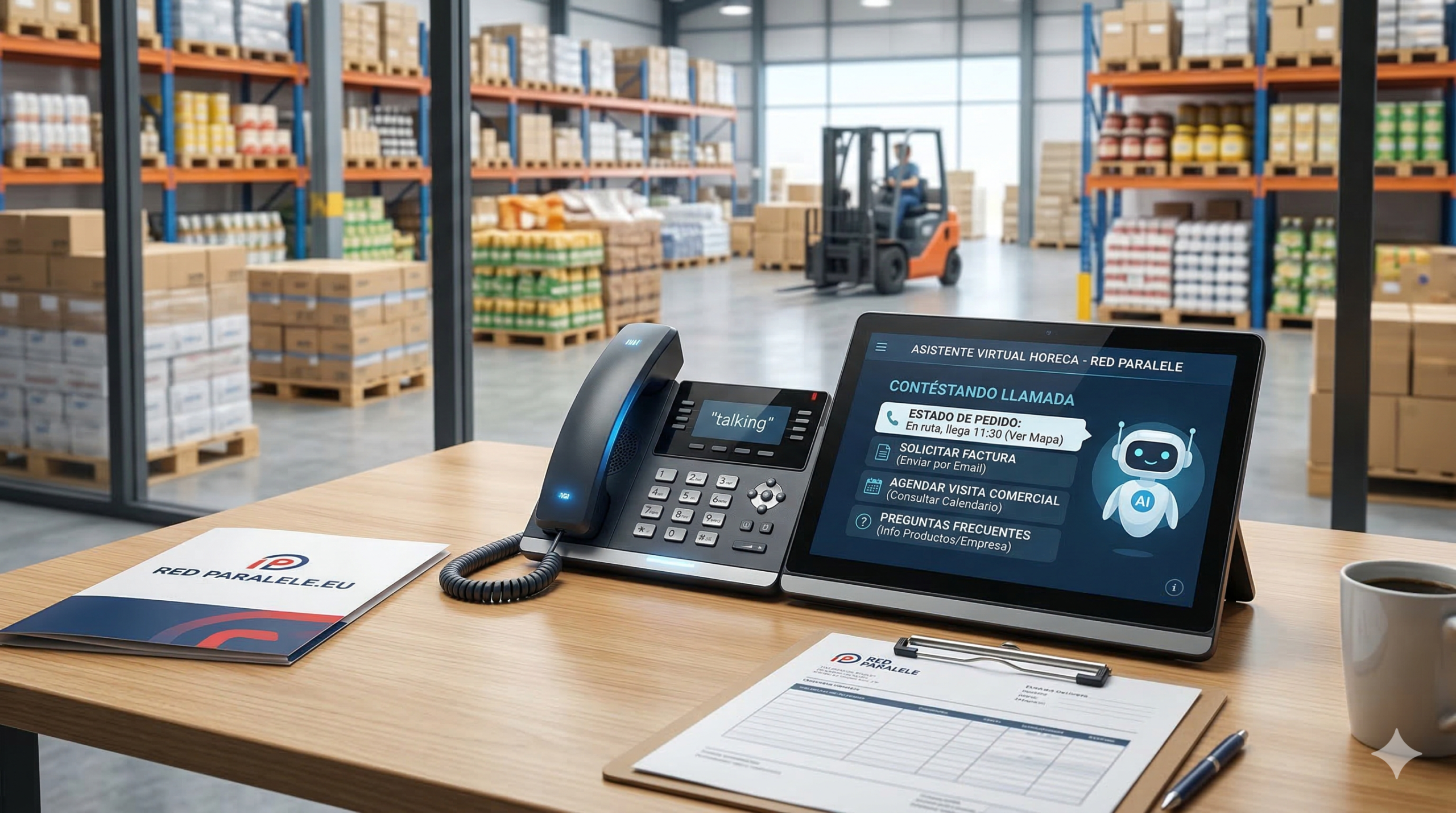
Atención al cliente con inteligencia artificial en distribución horeca

AI in HORECA distribution: Why a wholesaler’s phone can no longer afford to “communicate”

In the fast-paced day-to-day of the HORECA channel, time is the most expensive ingredient. For a wholesale distributor, managing calls during “peak hours” is often a bottleneck: last-minute orders, queries about lost invoices, or the eternal question “where is my truck?”.

Digitalization has advanced significantly with e-commerce platforms, but the landline phone remains the trusted channel for many customers. The good news is that, thanks to Artificial Intelligence, this traditional channel has become a high-efficiency tool.

The Voice Agent: Your new “employee” that never rests

Unlike old “press 1 for sales” switchboards, today’s AI voice agents hold natural conversations. They understand context, don’t get tired and, most importantly, are integrated with company data.

What can this technology actually do for a HORECA wholesaler?

1. Intelligent Reception and Routing

The agent answers the call on the first ring. It identifies whether the customer needs to speak with accounting, their assigned sales representative, or the warehouse.

  • The benefit: No more hold music and endless call transfers. The customer reaches the right person immediately.

2. On-the-fly Document Management

It’s common for a restaurant owner to call asking for an invoice for their accountant or a quote for a special event.

  • The solution: The AI accesses the ERP, locates the document and sends it via email or WhatsApp in seconds, while continuing the conversation with the customer. No human intervention.

3. Real-time Order Status

“What time will my order arrive today?” This is the most frequently asked question.

  • The solution: Being connected to logistics, the AI informs about the expected delivery window or any incidents on the route, reducing stress for both the customer and the customer service team.

4. Answering Questions and FAQs

From checking allergens of a specific product to knowing the minimum order for a particular area, the AI acts as a living company manual, accurately answering any technical question about the catalog.

5. Automated Sales Scheduling

If a customer identifies a need that requires personal attention, the AI doesn’t just take note: it can check the sales representative’s schedule for that area and book a visit directly. This ensures no business opportunity is lost due to administrative oversight.

Reflection: Implementing AI is not about replacing human interaction, but freeing it from repetitive tasks so it can focus on what truly adds value: personal relationships and strategic advice.

Towards smarter distribution

At Red Paralela, we believe that operational efficiency is the key for the HORECA sector to keep growing. This forward-looking vision and continuous technological evolution are made possible thanks to our innovation ecosystem, where we rely on the technical support of grau.ad (a group company), who help us integrate these cutting-edge solutions into the day-to-day of distribution.

The future of wholesale distribution is not just about moving boxes; it’s about moving information quickly, accurately and humanly. Is your phone ready for the next level?


Beverage Distribution in Spain: How to Survive the Administrative Stranglehold in 2026

Un camión de reparto en la plaza de una ciudad aplastado por un mazo gigantesco

Administrative suffocation in wholesale beverage distribution: Comply with laws or sell product?

The wholesale beverage distribution sector in Spain is going through a critical phase. What was traditionally a business based on logistical efficiency and commercial relationships is becoming a race through bureaucratic obstacles. The convergence of new environmental regulations, digitized fiscal controls and market regulations is forcing qualified staff to spend more time filling out forms than optimizing routes or visiting clients.

In this article we analyze the regulations that, although with commendable objectives, are reducing the competitiveness of our companies by imposing tasks that add no real value for the customer.

1. The environmental maze: From RD 1055/2022 to the new European Regulation (PPWR)

Packaging management has become a massive statistical task for distributors. Royal Decree 1055/2022 already requires a detailed breakdown of weights and materials for every product reference placed on the market. But the challenge does not end there.

Starting on August 12, 2026, the new European Packaging Regulation (PPWR) will come into effect. This regulation introduces even stricter obligations:

      • Space minimization: Empty space inside grouping and transport boxes may not exceed 50%.

      • Supplier auditing: Wholesalers must request and archive certificates of conformity from each manufacturer to ensure packaging complies with the new recyclability standards.

      • ERP data registration: Management systems must be adapted to record the exact composition and recyclability class of each package.

Obligation Administrative Task Impact on Staff
Producer Registration Annual reporting of units, weights and materials. Very High (Months of data collection).
PPWR Certification Audit and archiving of supplier certificates. High (Technical and documentation workload).
Empty Space Control Physical and documentary verification of packaging. Medium (New warehouse protocols).

2. The Plastic Tax: A persistent “operational chaos”

Since its implementation, the tax of €0.45/kg on non-reusable plastic has been described by associations such as ANAIP as a source of legal uncertainty. The problem is not only the cost, but also traceability:

      • Impossible certifications: Getting international suppliers to provide the Spanish standard UNE-EN 15343:2008 is a titanic task that often ends with the company assuming the full tax cost due to lack of documentation.

      • Refund management: The procedure before the AEAT to recover the tax on exports is so complex that many SMEs give up, losing commercial margin.

3. Food Chain Law and the RECA Register

The reform of Law 12/2013 sought to balance the chain, but it has introduced contractual rigidity that clashes with the day-to-day dynamism of the sector.

      • RECA registration: Requires each contract and its modifications to be registered in the AICA digital registry before delivery takes place.

      • Destruction of agility: In a sector where offers change daily and volumes fluctuate, this constant “data entry” prevents quick deals and forces sales staff to act as data administrators.

4. Total fiscal surveillance: SILICIE, EMCS and VeriFactu

For those distributing alcohol, the digital tax burden is permanent. In addition to the already known SILICIE system (immediate reporting of special tax accounting books) and the EMCS system for the circulation of goods , new requirements are now being added:

      • VeriFactu (January/July 2026): All companies and self-employed professionals must implement systems for the immediate transmission of invoicing records to the AEAT.

      • Fiscal Stamps: Starting January 1, 2026, the commercialization of spirits with old fiscal stamps will be prohibited, requiring rigorous physical and documentary stock control to avoid serious penalties.

System Function Administrative Burden
SILICIE Real-time electronic accounting of alcohol. Very High (Reporting for every movement).
VeriFactu Immediate transmission of invoices to the tax authority. High (Investment in software and processes).
EMCS Control of the movement of excise goods. High (ARC code management).

5. The challenge of Urban Logistics (DUM-H)

Not all bureaucracy is in offices. Municipal regulations on Urban Goods Distribution (DUM-H) are suffocating delivery drivers:

      • Low Emission Zones (LEZ): Require specific authorizations for each vehicle in each municipality, with platforms that do not communicate with each other.

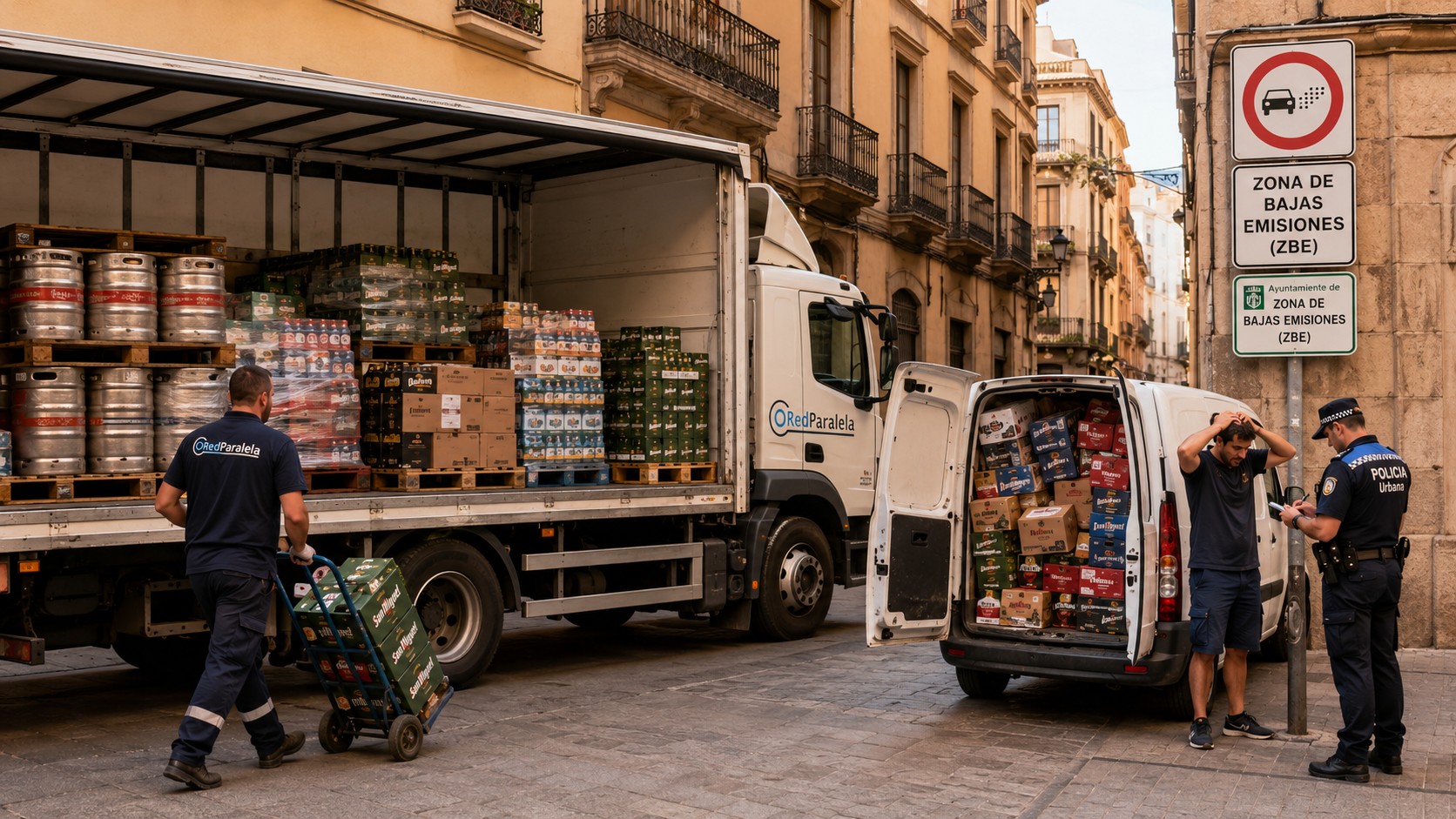
      • Insufficient loading times: The standard 30 minutes are unfeasible for reverse beverage logistics (collection of empty containers and kegs), generating an avalanche of fines that administrative staff must contest daily.

Conclusion: Toward a digitalization that frees rather than chains

The sum of these tasks —environmental, fiscal, contractual and logistical— consumes more than 1,500 hours per year in bureaucratic procedures for companies in our sector. That is time not spent finding new clients or improving our catalog.

What is the solution?

      1. Automation: Integrating the ERP with public systems (RECA, SILICIE, VeriFactu) is now a survival requirement, not an option.

      2. Administrative unification: Authorities must urgently apply the “only once” principle so companies do not have to report the same data to different ministries.

At RED PARALELA, we believe the value of a wholesaler lies in its service capacity and its knowledge of the market, not in its ability to fill out forms. We also believe it is time to rationalize the legislative ecosystem so those who truly move the economy can focus on their work.

Automating order management for HORECA distributors

automatización de pedidos del distribuidor horeca

Automate or Die: The Future of Order Reception in the Horeca Channel

The Horeca distribution sector is living a paradox: while gastronomy innovates at a breakneck pace, many distributors are still managing their orders as they did twenty years ago.

If your operations still depend on a sales rep listening to WhatsApp voice notes at midnight or an administrator transcribing paper notes into the ERP, you have a leak problem.

  • Leaks of time,
  • of money and,
  • most seriously, of customers.

In a market with tight margins, efficiency is no longer an extra; it is your life insurance.

The Era of Zero Error: Technologies that Dictate Who Stays Behind

Automation is not about “buying software,” it’s about eliminating the bottlenecks that kill your profitability. These are the tools that are separating the leaders from those about to disappear:

1. B2B Portals: Your Store Open While You Sleep

Waiting for a sales rep to visit the premises is a thing of the past. A dedicated B2B e-commerce portal allows hospitality professionals to place their orders at their moment of greatest need (when closing the books or taking inventory).

  • The impact: You reduce the cost per order to almost zero and prevent the customer from calling the competition if your sales rep doesn’t arrive on time.

2. AI and OCR: Digitalizing Customer Chaos

You cannot force all your customers to be tech-savvy, but you can be. Artificial Intelligence with OCR solutions allow you to receive a photo of a crumpled delivery note or a voice message and automatically convert them into a structured order in your system.

  • The advantage: You maintain customer convenience while eliminating human error in data entry.

3. EDI (Electronic Data Interchange): The Language of the Giants

If you aspire to serve large restaurant chains or organized groups, EDI is your “identity document.” It remains the gold standard for systems to talk to each other without human intervention, ensuring that the order, delivery note, and invoice match to the penny.

4. Self-Sales and Pre-Sales Apps (SFA)

Giving your sales reps total mobility. The order is closed at the customer’s table and printed in the warehouse in real time. If your sales rep is still taking notes in a notebook to record them when they get back to the office, you are losing critical logistics hours.

Why Resistance to Change is Your Company’s Biggest Cost

Many distributors fear that technology will “cool down” the relationship with the customer. The reality is quite the opposite:

      • Fewer incidents = Happier customers: A misdelivered order due to a transcription error damages the relationship more than any machine ever could.
      • Sales reps, not data entry clerks: Your sales team should be advising, introducing new references, and improving margins, not typing data into a screen.
      • Precision logistics: Receiving automated orders allows for delivery route optimization even before the warehouse opens.

Conclusion: The Clock is Ticking

Technology has stopped being an economic barrier and has become a mental one. Distributors who remain anchored in “the way we’ve always done it” will see their operating costs devour their profits, while digitalized competitors gain market share with leaner and faster structures.

What to do when a delivery route is not profitable

Ruta de reparto deficitaria

When a delivery route is not profitable, execute these 8 steps

In the previous article we saw how to measure the real profitability of a route. Not revenue. Not volume. The real margin after costs.

Now we start from a fact: you have already calculated it and that route is losing money. In addition, you are clear that logistically it is well organized.

Therefore,

the problem is not the map,

it is the model.

Here is the action plan.

1. Accept the diagnosis

The first step is not technical. It is mental.

If the numbers say it is losing money, it is losing money.

It is not compensated by:

      • high billing volume
      • having long-standing customers
      • “building image”
      • helping to fill the truck

A loss-making route does not become profitable out of pride.

2. Define your red line

If you do not define minimums, everything becomes negotiable.

Put in writing:

      • minimum margin per stop
      • minimum order per delivery
      • minimum viable frequency
      • minimum billing per route

What is not defined ends up being flexible.

And what is flexible ends up in losses.

3. Identify the real source of the problem

Rarely is the entire route the issue.

Usually there is a small group of customers who:

      • buy little
      • order too frequently
      • demand urgent deliveries
      • operate on very tight margins

Put names and numbers on it.
Profitability is not managed in the abstract.

4. Make one decision per customer

There are only three real options:

      1. Raise conditions (price, minimums, delivery charges)
      2. Change the service model (less frequency, fixed day, no urgencies)
      3. Stop serving

Everything else is postponing losses.

5. Execute the uncomfortable conversations

This is where most people hesitate.

It is not an emotional negotiation.
It is a model adjustment.

Clear and simple message:

“To maintain the sustainability of the service, we are applying these new conditions.”

Do not ask for permission. Communicate the conditions.

Those who value the service will adapt.
Those who only value price were probably not profitable.

6. Eliminate exceptions

Profitability dies in the exceptions:

      • “just this once”
      • “they are a long-standing customer”
      • “it makes up for it in high season”

Especially in seasonal areas, summer hides what winter destroys.

If you allow exceptions, you will return to the same point.

7. Align the sales team

If your salesperson keeps selling volume without a margin criterion, the problem will reappear.

Routes are not a logistics problem. They are the direct reflection of how you sell. If you do not change the commercial criteria, you will fill the route again with small, scattered and low-margin customers.

And you will repeat the cycle.

8. Measure the impact and decide

After applying changes, review at 30 and 60 days:

      • margin per stop
      • average ticket
      • actual frequency
      • logistics cost per order

If it improves, consolidate.

If it does not improve, the decision is structural: redesign or close.

Keeping a route in the red to “maintain presence” is financing losses with your good margin.

Conclusion

A non-profitable route is not a logistics failure.
It is a decision you are tolerating.

And every week that passes, you are financing it with your good margin.

Profitability of delivery routes in HORECA distribution

Camión en una ruta de reparto que pierde dinero

The route that invoices the most can make you lose money (and you don’t even know it)

There’s a question that almost no HORECA wholesaler asks themselves honestly:

Do I really know how much money each of my routes makes or loses?

Most answer quickly: “Yes, of course. That route sells a lot”.
But selling a lot doesn’t mean making money.

And this is where the problem starts.

In many distributors, routes are analysed by turnover. As if volume were a guarantee of profitability. It isn’t. Especially in coastal areas, where seasonality masks reality for several months a year.

The only serious way to measure a route is to calculate its real net margin. Every month.

What is a route’s profitability, really?

It’s not the commercial margin.
It’s not growth.
It’s not the number of customers.

The formula is this:

Real net invoicing
– real cost of goods
– direct route costs
– allocated indirect costs
= real net margin

If this calculation doesn’t exist, the business is making decisions blind.

the first common mistake: using gross invoicing

Profitability is calculated using real net invoicing minus:

– discounts
– rebates
– credit notes
– returns

the second mistake: forgetting what it costs to serve

A route doesn’t only cost fuel.

It costs:

– driver’s salary
– social security contributions
– maintenance
– vehicle lease or depreciation
– insurance
– tolls
– per diems

And it also consumes overhead:

– warehouse
– picking
– traffic / warehouse manager
– administration
– sales organisation
– inventory financing cost
– shrinkage

If these costs aren’t allocated, profitability is accounting fiction.

Seasonality distorts everything

For coastal distributors (very typical in Spain), it’s even more critical.

In summer:

      • invoicing spikes
      • frequency increases
      • urgent orders multiply
      • fuel consumption rises

In winter:

      • density drops
      • many kilometres remain the same
      • average ticket falls
      • cost per order spikes

A route can look excellent in August and be loss-making for six months a year. That’s why it’s not enough to analyse a good month. You have to look at:

      • monthly profitability
      • annual average
      • the difference between high and low season

The indicators that separate those who make money from those who merely survive

If a wholesaler wants to control real profitability, they should start measuring:

      • euros invoiced per kilometre
      • euros invoiced per stop
      • average gross margin per order
      • logistics cost per order
      • number of orders per customer per month

When the average gross margin per order is lower than the logistics cost per order, every delivery destroys value.

And this happens more often than it seems.

The real levers to make a route profitable

It’s not just about selling more. It’s about selling better.

    1. Increase density
      More invoicing per kilometre.
      More customers concentrated.
      Eliminate scattered customers that consume time and overhead.

    2. Increase the average ticket
      Set minimum order values.
      Reduce micro-orders.
      Bundle purchases.

    3. Adjust frequencies
      Many distributors deliver too often.
      Cutting one delivery per week can change the profitability of the entire route.

    4. Segment conditions
      Not all customers can have the same frequency or the same terms.

    5. Adapt structure to seasonality
      On the coast, you can’t have the same structure in January as you do in August.

Final reflection

In today’s HORECA environment, the wholesaler who invoices the most doesn’t win.
The winner is the one who knows exactly which routes generate net margin and which ones destroy it.

Because an unprofitable route isn’t fixed by selling more.
It’s fixed by measuring better and making uncomfortable decisions.

And that’s where the difference begins between surviving and building a solid business.

The “order-taking” salesperson is dead

el comercial toma-pedidos ha muerto

The “order-taker” salesperson is dead: here’s how your marketing and sales must adapt to survive

Let’s be clear: the “order-taker” salesperson is dead. And many companies still haven’t realized it.

The “coffee, drink, and cigar” distribution model is over.

For decades, sales in HORECA ran on inertia: the route salesperson would drop by, say hello, write down what was missing on the shelf, and leave. It worked because margins were wide and costs were low.

Today, that model is financial suicide.

As we’ve analyzed at Red Paralela, today’s cost structure (fuel, staff, vehicles) no longer allows 15 different companies to visit the same bar just to ask, “What can I get you?”. If your sales strategy still depends on a physical visit to collect a routine replenishment order, you’re losing money every time you start the van.

Here are the 4 keys to adapting your sales system before the market forces you off the road.

1. Technology for ordering, people for value

The salesperson isn’t going to disappear, but their role must change radically. Technology must remove bureaucracy: replenishment orders should be automatic or digital (web, app, automated WhatsApp).

If the owner can order on their own, why visit them?

• Before: to fill out an order sheet.
• Now: to advise, introduce a profitable new product, or solve a problem.

The distributor that survives won’t be the one who visits more, but the one who visits better. Less frequency, more value.

2. Sniper marketing, not shotgun marketing

Most distributors have a database, but they use it as a paperweight. They send the same wine offer to a cocktail bar and to a lunch-menu restaurant. That’s not marketing, that’s noise. And noise doesn’t sell—it only eats your margin.

To sell today, you need to segment:

• Who has a terrace? (Summer offer)
• Who does late-afternoon drinking? (Spirits offer)
• Who has stopped buying a certain product family? (Recovery campaign)

A clean, segmented database is worth more than ten sales reps driving around with no direction.

3. Real omnichannel: the route salesperson isn’t alone

The route salesperson is still the anchor of trust, but they can’t be the only channel. Today’s HORECA customer wants immediacy. Your sales system must combine:

In-person visits: to close agreements and build loyalty.
WhatsApp / Email: for flash offers and reminders.
Telesales / Web: for boring replenishment that adds no in-person value.

If Amazon entered HORECA aggressively tomorrow (and it’s already watching closely), it would win on convenience. Your only defense is to offer that same digital convenience—plus the face-to-face service of your team.

4. Goodbye intuition, hello data

“I think this route is profitable.” That sentence has shut down more companies than any crisis.

You can’t manage sales by gut feeling. You need to measure:

• Net margin per customer (not gross). Some customers buy a lot but make you lose money with their logistics demands.
• Cost per stop.
• Drop size (average order size).

The problem isn’t selling too little. The problem is selling badly.

At Red Paralela, we’re clear: what isn’t measured with data is paid for with margin.

The uncomfortable conclusion

The market is going to reorder itself. In five years, there won’t be room for anyone who only moves boxes from one place to another. The survivors will be those who deliver service, agility, and profitability.

The market won’t wait for you to adapt. The road is narrowing, and not everyone will fit.

Your job is no longer just to sell soft drinks or beer. Your job is to help your customer make money while protecting your own margin.

If you need to improve your competitiveness to adapt to this new scenario—whether by buying better or freeing up excess stock that helps you hit rebates—at Red Paralela we know how to play this game.