
The Ultimate Checklist for Distributors Before Signing

comercial vendiendo vino a un distribuidor

Interested in this new product? The ultimate checklist for distributors before signing

Every week, dozens of manufacturers knock on the door of any wholesale distributor with the “holy grail” of products: the most innovative, the highest margin, the one that will sell itself. But in this business, enthusiasm doesn’t pay the bills. Introducing a new reference costs time, warehouse space, and the effort of your sales network.

To separate the wheat from the chaff and avoid wasting resources for nothing, a distributor cannot decide based on intuition alone. A cold, analytical filter is required.

If you are being offered a new product, before saying “yes”, the manufacturer must satisfactorily answer these 7 critical questions divided into three essential blocks:

Block 1: Shielding the Territory (Legal)

1. Is there a real, contractually guaranteed territorial exclusivity?

Being told “you are our guy in the province” verbally is worthless. Exclusivity is not a whim; it is the only way to guarantee that the prospecting and positioning efforts your team puts in aren’t exploited by the competitor next door three months later by dropping the price by two cents.

2. The danger of the “groundwork effect”: Who will sell to key accounts?

You do the heavy lifting: you open up the market client by client, make the brand visible, and suddenly, a major hotel chain or a national restaurant group takes an interest in the product.

  • The key question: If a corporate account or central purchasing body takes an interest in the product within my territory, will you respect my exclusivity or will you sell to them directly from the factory? If the manufacturer bypasses the distributor for the juicy accounts, they are taking advantage of your hard work.

Block 2: Viabilidad and “Proof of Performance” (Commercial)

3. What is the real market penetration potential in my area?

Not all markets consume the same way. A product that is a massive hit in a coastal or tourist area can be an absolute failure in an inland region with different consumption habits. The manufacturer must prove they have studied your local market and are not flying blind.

4. Can you show me a sales track record from a similar region?

Paper and catalogs can handle anything. A serious manufacturer must provide sell-out data (actual sales to the end customer) from other areas with demographic and commercial characteristics similar to yours. If the product already works in similar markets, the risk decreases significantly.

5. What is the level of commercial support and advertising investment?

A distributor is not a marketing agency; it is a logistical and commercial partner. If the manufacturer expects you to finance building their brand awareness, that’s a bad sign.

  • What you should demand: Will there be digital advertising campaigns targeted at the area? Will they provide us with POS (Point of Sale) materials, free samples for salespeople to showcase, or specific training for the sales team?

Block 3: Risk Mitigation (Financial)

6. What is your return policy if the product doesn’t work out?

Assuming 100% of the inventory risk for an unknown product is reckless. If, after 3 or 6 months of commercial effort, the product does not rotate due to factors beyond the distributor’s control (for example, the end consumer doesn’t accept it), a safety net must exist.

  • The ideal agreement: Agree on a buy-back or return clause for obsolete or slow-moving stock during the first year to share the launch risk.

7. Does the contract penalize manufacturer non-compliance?

A serious contract must be a two-way shield. It must specify what happens if the manufacturer faces stockouts that leave you stranded with your customers, or what compensation you are entitled to if they break the agreement unilaterally after you have consolidated their brand in the market.

📌 The quick checklist before signing:

  • [ ] Exclusivity: Is the territory defined with pinpoint accuracy in the contract?

  • [ ] Key Accounts: Is direct factory sales explicitly excluded within my territory?

  • [ ] Track Record: Has the manufacturer proven with data that the product is already moving in similar areas?

  • [ ] Marketing: Is there an allocated budget for samples, advertising, and sales support?

  • [ ] Security: Is there a return or credit policy for slow-moving stock?

  • [ ] Guarantees: Are the required purchasing targets realistic and progressive?

Conclusion: Combining intuition with cold analysis

Accepting a new product is an investment in the future. The manufacturer provides the merchandise, but the distributor contributes their most valuable asset: the trust of their customer portfolio, their sales force, and their logistical footprint.

Don’t give away your infrastructure to run a free launch campaign for a third party. If the manufacturer truly believes in their product, has a solid marketing plan, and respects your business, they will have no problem signing an agreement that protects, supports, and shares the risk with both parties. Otherwise, it’s better to pass on the “opportunity.”

Liquidity to negotiate better with suppliers at year-end

Negociación de compra a fin de año

Liquidity is power: how to use a strategic purchase to renegotiate terms with your suppliers before year-end

If your cash position is tight right now, don’t rule out this approach. Further down, we explain how to generate quick liquidity so you can play this card.

At year-end, many suppliers and their sales reps have a very clear objective: to close volume and invoice now. Not in January. Now.

That’s where distributor liquidity becomes real leverage.

This is not about asking for discounts in abstract terms. It’s about using your purchasing capacity and fast payment ability to help the supplier meet their annual targets — and negotiating from that position.

Step 1. Identify which purchase you can bring forward

The first step is not calling the supplier. It’s deciding which purchase you can bring forward that you would normally make later.

For example:
– Replenishment of fast-moving SKUs.
– Additional volume on stable products.
– Bringing forward part of Q1 purchases.

The key is twofold: it must make sense for you and be meaningful for the supplier at this point in the year.

Step 2. Understand what the supplier (and the sales rep) needs

At year-end, suppliers usually need one or more of the following:
– Immediate invoicing.
– To close volume targets.
– To improve year-end figures.
– To help sales reps reach their bonus.

Your liquidity fits perfectly into that need.

Don’t talk about “improving terms” in general. Talk about a specific transaction that helps them close the year.

Step 3. Present the deal clearly and directly

The right approach is simple:

“I can bring this purchase forward and pay immediately. In return, I need these conditions to improve.”

At that point, the conversation changes. You’re no longer asking. You’re proposing a solution.

Step 4. Which conditions make sense to renegotiate

When the purchase helps year-end closure, there is real room to negotiate:
– Better pricing on that specific order.
– An additional rebate linked to the advanced purchase.
– Improved terms for future orders.
– Extra commercial or logistics support.
– Preferential commitments for the coming year.

Focus on conditions linked to that purchase, not on general reviews without a clear trade-off.

Step 5. Fast payment as a key lever

This is one of the most underused competitive advantages.

Selling through Red Paralela generates immediate liquidity because we pay very fast. This allows distributors to:
– Get paid sooner.
– Buy sooner.
– Negotiate better.

For suppliers, volume matters. For sales reps, speed of payment matters even more. If you can pay fast, say it clearly. At year-end, it’s a powerful lever.

Step 6. What if your cash position is tight right now?

This is the point many overlook.

If you can turn stock into liquidity by selling through Red Paralela, you can:
– Free up cash in a matter of days.
– Use that cash for a strategic purchase.
– Improve terms with your supplier.

This is not financial theory. It’s a very concrete chain:
sell fast → get paid fast → buy better → negotiate better.

Step 7. Close the deal and set the basis for next year

Once the purchase is closed:
– Get the agreed conditions in writing.
– Define whether the scheme can be repeated.
– Open the conversation for the start of next year.

A well-structured year-end purchase doesn’t just improve one order. It positions you better for the entire following year.

The most common mistake

Waiting until you need better terms to call the supplier.

When you call out of necessity, your leverage is minimal. When you call with liquidity and a concrete purchase on the table, the negotiation changes.

Key takeaway

Liquidity is not there to “negotiate better”.
It’s there to buy at the right moment and help the supplier close the year.

And when you help close the year, conditions improve.

What’s Really Happening Before the Price Increases

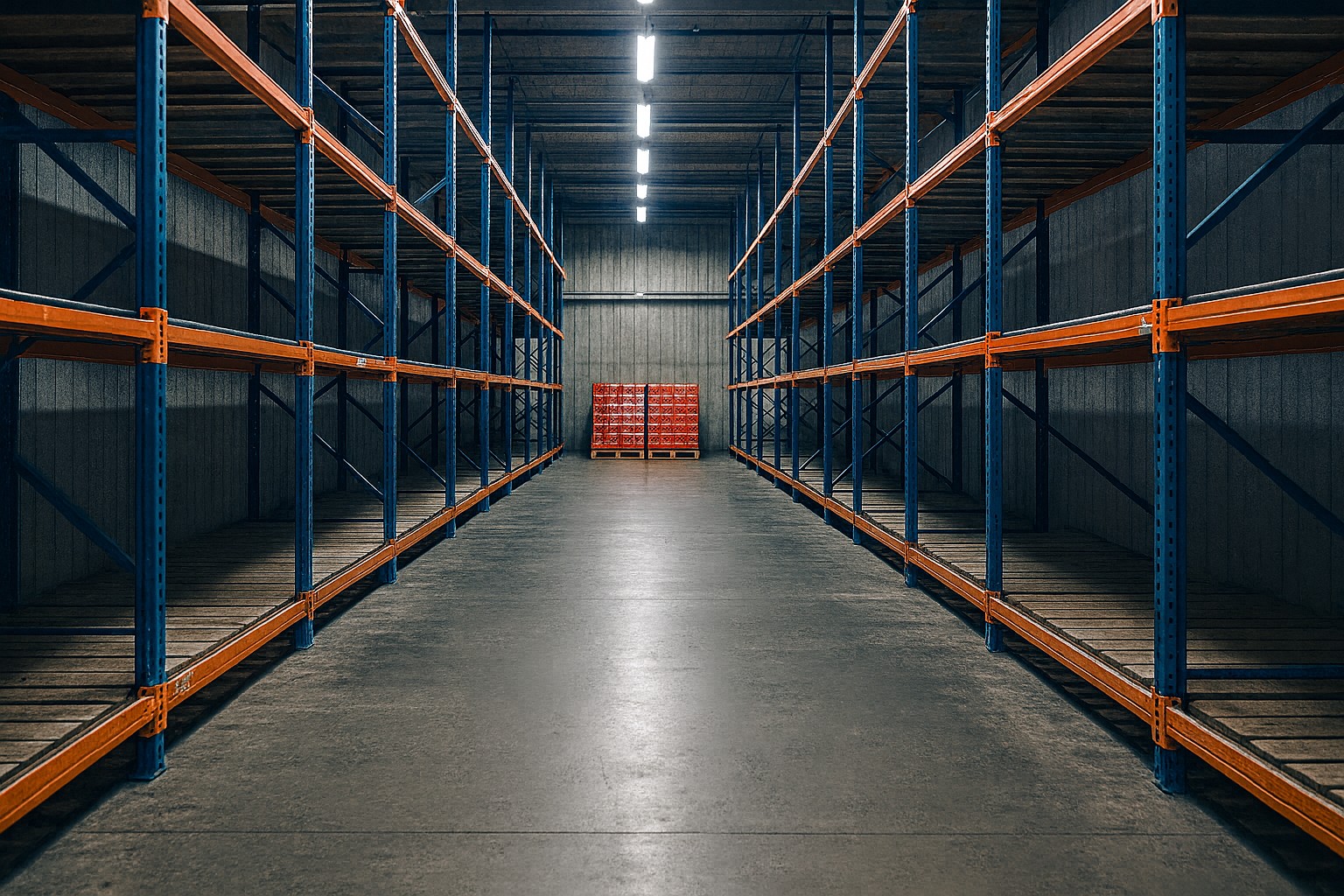
Almacén casi vacio por la subida de precios y el control de los fabricantes antes de la subida.

📉What’s Really Happening Before the Price Increases

This winter won’t be easy. Factories are already preparing the 2026 price increase and, to apply it as soon as possible, they’re slowing down sales now. They’re delivering less product, tightening supply, and limiting access. It’s the fastest way to make sure everyone reaches January under the new tariff.

But the parallel market works differently. While factories tighten the flow, opportunities at 2025 prices still appear here—short-lived, quiet, and easy to miss if you’re not paying attention.
And that’s the real risk: entering January without having taken advantage of these opportunities and being forced to raise your prices just when demand is at its weakest.

This isn’t about winning margin. It’s about keeping your sales alive during the coldest months. A poorly prepared winter can easily drag on until March and ruin the entire first quarter.

3 practical ideas to buy smart

1) Take opportunities when they appear
In the parallel market, good batches don’t wait. They don’t come with long warnings, and they don’t come twice.
If you wait until January, factories will already be applying the new prices—and you’ll have no alternative to keep your winter prices stable.

2) Focus on the products that truly keep your business moving
This isn’t about speculation. It’s about protecting the references you know your network will sell even in the coldest weeks:
– high-rotation soft drinks
– standard beer formats
– brands that keep moving even at low consumption points
Securing these items at 2025 prices is what allows you to keep selling through February without losing pace.

3) Don’t wait for the “official confirmation” of the increase
Yes, factories are already announcing price increases.
What they’re not saying is how strong they will be: inflation remains high, transportation and logistics costs are up, and producers want to update prices as soon as they can.
If you wait until everything is “official,” you’ll be too late. Factories are already slowing down supply precisely to accelerate the transition to higher prices.

If you want to know what’s moving—and what will move—in the parallel market, get in touch with our commercial team.

This winter, the difference isn’t who buys cheaper… it’s who can keep selling while everyone else slows down