

- Shipped
- Reading
- 6 min
The secret of the best-selling HORECA distributors is internal communication
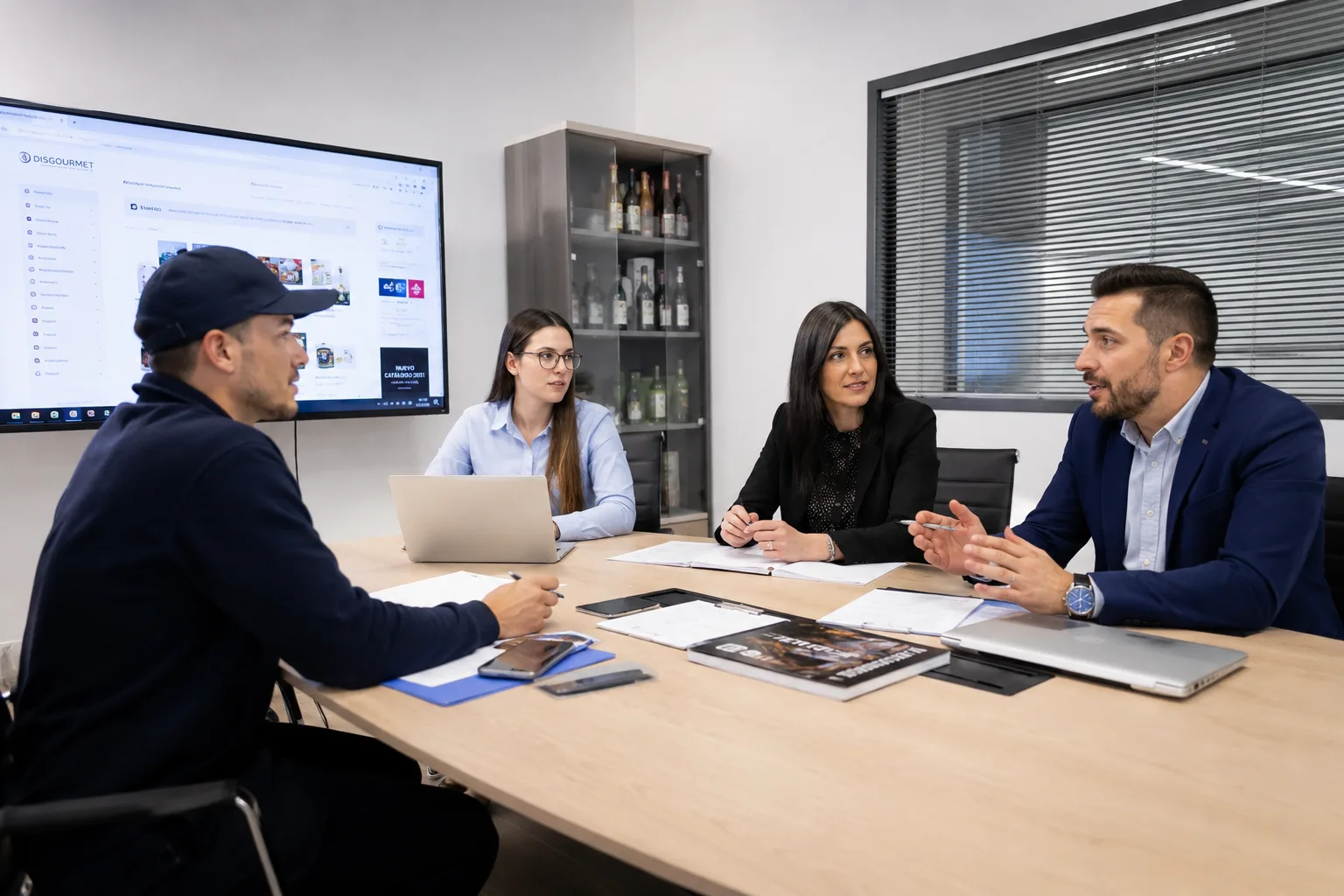
The secret of the best-selling HORECA distributors: what do your bars and restaurants think of you?
In the HORECA sector, the pace is frantic. Daily life at a food, drinks or supplies distributor is built on speed and repetition: pre-sales visits, phone calls to close the recurring order before the routes go out, delivery notes, lorries and cases going in and out of the warehouse.
At this speed, it is alarmingly easy to fall into the routine of "What can I get you this week?". We take the order, deliver, collect payment and move on to the next customer. Hardly anyone stops to gather information and ask: how are we really doing?
Using the daily momentum to collect fresh information is a massive competitive advantage. In a market where margins are tight to the cent and competitors lurk on every corner, whoever listens best to the bar or restaurant owner keeps the account.
The danger of "silence" in hospitality
In the restaurant trade there is a rule every distribution manager should have tattooed: a dissatisfied customer rarely complains; they simply change supplier. If a bar has a recurring stock-out, if the driver arrived late three times in a row at peak time, or if the product didn't arrive at its usual quality, the owner (who is swamped running the kitchen, the staff and the tables) often won't call the office to make an official complaint. They will simply order that product next week from the competing distributor who walks through their door with a smile.
Gathering your customers' opinions constantly is your protective shield. It lets you spot the fire before it burns down the business relationship completely.
The harsh reality on the street: the "WhatsApp effect" and lost information
When we talk about gathering information, many people think of big systems or emailing digital surveys. Let's be realistic: that doesn't work in HORECA. A restaurant owner is not going to open an email to fill in a satisfaction questionnaire.
Valuable information comes from face-to-face contact. And this is where the link closest to the customer comes in: the delivery driver.
The driver goes right into the kitchen, into the storeroom, and has the customer's complete trust. They hear first-hand comments like: "Hey, last week this cheese format didn't work for me" or "Tell your sales rep I urgently need samples of the new beer".
With the lorry badly parked, in a rush and carrying cases, the driver does the best they can: takes out their phone, records a 15-second WhatsApp voice note and sends it to the area's pre-sales rep.
They've done their part. But this is where distributors' great black hole begins:
The pre-sales rep gets the voice note while driving to another customer or in the middle of a visit. They listen to it, think "I'll note it down later"… and that message gets buried under another 40 chats coming in throughout the day. But the reality is that the sooner they note it down the better for everyone, because we don't know whether the customer will call the office in the meantime.
WhatsApp is a fast internal channel, but if the information isn't recorded in a centralised system, it is gone with the wind. And the customer is left waiting for an answer or a solution that never comes.
The guardians of information: pre-sales and telesales
For the flow to work, you have to understand that the driver is only the "receiver" of the alert out on the street. The people responsible for feeding that information into the company's control loop are the pre-sales rep and the telesales team.
- The pre-sales rep as a filter: At the end of their day of visits, one of the sales rep's tasks should be to review the WhatsApps from the drivers in their area and write them up properly in the customer's record (whether in the company's CRM or ERP) before they fade from memory. A traffic-light system can be a great help so the sales manager can spot the important things that have happened and check whether they have been resolved. That is why recording these notes is essential for customer service excellence. That way anyone who opens the record can see the latest with the customer and act accordingly.
- Telesales to close the loop: When the telesales team calls to chase the recurring order, they will have the sales rep's note on screen in front of them. That is where the magic happens and the customer is locked in: "Hi Manuel, the driver told me you had a problem with the cheese format on Tuesday. I've got it noted here and we've corrected it for the order arriving tomorrow".
The owner will feel they are working with a serious company that coordinates and cares about them, not with separate departments that don't talk to each other.
The sales manager's role: stop leading from the office
None of the above will happen unless sales management takes the reins. The sales manager can't just look at turnover charts at the end of the month; they have to be the human bridge between the warehouse and the street.
If information gets lost, it is often because the habit hasn't been created from the top and staff haven't been motivated. The sales manager must lead this change in two directions:
- Raise awareness and value the driver: You have to go down to the loading dock and talk to the delivery team. Explain to them why their role is so important: "Guys, your eyes in the bar save our accounts. If you see a customer is upset or a competitor is bringing in a new product, let the pre-sales rep know. Your WhatsApp is vital". When drivers see that their alert is useful and taken into account, their commitment multiplies.
- Audit and hold the pre-sales rep accountable: The sales manager must banish the "I forgot what the driver told me". Their job is to check that sales reps process that information from the street and record it so the rest of the company can act.
Conclusion: the distributor that coordinates faces less competition.
In the HORECA sector, the list price matters, of course. But service, reliability and empathy matter far more. When you stop being a mere "order taker" and get your driver, your pre-sales rep and your telesales team to speak the same language and share information about what is happening in the venues, you stop competing for cents. You become the owner's trusted partner. And a trusted partner who makes your life easier is never swapped for another.