

- Shipped
- Reading
- 3 min
The real value of tyres
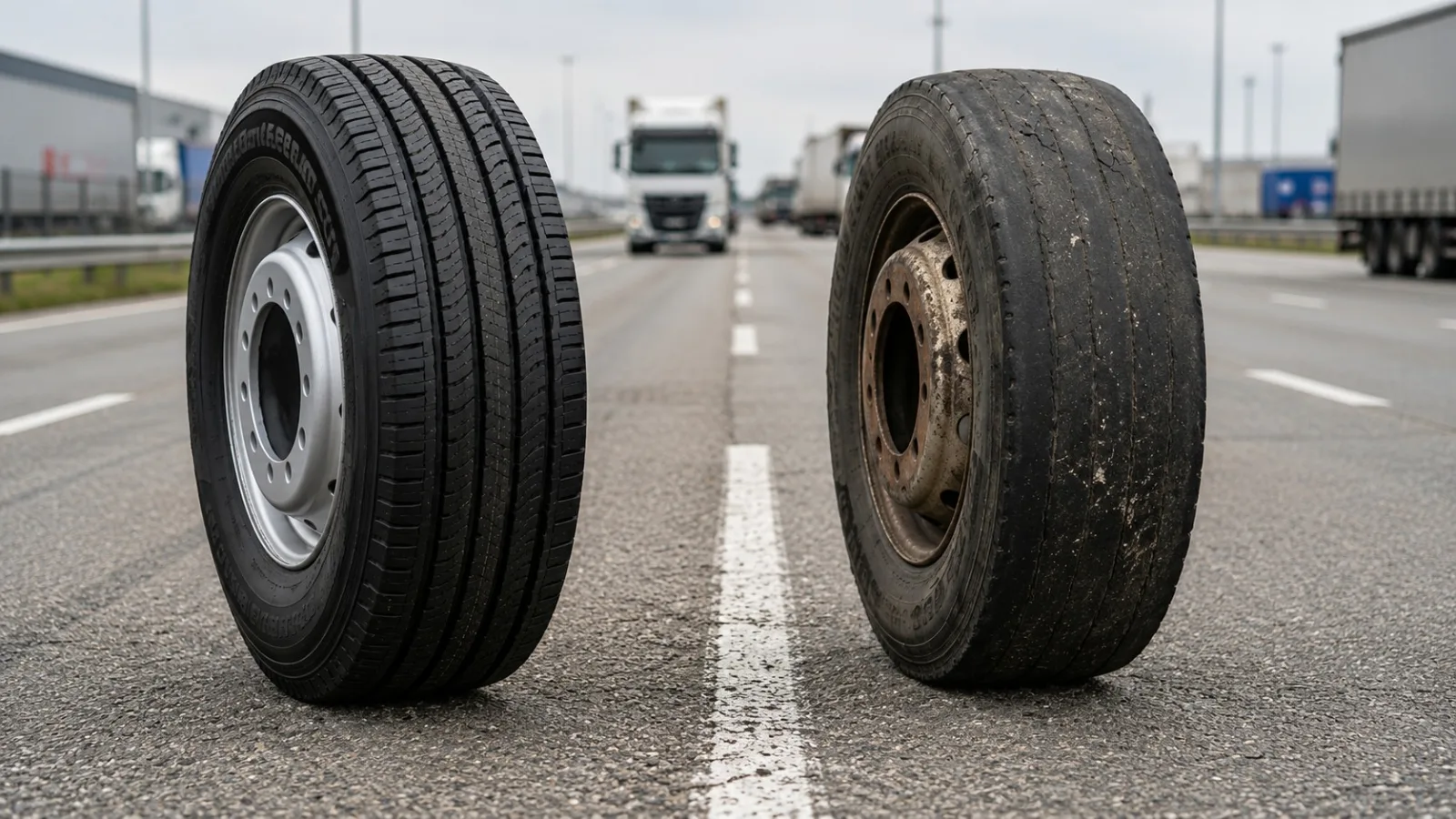
What a truck driver taught me about the "real value" of tyres
Sometimes, after so many years in this business, you think you know everything there is to know about logistics. But then a new lesson turns up when you least expect it.
The other day, chatting with a driver about the condition of his wheels, he opened my eyes to a world of tyres I knew nothing about. He began with a line that may sound like a cliché, but what was interesting was the reasoning that followed: "The cheapest tyre is usually the one that costs you most by the end of the month". And look how right he was:
- Mileage: a premium tyre may cost 30% more, but if its compound lets it run 50% more kilometres, the cost per kilometre (the figure that really matters) is much lower.
- Fuel consumption: rolling resistance is key. A low-quality tyre can push diesel consumption up enough to pay the difference with a leading brand in just a few months. With diesel prices where they are today, this matters all the more.
- The date of manufacture (DOT code): a vital detail to avoid being fooled. Tyres have a "technical obsolescence": even if the tread looks new, rubber hardens over time and loses grip. To find out when a tyre was made, look for the DOT code on the sidewall (four digits): the first two give the week and the last two the year.
Example: if you read 1226, that tyre came off the production line in week 12 of 2026. Watch out for sharp practice! Sometimes tempting offers appear for "brand new" tyres that have been sitting in a warehouse for 5 years. If the rubber has lost its elasticity, you're buying a risk, not a solution.
- Safety and response at the limit: this is where sharp practice costs most. A quality tyre shortens braking distance in the wet and copes far better with high temperatures and maximum loads, minimising the risk of a blowout. A single scare or a breakdown stop wipes out any earlier saving on the purchase price.
- The value of the casing: quality casings can be retreaded with guarantees (something low-cost brands rarely offer), which means savings of up to 50% on cost and a firm commitment to sustainability, cutting oil consumption and waste generation by 70%.
In such a competitive market, sharp practice is the order of the day. The real value of a tyre isn't what you pay at the garage, but the sum of its durability, its reliability and, above all, the peace of mind of knowing the truck will respond when the road gets tough.
At Red Paralela we no longer run our own vehicles. Our move to an effective freight exchange built on efficiency has allowed us to cut our costs by using trucks that have reached a destination and have no return load.
But that doesn't change the fact that this is our world, and after this little discovery we felt we had to share it. In the end, in this business, information is the best fuel.