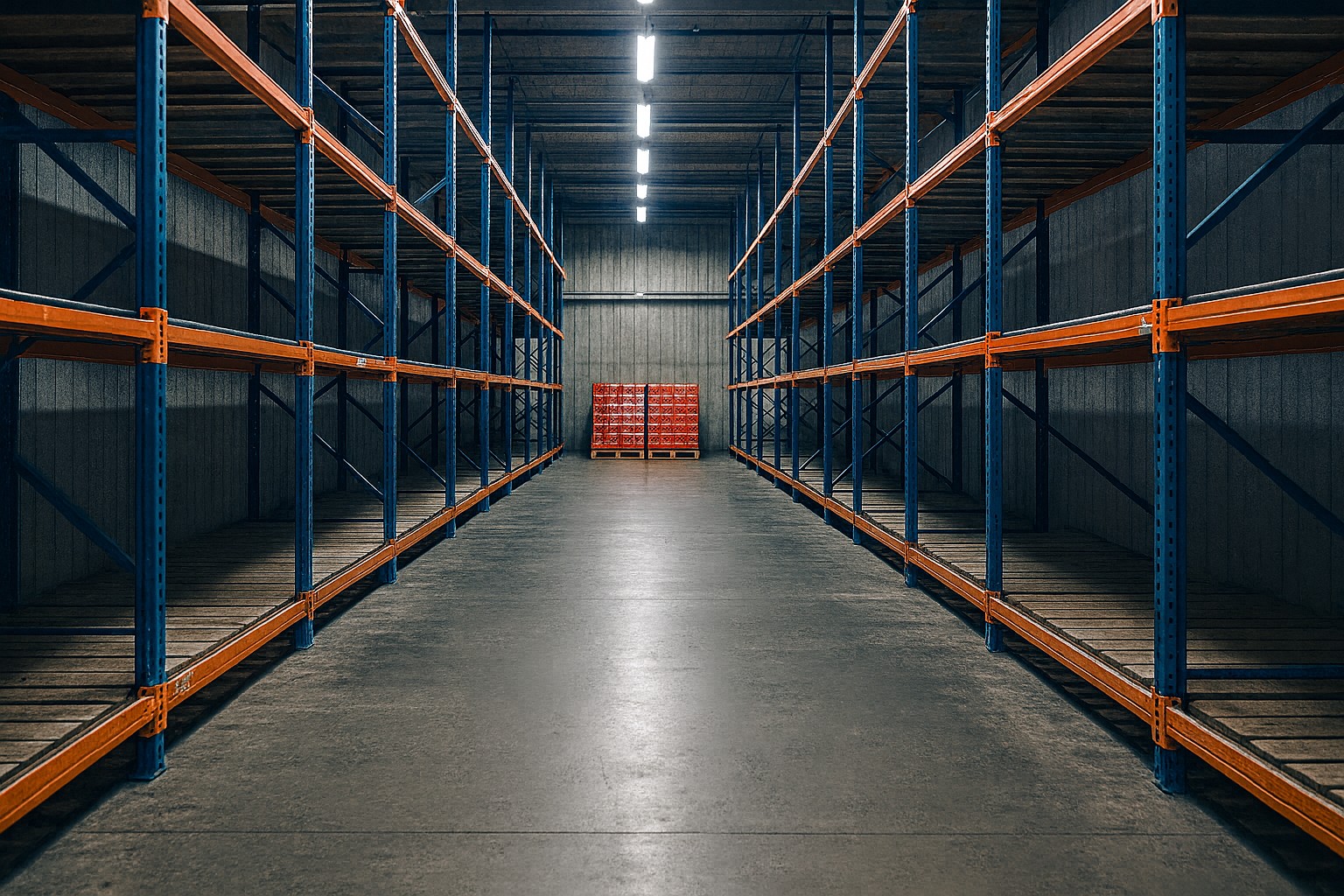
The future of distribution (5-year outlook)

El futuro de la distribución a 5 años

A hypothesis on the future of distribution (5-year outlook)

Here it is. Let’s see what you think:

Distribution is not going to disappear.
But it will stop working the way it has until now.

For decades, the model has been more or less the same: many suppliers, many routes, many visits, and enormous operational inertia. It worked because margins allowed it, and because the cost of not changing was low.

That is over.

Over the next five years, distribution will be forced to reconfigure itself under four very specific pressures: costs, logistics, and technology.

And that leads us to an uncomfortable but inevitable question:

Does it make sense for 15 different companies to supply and visit the same establishment?

1. The cost problem (that can no longer be absorbed)

Fuel, staff, vehicles, warehouses, insurance, financing, bureaucracy, and crushing taxes…
The cost structure of a distributor is becoming heavier and less flexible every year.

The current model multiplies expenses:

      • Overlapping routes.
      • Small and frequent deliveries.
      • Sales reps visiting the same venue week after week for very similar orders.

For years, this was offset by volume.
Today, that balance no longer works.

Five years from now, margins will not support 10, 12, or 15 different suppliers visiting the same customer.

2. Logistics: too much complexity for too little value

From a logistics perspective, the system is inefficient by design.

A single restaurant receives:

      • One truck for beer.
      • Another for wine and spirits.
      • Another for fruit and vegetables.
      • Another for frozen products.
      • And several more, depending on agreements and brands.

Each with its own schedule, incidents, and hidden cost for the customer.

The question is not whether this is convenient for the distributor.
The real question is whether it delivers real value to the hospitality operator.

Increasingly, the answer is no. That is why we will see:

      • Delivery consolidation.
      • Shared logistics platforms.
      • Operators that do not sell brands, but service and capillarity.
      • Fewer trucks.
      • Better loaded.
      • Better coordinated.

3. Technology: the sales rep stops being an order taker

Technology will eliminate one of the main justifications of the current model: constant visits.

Automatic orders based on consumption history, calendar-based forecasting, smart integrations, well-designed digital catalogues.
All of this drastically reduces the need for physical presence.

Sales reps will not disappear, but their role will change:

      • Less order taking.
      • More advisory work.
      • More judgment.
      • Less frequency, more value.

If orders can be placed automatically, why so many visits?

In the end, attending sales reps is also a cost for the hospitality operator. There is no better proof than showing that visits are no longer about taking orders.

4. The hypothesis

My hypothesis is simple:

In five years, the market will not be able to sustain 15 different companies supplying the same establishment on a recurring basis.

Not for theoretical efficiency reasons.
For pure economic survival.

The system will reorganize around:

      • Fewer players per customer.
      • More logistical collaboration.
      • Real specialization.
      • And a clear separation between those who provide product and those who provide service.

5. This is not concentration by choice, it is adaptation

This is not about big versus small.
It is about viable models versus exhausted ones.

Some will disappear.
Others will integrate.
Others will radically change their role.

The status quo is not an option.

6. Who will make it — and who won’t

In this scenario, it will not be “the best” or “the most innovative” who survive.
It will be those who fit into a viable model.

Put clearly:

The distributor who needs to visit in order to sell will not make it.
The one who is called when needed will.

The one who competes on catalogue will not make it.
The one who solves a specific category better than anyone else will.

The one who duplicates existing routes will not make it.
The one who reduces deliveries, incidents, and operational friction will.

The one who calls digitalizing orders “innovation” will not make it.
The one who uses technology to eliminate useless work — their own and their customer’s — will.

The one who shifts complexity onto the hospitality operator will not make it.
The one who removes it will.

Everything else — frequency, proximity, “personal treatment” — will stop being an advantage when costs no longer allow it.

7. The conclusion (no detours)

Let’s go back to the initial question.

Does it make sense for 15 different companies to supply and visit the same establishment?

The answer is not ideological.
It is economic.

In five years, this model will no longer be dominant because it will not be profitable.
Not for the distributor.
Not for the customer.
Not for the system.

Distribution will not transform because of strategic vision,
but out of pure necessity.

And when that happens, there will be no time to adapt.
Only time to see whether you were already on the right side.
Is it worth being disruptive in horeca distribution? How to look before you change

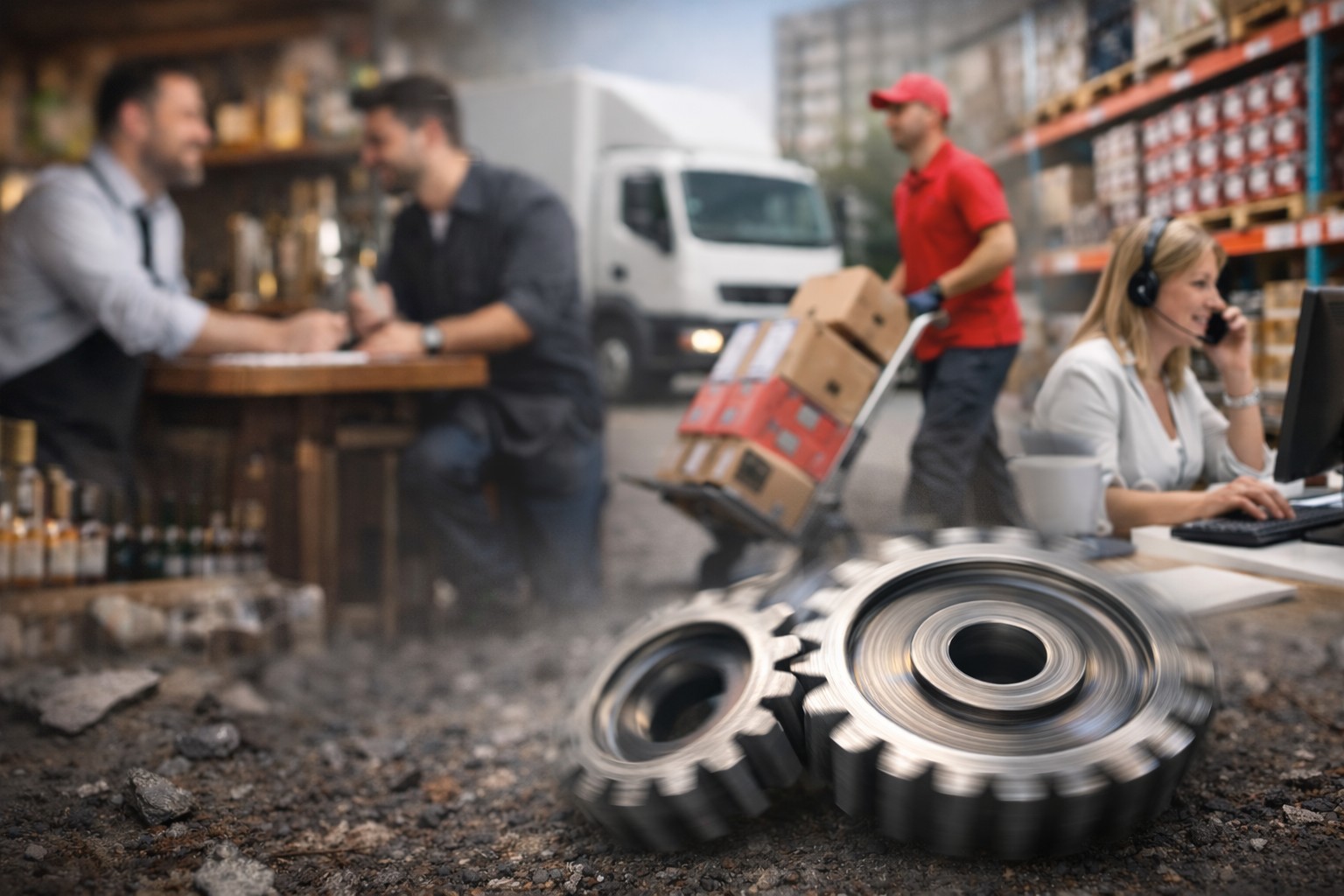
Cuando la distribución funciona como un engranaje y todo fluye

In recent years, the word disruption has become firmly embedded in business language. In horeca distribution, it appears in conversations, presentations and strategic plans almost as an objective in itself.
But it is worth asking a prior question, one that is more uncomfortable and far more useful:

What does it really mean to be disruptive in a sector where reliability is essential?

Because in horeca, innovation without clear judgement does not add value. It can easily upset very delicate balances.

The risk of wanting to be disruptive “because it’s expected”

Many companies feel the pressure to change quickly. The market tightens, margins shrink, new tools appear, and everything seems to suggest that standing still is not an option.

The problem arises when disruption is driven by haste rather than analysis.
In those cases, processes that already worked are changed, unnecessary layers of complexity are added, and internal and external tensions grow.

Impulsive disruption rarely improves a business.
More often, it simply creates disorder.

What being disruptive in horeca distribution is not

Before talking about disruption, it is important to clarify what it is not:

      • It is not change for the sake of change
      • It is not adding systems without removing friction
      • It is not copying others without understanding the context
      • It is not making life harder for the customer to make it easier internally
      • It is not confusing novelty with improvement

Many initiatives are presented as innovative when, in reality, they only move the problem elsewhere.

Areas where disruption is not welcome

In horeca distribution, there are areas where customers expect stability, not creativity.

      • Deliveries must arrive when promised.
      • The cold chain must always be respected.
      • Invoicing must be clear.
      • Traceability leaves no room for improvisation.

In these areas, value lies not in surprising the customer, but in not failing.

Being disruptive here does not mean doing new things, but strengthening what is already critical without creating noise.

True disruption starts with how you look at the business

In most cases, meaningful disruption does not begin with a tool, but with a change in perspective.

Some examples of this shift in mindset:

        • moving from thinking only about products to thinking about the customer’s mental load
        • moving from measuring volume to measuring friction
        • moving from reacting to anticipating
        • moving from selling to solving problems

When the way you look at the business changes, decisions tend to follow naturally.

Critical thinking before brilliant solutions

A useful exercise before making any change is to ask simple, but uncomfortable, questions:

      • does this reduce real work, or does it simply move it elsewhere?
      • does this make life easier for the customer, or only for the company?
      • will this hold up over time, or does it depend on specific individuals?
      • does this improve day-to-day operations, or does it just sound good on paper?

Disruption that cannot stand up to these questions is usually cosmetic, not structural.

The mistake of confusing disruption with speed

Innovation is not always about moving fast.
In horeca distribution, it is often the opposite.

      • Observe more.
      • Change fewer things at the same time.
      • Measure calmly.
      • Consolidate before moving forward.

The winner is not the one who introduces the most changes, but the one who introduces the right ones.

Disrupting without breaking

Disruption that truly adds value is rarely obvious on day one.
It becomes visible when:

      • customers call less
      • errors decrease
      • issues are resolved more smoothly
      • relationships become more stable

We don’t know what you think, but we believe that in horeca distribution, being disruptive is not about making noise or looking modern. It is about making everything work better without anyone having to think about it.

And that, paradoxically, is the hardest thing to achieve… and the most valuable.

The intergenerational shift in HoReCa distribution: when growth is no longer about accumulation

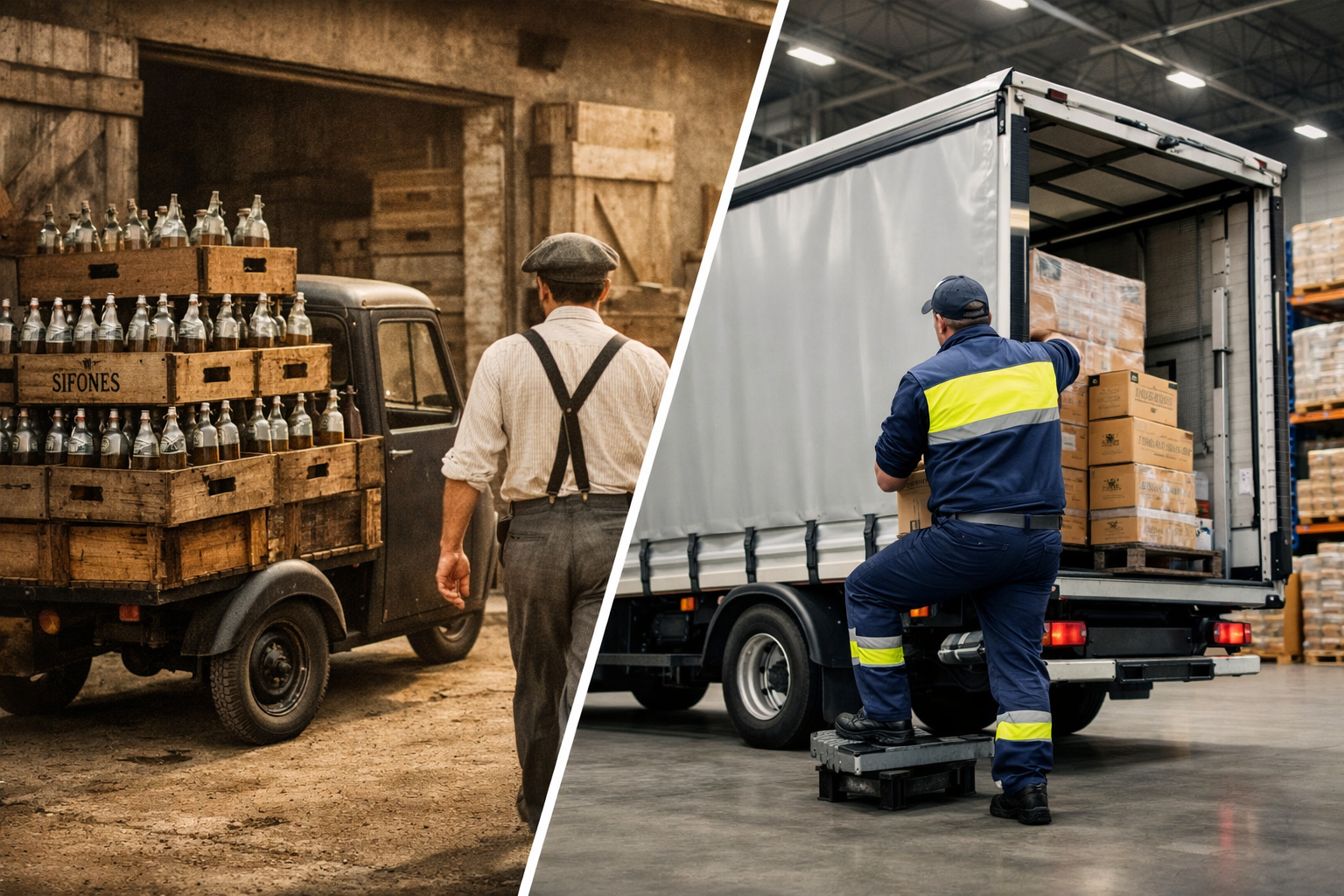
De la distribución artesanal al modelo logístico actual: una evolución que invita a reflexionar.

Where We Come From — and Why the Model Is Starting to Weigh Us Down.

Many beverage and soft drink distribution companies did not start out as distributors. They began as small local producers of soda water, siphon bottles, or soft drinks. Family businesses, closely tied to their territory, that grew by solving a simple problem: supplying drinks to the bars in their area.

Carbòniques Montaner is a clear example of that journey. It went from manufacturing siphon bottles in the 1930s to distributing water, then beer, and later soft drinks. The next step was a logical one: together with other distributors in the region, it created a buying group to better manage that growth, add more product lines, and gain autonomy and independence from manufacturers who put pressure on our company, fully aware of the leverage they held over it. Over time, it continued expanding the catalogue until it was distributing around 1,000 SKUs.

That model worked. And it worked well for many years. Until, gradually, we became Red Paralela, leaving behind the capillary, local delivery model that had accompanied us for so many decades.

Technology followed that evolution too: from the fax machine to the first IT systems, and from there to what Red Paralela is today—an extranet designed to organise and manage distributors’ parallel operations.

Three generations along this path.

Today, many distributors still build their business around one or two official brands that are the true backbone of their revenue. In many cases, more than 50% of the business depends on them. Around that core, there is a very broad range of brands and product families that “tag along”, but are not strategic.

And that “tag-along” range comes at a cost:

      • A growing labour cost: more sick leave and lower productivity than ever.
      • An ever-increasing financial cost.
        A logistics cost that is hard to justify.
      • And a management cost that never stops rising.
      • While the core brand sustains the business, everything else starts to weigh it down. More SKUs, more stock, more breakages, more errors, and more resources spent on products that do not create real value

On top of that, the current context is especially challenging. Labour costs rising out of control. A suffocating regulatory environment. New laws, procedures, and obligations piling up—and instead of helping, they make day-to-day operations harder and reduce the ability to be efficient.

      • More rules every day.
      • Less margin every day.

And that is where uncomfortable questions begin to appear:

      • Does it make sense to maintain structures designed for massive catalogues when the real business rests on three or four key manufacturers?
      • Wouldn’t it be more sensible to simplify, focus efforts, and be extremely efficient by representing only those manufacturers that truly support the distributor (now and in the future) and that the distributor can genuinely defend?
      • Could it be time to stop and rethink the model before the structural weight makes it unviable?

Rethinking the model is not always comfortable, but it is almost always necessary.

How to apply a price increase when your competitors don’t

How to apply a price increase when your competitors don’t

Cómo subir precios cuando tu competencia no lo hace

Your cost has already gone up and another distributor is still selling cheaper: 5 real tactics to win.

In horeca sales this happens often: the manufacturer has already increased prices, you are now buying at the new cost, but your competitors are still clearing old stock and can sell cheaper. The customer is very clear: “When you match the price, I’ll buy from you.”

    • If you try to match it, you destroy your margin.
    • If you stand still, you lose sales — or even customers, if the product is critical.

The solution is easy to understand and hard to execute: offer something the bar or restaurant owner values directly, here and now, even if the price per case is slightly higher.

These tactics work because they change the comparison: you stop competing only on “euros per case” and start competing on total value.

1. Deferred rebate

Instead of lowering the price on every invoice, you return part of the value later, in exchange for a specific customer behavior.

What usually works:

    • monthly or quarterly rebate if an agreed volume is reached in that product family
    • rebate if the increased-price reference is combined with other products the customer does not usually buy from you, and where you have no relevant price disadvantage versus competitors
    • credit balance for the next order (very effective to secure repeat business)

Why it works
The operator does not reject paying more if they feel that, at the end of the period, they come out ahead. Mentally, it is not perceived as an “expensive price” but as a “price that comes back.” You protect the updated price, avoid discount wars, and reward commitment. You also avoid a very common effect: losing several references because of just one.

2. Activations the operator can monetize

When you cannot win on price, win on sales. But it must be concrete — not vague promises of “support.”

Actions that are understood and actually used:

    • simple point-of-sale material linked to purchase (chalkboards, posters, bar displays)
    • a closed promotion proposal for the venue. For example, when beer is the reference that has increased in price, you can activate a weekend pack including beer, olives, and chips at a special weekend price, plus table material that encourages customers to order the promotion — so the operator not only sells the now more expensive beer, but also increases the average ticket through the accompaniment
    • short, practical staff training to drive one specific reference (30–45 minutes)

Why it works
Operators do not buy “service,” they buy results. If they see a product rotates better with you because you help them attract customers, they stop comparing only price. Price stops being a cost and becomes an investment. You are helping them sell more, not just supplying product.

3. Cross-selling with references your competitor cannot match

If you are agile, respond with a cross-offer using products your competitor does not have in their portfolio. The key is that they must be easy to sell and have enough margin to absorb part of the price gap.

How to apply it simply:

    • “If you take X cases of this reference, I improve conditions on these others you already consume”
    • “If we do this mixed order, the advantage is visible in the total”
    • “I’ll prepare a standard weekly order based on what rotates most in your venue”

Why it usually works
The customer compares the full order, not just the problematic reference. If the total makes sense, the focus shifts. Even if you earn less on one line, you do not lose the sale or the customer. You keep the relationship, rotation, and control of the full order.

4. Clear financing or flexible payment terms

Here we are talking about something the customer understands in ten seconds: cash flow. In horeca, many decisions are made based on liquidity, not theoretical price.

Useful examples:

    • extending payment terms for selected customers
    • splitting a large order into two due dates
    • allowing smaller replenishments for a few weeks to avoid tying up cash

Why it works
Operators value paying better far more than paying less. Less cash tension means less friction in buying. This competes directly with “it’s cheaper elsewhere” because it reduces the immediate financial strain, which is what hurts most day to day.

5. The parallel market as a price option

When your supplier only sells at the new price, but there is still old stock available in the market, the parallel market can be a temporary solution to avoid losing competitiveness.

Why it works
You gain time while the market aligns, prevent the customer from getting used to buying from another distributor, and maintain the commercial relationship. That said, it must be used carefully: as a temporary solution, ensuring traceability, and as a transition tool — not as a permanent model that could damage your relationship with the official supplier.

A useful note: when this can be anticipated, you can win earlier

This scenario is easier to manage when you see it coming. If you know a reference is about to increase and there will be weeks of misalignment, you can prepare agreements or purchasing plans before the customer compares prices when it is already too late.

In summary

When another distributor is still selling at old prices, you will not win by copying their game. You win by changing the comparison:

    • deferred rebates
    • activations that help sell in the venue
    • mixed orders with real rotation
    • financing

It is not about selling more expensively.
It is about selling with an advantage that today’s cheaper option is not offering.

The natural next step would be to turn this into a direct sales script for reps, sentence by sentence, to use at the bar without detours. But I’ll leave that in your hands.

Liquidity to negotiate better with suppliers at year-end

Negociación de compra a fin de año

Liquidity is power: how to use a strategic purchase to renegotiate terms with your suppliers before year-end

If your cash position is tight right now, don’t rule out this approach. Further down, we explain how to generate quick liquidity so you can play this card.

At year-end, many suppliers and their sales reps have a very clear objective: to close volume and invoice now. Not in January. Now.

That’s where distributor liquidity becomes real leverage.

This is not about asking for discounts in abstract terms. It’s about using your purchasing capacity and fast payment ability to help the supplier meet their annual targets — and negotiating from that position.

Step 1. Identify which purchase you can bring forward

The first step is not calling the supplier. It’s deciding which purchase you can bring forward that you would normally make later.

For example:
– Replenishment of fast-moving SKUs.
– Additional volume on stable products.
– Bringing forward part of Q1 purchases.

The key is twofold: it must make sense for you and be meaningful for the supplier at this point in the year.

Step 2. Understand what the supplier (and the sales rep) needs

At year-end, suppliers usually need one or more of the following:
– Immediate invoicing.
– To close volume targets.
– To improve year-end figures.
– To help sales reps reach their bonus.

Your liquidity fits perfectly into that need.

Don’t talk about “improving terms” in general. Talk about a specific transaction that helps them close the year.

Step 3. Present the deal clearly and directly

The right approach is simple:

“I can bring this purchase forward and pay immediately. In return, I need these conditions to improve.”

At that point, the conversation changes. You’re no longer asking. You’re proposing a solution.

Step 4. Which conditions make sense to renegotiate

When the purchase helps year-end closure, there is real room to negotiate:
– Better pricing on that specific order.
– An additional rebate linked to the advanced purchase.
– Improved terms for future orders.
– Extra commercial or logistics support.
– Preferential commitments for the coming year.

Focus on conditions linked to that purchase, not on general reviews without a clear trade-off.

Step 5. Fast payment as a key lever

This is one of the most underused competitive advantages.

Selling through Red Paralela generates immediate liquidity because we pay very fast. This allows distributors to:
– Get paid sooner.
– Buy sooner.
– Negotiate better.

For suppliers, volume matters. For sales reps, speed of payment matters even more. If you can pay fast, say it clearly. At year-end, it’s a powerful lever.

Step 6. What if your cash position is tight right now?

This is the point many overlook.

If you can turn stock into liquidity by selling through Red Paralela, you can:
– Free up cash in a matter of days.
– Use that cash for a strategic purchase.
– Improve terms with your supplier.

This is not financial theory. It’s a very concrete chain:
sell fast → get paid fast → buy better → negotiate better.

Step 7. Close the deal and set the basis for next year

Once the purchase is closed:
– Get the agreed conditions in writing.
– Define whether the scheme can be repeated.
– Open the conversation for the start of next year.

A well-structured year-end purchase doesn’t just improve one order. It positions you better for the entire following year.

The most common mistake

Waiting until you need better terms to call the supplier.

When you call out of necessity, your leverage is minimal. When you call with liquidity and a concrete purchase on the table, the negotiation changes.

Key takeaway

Liquidity is not there to “negotiate better”.
It’s there to buy at the right moment and help the supplier close the year.

And when you help close the year, conditions improve.

Overstock

Como solucionar el sobre stock

How to clear overstock without devaluing the brand in your own area

Many distributors and sales reps face the same problem: they need to move product, but they can’t afford visible discounts that might damage the brand or create tension with nearby points of sale.

The concern is valid: a badly placed discount can hurt product perception, trigger unwanted comparisons, and—at worst—undermine relationships within the distribution network.

The key is to find a discreet, controlled and profitable channel.

Move overstock without public discounts

With Red Paralela, you can release product without exposing reduced prices in your direct market. This helps you recover liquidity, free up space and protect the brand image in your own area.

This approach is especially useful when you face:

  • Accumulation of slow-moving SKUs
  • Packaging or seasonal changes
  • A need to generate cash quickly without impacting your territory

In summary

Clearing overstock doesn’t have to mean discounting or damaging the brand. You just need a parallel channel—discreet, safe and profitable.

What’s Really Happening Before the Price Increases

Almacén casi vacio por la subida de precios y el control de los fabricantes antes de la subida.

📉What’s Really Happening Before the Price Increases

This winter won’t be easy. Factories are already preparing the 2026 price increase and, to apply it as soon as possible, they’re slowing down sales now. They’re delivering less product, tightening supply, and limiting access. It’s the fastest way to make sure everyone reaches January under the new tariff.

But the parallel market works differently. While factories tighten the flow, opportunities at 2025 prices still appear here—short-lived, quiet, and easy to miss if you’re not paying attention.
And that’s the real risk: entering January without having taken advantage of these opportunities and being forced to raise your prices just when demand is at its weakest.

This isn’t about winning margin. It’s about keeping your sales alive during the coldest months. A poorly prepared winter can easily drag on until March and ruin the entire first quarter.

3 practical ideas to buy smart

1) Take opportunities when they appear
In the parallel market, good batches don’t wait. They don’t come with long warnings, and they don’t come twice.
If you wait until January, factories will already be applying the new prices—and you’ll have no alternative to keep your winter prices stable.

2) Focus on the products that truly keep your business moving
This isn’t about speculation. It’s about protecting the references you know your network will sell even in the coldest weeks:
– high-rotation soft drinks
– standard beer formats
– brands that keep moving even at low consumption points
Securing these items at 2025 prices is what allows you to keep selling through February without losing pace.

3) Don’t wait for the “official confirmation” of the increase
Yes, factories are already announcing price increases.
What they’re not saying is how strong they will be: inflation remains high, transportation and logistics costs are up, and producers want to update prices as soon as they can.
If you wait until everything is “official,” you’ll be too late. Factories are already slowing down supply precisely to accelerate the transition to higher prices.

If you want to know what’s moving—and what will move—in the parallel market, get in touch with our commercial team.

This winter, the difference isn’t who buys cheaper… it’s who can keep selling while everyone else slows down