

- Shipped
- Reading
- 4 min
The future of HORECA distribution over the next 5 years
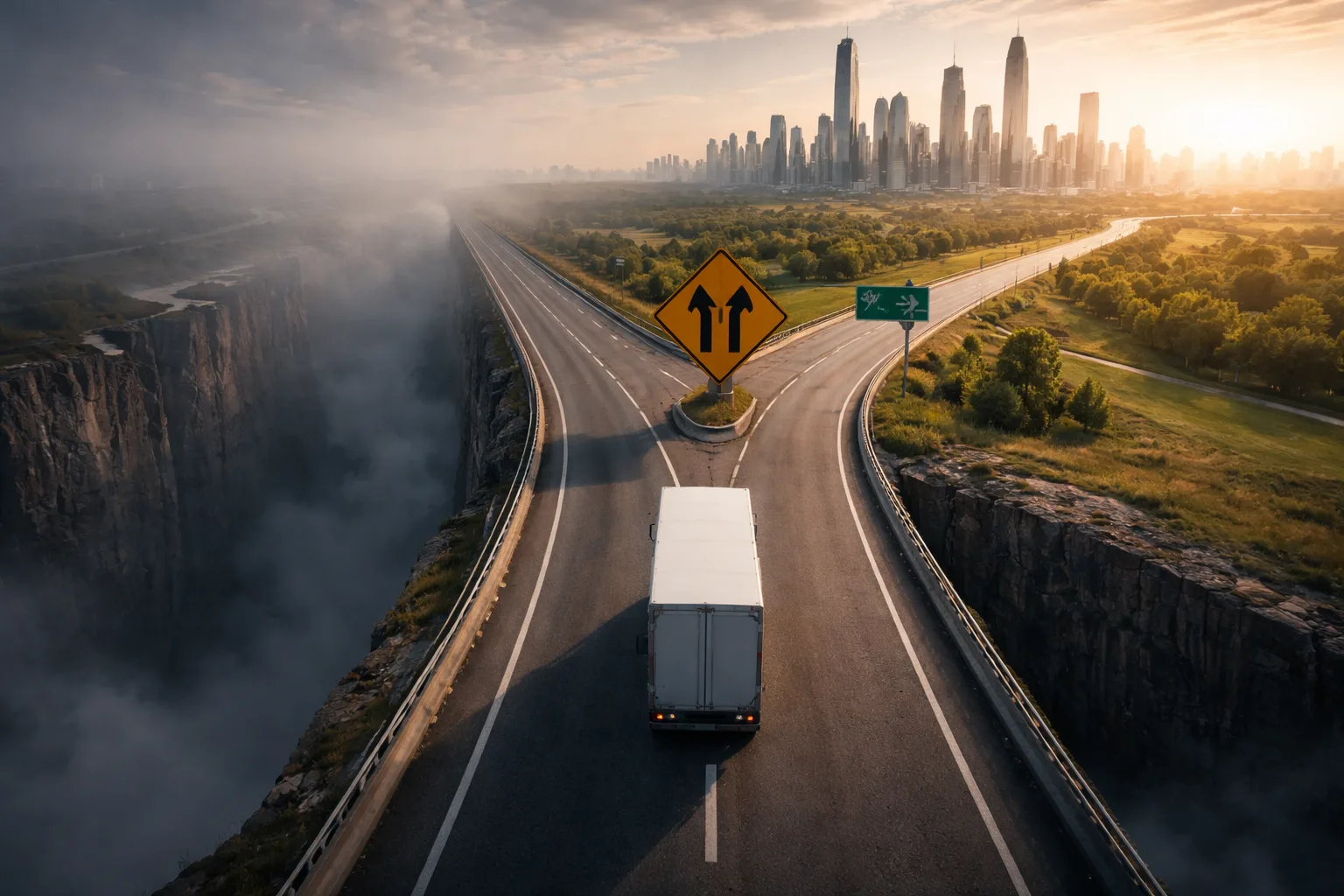
A hypothesis on the future of distribution (over 5 years)
Here it is; let's see what you think:
Distribution isn't going to disappear.
But it is going to stop working the way it has until now.
For decades, the model has been more or less the same: lots of suppliers, lots of routes, lots of visits and enormous operational inertia. It worked because margins allowed it and because the cost of not changing was low.
That's over.
Over the next five years, distribution will be forced to reconfigure itself under four very specific pressures: costs, logistics and technology.
And that leads us to an uncomfortable but unavoidable question:
Does it make sense for 15 different companies to serve and visit the same venue?
1. The cost problem (which can no longer be absorbed)
Fuel, staff, vehicles, warehouses, insurance, financing, red tape and crippling taxes…
A distributor's cost structure is getting heavier and less flexible all the time.
The current model multiplies expenses:
- Overlapping routes.
- Small, frequent deliveries.
- Sales reps visiting the same venue week after week for similar orders.
For years this was offset by volume.
Today, the balance no longer adds up.
Five years from now, margins won't be enough to sustain 10, 12 or 15 visits from different suppliers to the same customer.
2. Logistics: too much complexity for too little value
From a logistics point of view, the system is inefficient by design.
A single restaurant receives:
- A beer truck.
- Another with wines and spirits.
- Another with fruit and vegetables.
- Another with frozen goods.
- And several more, depending on agreements and brands.
Each with its own schedule, its own incidents and its own hidden cost for the customer.
The question isn't whether this is convenient for the distributor.
The question is whether it adds real value for the venue.
More and more, the answer is no. That's why we'll see:
- Consolidated deliveries.
- Shared logistics platforms.
- Operators that don't sell brands, but service and reach.
- Fewer trucks.
- Better loaded.
- Better coordinated.
3. Technology: the sales rep stops being an order-taker
Technology is going to remove one of the main justifications for the current model: the constant visit.
Automatic orders based on consumption history, calendar-based forecasts, smart integrations, well-built digital catalogues.
All of this drastically reduces the need for physical presence.
Sales reps won't disappear, but their role will change:
- Less order-taking.
- More advice.
- More judgement.
- Less frequency, more value.
If the order can place itself, why so many visits?
After all, seeing sales reps is also a cost for the venue owner. What better than showing them that visits are no longer about taking orders?
4. The hypothesis
My hypothesis is simple:
In five years, the market won't be able to sustain 15 different companies regularly serving the same venue.
Not for the sake of theoretical efficiency.
For sheer economic survival.
The system will reorganise itself towards:
- Fewer players per customer.
- More logistics collaboration.
- More genuine specialisation.
- And a clear separation between those who provide product and those who provide service.
5. It's not concentration on a whim, it's adaptation
This isn't about big versus small.
It's about viable models versus exhausted ones.
Some will disappear.
Others will merge.
Others will radically change their role.
The status quo is not an option.
6. Who will make it and who won't
In this scenario, it won't be "the best" or "the most innovative" who survive.
Those who fit into a viable model will survive.
To put it plainly:
The distributor who needs to visit in order to sell won't make it.
The distributor who is asked to come when needed will.
The one competing on catalogue won't make it.
The one who handles a specific category better than anyone will.
The one duplicating existing routes won't make it.
The one who reduces deliveries, incidents and operational friction will.
The one who calls digitising an order "innovation" won't make it.
The one who uses technology to eliminate pointless work, their own and other people's, will.
The one who passes their complexity on to the venue won't make it.
The one who takes it off their hands will.
Everything else (frequency, proximity, the "personal touch") will stop being an advantage once costs no longer allow it.
7. The conclusion (no beating about the bush)
Back to the opening question.
Does it make sense for 15 different companies to serve and visit the same venue?
The answer isn't ideological.
It's economic.
In five years, that model won't be the norm because it won't be profitable.
Not for the distributor.
Not for the customer.
Not for the system.
Distribution won't be transformed by strategic vision,
but out of sheer necessity.And when that happens, there'll be no time to adapt.
Only to find out whether you were already on the right side.