

- Shipped
- Reading
- 3 min
Is it worth being disruptive in HORECA distribution? How to look before you change
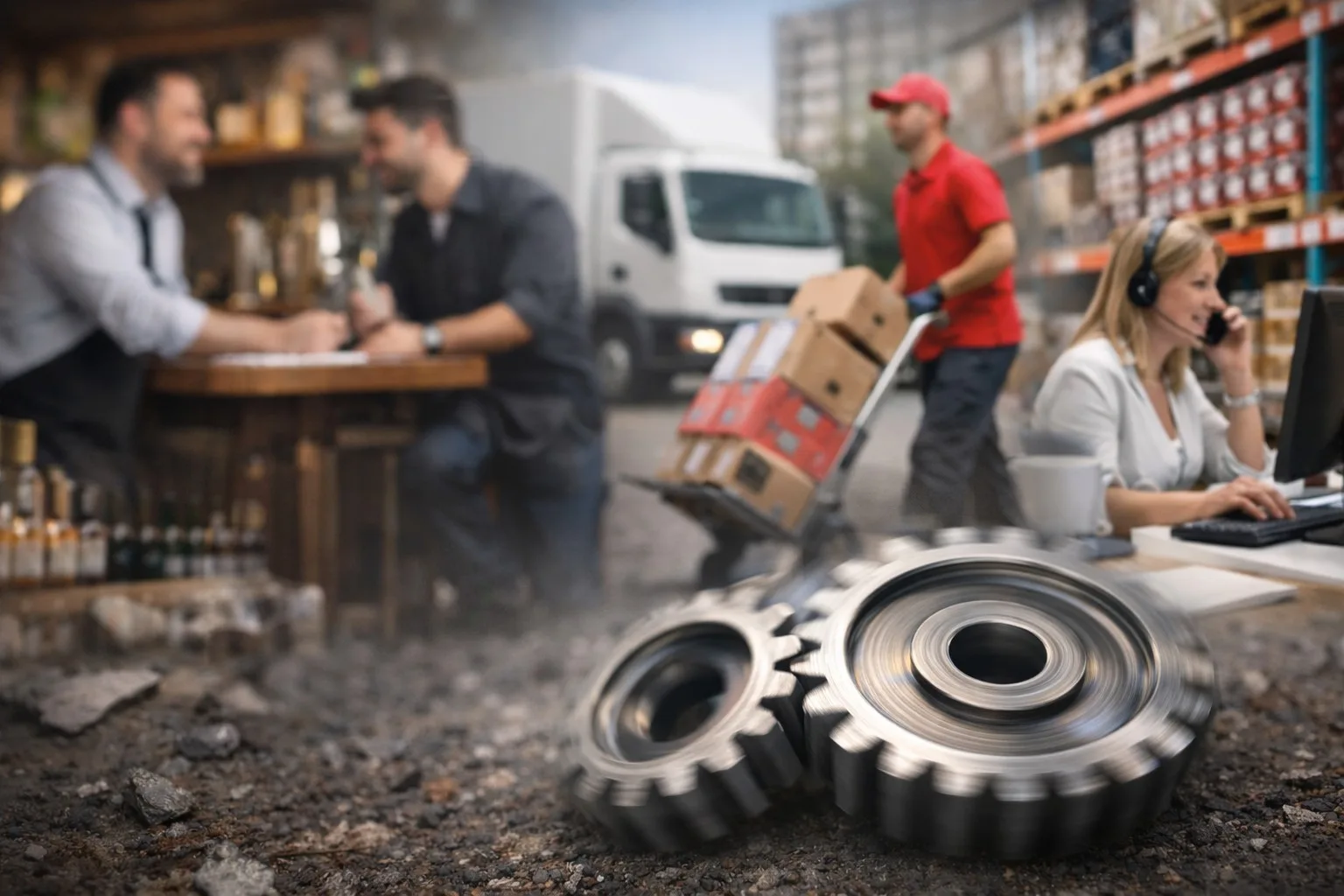
In recent years, the word disruption has made a forceful entry into business language. In HORECA distribution it crops up in conversations, presentations and strategic plans as if it were a goal in itself.
But it is worth asking a prior question, one that is more uncomfortable and more useful:
What does being disruptive really mean in a sector where reliability is key?
Because in HORECA, innovating without judgement not only adds nothing, it can upset some very delicate balances.
The risk of trying to be disruptive "because it's the thing to do"
Many companies feel under pressure to change fast. The market is squeezing, margins are narrowing, new tools are appearing and everything seems to suggest you have to move.
The problem comes when disruption is born of haste rather than analysis.
In those cases, processes that already worked get changed, unnecessary layers of complexity are introduced and internal and external tensions arise.
Impulsive disruption rarely improves the business.
It usually throws it into disarray.
What being disruptive in HORECA distribution is not
Before talking about disruption, it is worth being clear about what it is not:
- It is not change for change's sake
- It is not adding systems without removing friction
- It is not copying what others do without understanding the context
- It is not making life harder for the customer to make it easier for yourself
- It is not mistaking novelty for improvement
Many initiatives are presented as innovative when, in reality, they only move the problem somewhere else.
The areas where it doesn't pay to be disruptive
In HORECA distribution there are areas where the customer expects stability, not creativity.
- Deliveries must arrive when they are due.
- The cold chain must always be maintained.
- Invoicing must be clear.
- Traceability leaves no room for improvisation.
In these areas, the value lies not in surprising, but in never failing.
Being disruptive here doesn't mean doing new things, but reinforcing what is already critical without creating noise.
Real disruption starts with how you look at things
In most cases, useful disruption doesn't start with a tool, but with a change of focus.
Some examples of that change of perspective:
- stop thinking only about the product and think about the customer's mental load
- stop measuring only volume and start measuring friction
- stop reacting and start anticipating
- stop selling and start solving
When the way you look at the business changes, decisions change by themselves.
Critical thinking before brilliant solutions
A good exercise before any change is to ask yourself simple but uncomfortable questions:
- does this reduce real work or just move it elsewhere?
- does this make life easier for the customer or only for the company?
- will this last over time or does it depend on specific people?
- does this improve day-to-day operations or does it just sound good on paper?
Disruption that doesn't pass these questions is usually cosmetic, not structural.
The mistake of confusing disruption with speed
Innovating isn't always about going fast.
In HORECA distribution, it is often exactly the opposite.
- Observe more.
- Change fewer things at once.
- Measure calmly.
- Consolidate before moving forward.
The winner isn't whoever introduces the most changes, but whoever introduces the right ones.
Disrupting without breaking
Disruption that really adds value usually isn't noticeable on day one.
You notice it when:
- the customer calls less
- errors go down
- incidents are resolved better
- the relationship becomes more stable
We don't know what you think, but we believe that in HORECA distribution, being disruptive isn't about making noise or looking modern. It is about making everything work better without anyone having to think about it.
And that, paradoxically, is the hardest thing… and the most valuable.