

- Shipped
- Reading
- 5 min
How to apply a price increase when your competitors don't
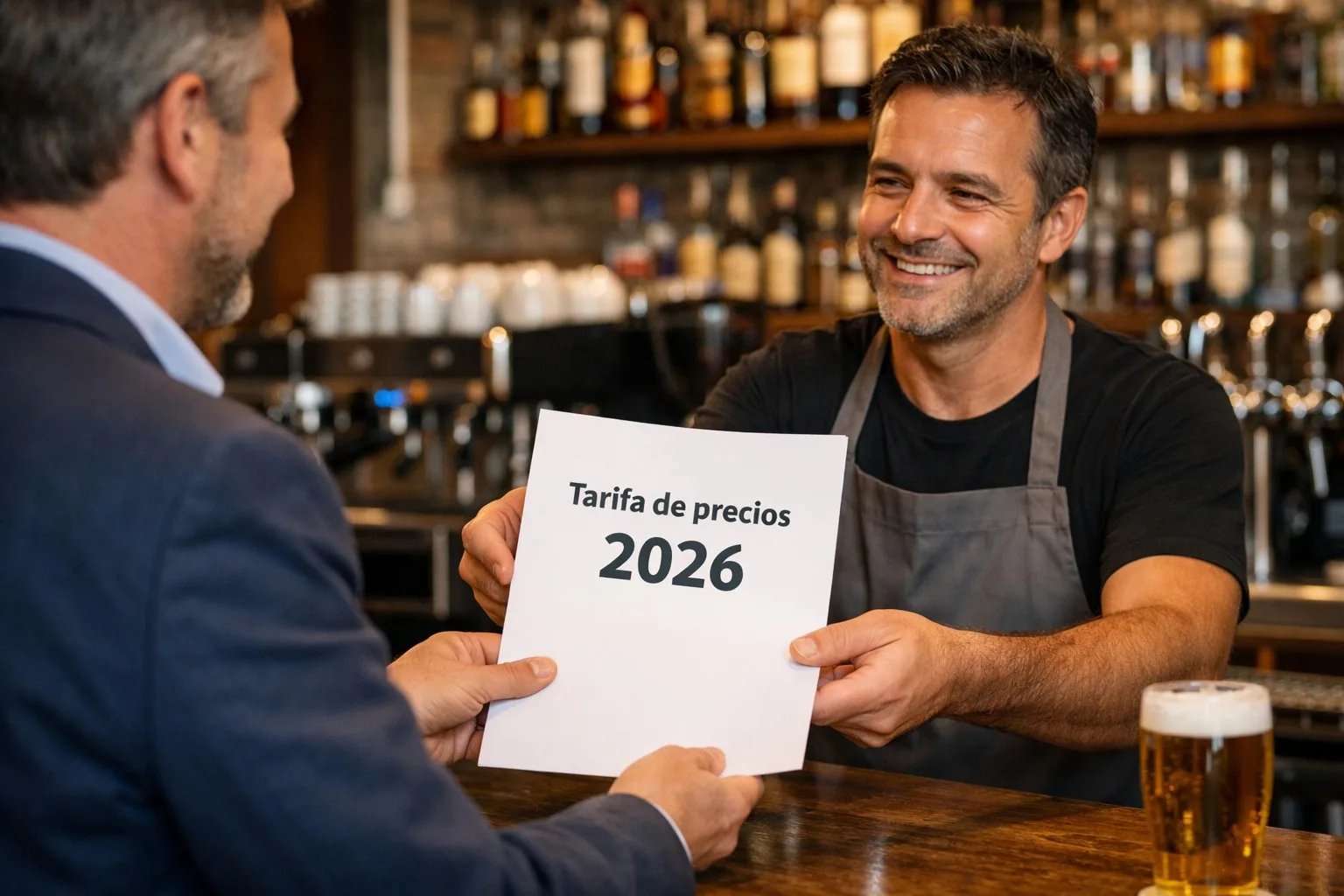
Your cost has already gone up and another distributor is still selling cheap: 5 real tactics to win.
It happens all the time when selling to the HORECA channel: the manufacturer has already raised its prices, you are already buying at the new price, but your competitor is still clearing old stock and can sell cheaper. The customer puts it bluntly: "when you match the price, I'll buy from you".
- If you try to match it, you destroy your margin.
- If you stand still, you lose sales, or even customers if the product is very important.
The way out is easy to understand and hard to execute: offer something the bar or restaurant owner values directly, here and now, even if the price per case is a little higher.
These tactics work because they change the comparison: you stop competing only on "euros per case" and compete on "total value".
1. Retrospective rebates
Instead of cutting the price on every invoice, you give back part of the value later, in exchange for specific behaviour from the customer.
What usually works:
- a monthly or quarterly rebate if they reach an agreed volume in that product family that makes it worthwhile for you
- a rebate if they combine the "increased" line with other lines they don't usually buy from you and where you have no significant price gap with your competitor
- a credit towards the next order (very effective for securing repeat business)
Why it works
The customer doesn't refuse to pay more if they feel they come out ahead at the end of the period. Mentally they don't experience it as an "expensive price" but as "a price that comes back". You protect the updated price, avoid a discount war and reward commitment. You also avoid a very common effect: losing several lines because of just one.
2. Activations the customer can turn into money
When you can't win on price, win on sales. But it has to be something concrete, not promises of "we'll help you".
Actions that customers understand and actually use:
- simple point-of-sale material linked to purchases (chalkboards, posters, bar displays)
- a ready-made promotion for their venue. For example, when beer is the line that has gone up in price, you can launch a weekend pack including beer, olives and crisps at a special weekend price, with table material inviting guests to order the promotion, so the owner doesn't just sell the beer (now more expensive) but also increases the average ticket with the side items.
- short staff training to push a specific line (30–45 minutes, hands-on)
Why it works
The customer doesn't buy "service", they buy results. If they see a line moving faster with you because you help them bring in customers, they stop comparing on price alone. The price stops being a cost and becomes an investment. You are helping them sell more in their venue, not just keeping them supplied.
3. Cross offers with lines your competitor can't match
If you are agile, respond with a cross offer using lines your competitor doesn't have in its portfolio. The key is that they are easy-to-sell products with enough margin to absorb part of the price gap.
How to apply it without complicating things:
- "if you take X cases of this line, I'll improve your terms on these others you already buy"
- "if we do this mixed order, you'll see the advantage in the total"
- "I'll put together a standard weekly order with what sells best in your venue"
Why it usually works
The customer compares the whole order, not just the problem line. If the total adds up, the focus fades. Even if you earn less on one line, you don't lose the sale or the customer. You keep the relationship, the turnover and control over the order as a whole.
4. Clear financing or flexible payment
Here we are talking about something the customer understands in ten seconds: cash. In HORECA, many decisions are driven by cash flow, not by the theoretical price.
Useful examples:
- extending payment terms for selected customers
- splitting a large order into two due dates
- allowing smaller restocks for a few weeks so they don't tie up money
Why it works
The customer values paying more comfortably far more than paying less. Less cash-flow pressure means less friction in the purchase. This competes directly with "it works out cheaper", because it reduces the immediate financial effort, which is what hurts most day to day.
5. The parallel market as a price option:
When your supplier only supplies at the new price, but there is still old stock on the market, the parallel market can be a temporary solution to stay competitive.
Why it works
You buy time while the market aligns, you stop the customer getting used to buying from another distributor, and you keep the business relationship. It must, however, be used with judgement: occasionally, with care for traceability and as a transitional solution, not as a permanent model that could cloud your relationship with the official supplier.
A useful note: when you can see it coming, you can win earlier
This scenario is easier to manage when you see it coming. If you know a line is going to go up and there will be weeks of price lag, you can prepare agreements or purchasing plans before the customer starts comparing you when it is already too late.
In short
When another distributor is still selling at old prices, you won't win by copying their game. You win by changing the comparison:
- retrospective rebates
- activations that help sell in the venue
- combined orders built around turnover
- financing
It is not about selling at a higher price. It is about selling with an advantage that today's cheaper option isn't offering.
The natural next step would be to turn this into a straight-talking sales pitch for sales reps, line by line, to use at the bar without beating about the bush. But I'll leave that in your hands.