

- Shipped
- Reading
- 2 min
The intergenerational shift in HORECA distribution: when growth is no longer about accumulation
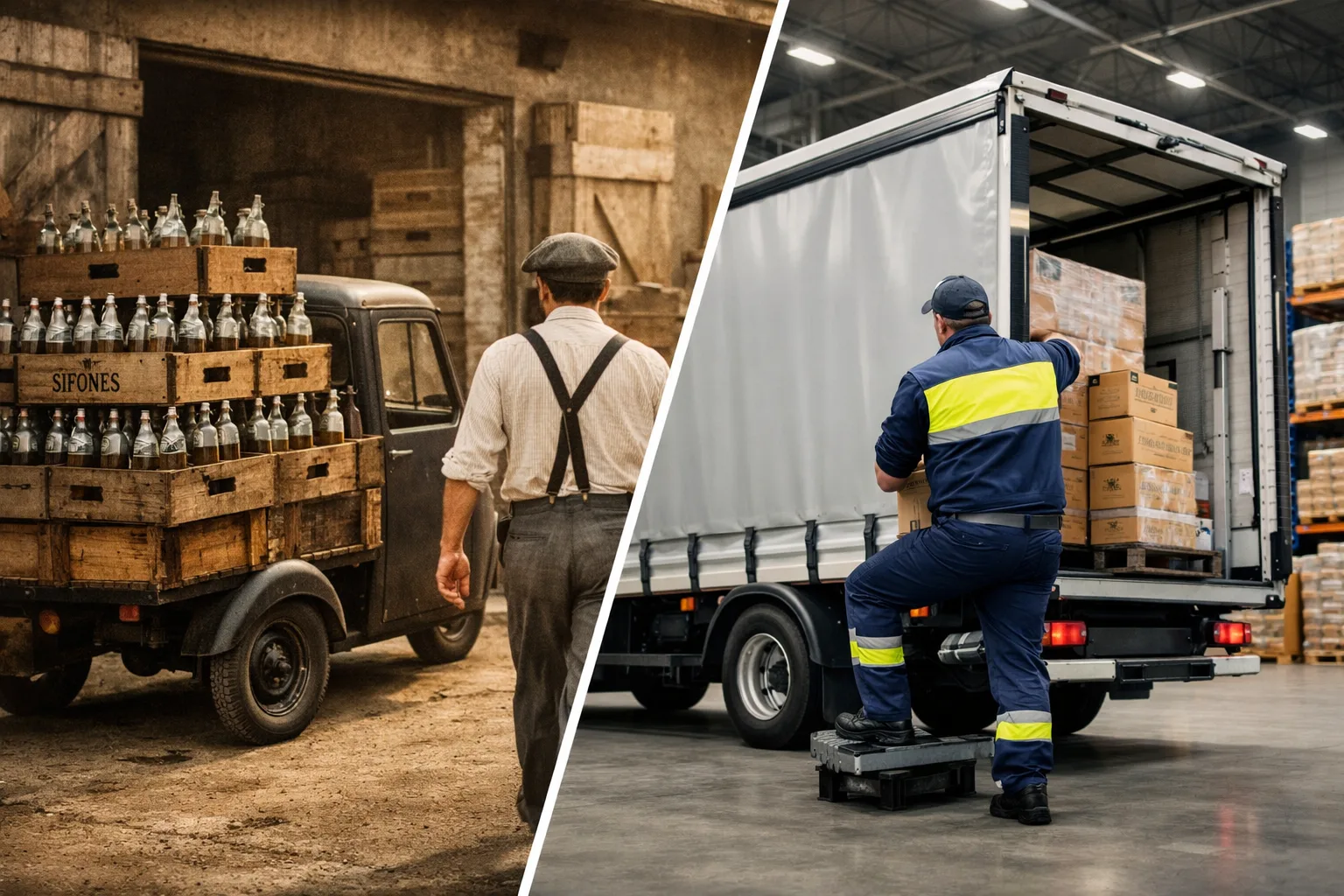
Where we come from and why the model is starting to weigh us down.
Many beverage and soft drink distribution companies weren't born as distributors. They started out as small local makers of soda, soda siphons or soft drinks. Family businesses, deeply rooted in their area, that grew by solving a simple problem: supplying drinks to the bars nearby.
Carbòniques Montaner is a clear example of that journey. It went from making soda siphons in the 1930s to distributing water, then beer, and later soft drinks. The next step was a logical one: together with other distributors in the area, it set up a purchasing group to manage that growth better, add more SKUs and gain autonomy and independence from manufacturers who were putting pressure on our distribution business, knowing the power they had over it. Over time, it kept expanding its catalogue until it was distributing around 1,000 SKUs.
That model worked. And it worked well for years. Until, little by little, we became Red Paralela, leaving behind the door-to-door distribution that had been with us for so many decades.
Technology went hand in hand with that process. From fax to the first computer systems connected to the internet, and from there to what Red Paralela is today: an extranet designed to organise and manage distributors' parallel market deals.
Three generations along this journey.
Today many distributors still build their business on one or two official brands that are the real backbone of their turnover. In many cases, more than 50% of the business depends on them. Around them sits a very wide range of brands and product families that "come along for the ride" but aren't strategic.
And that ride comes at a cost:
- A staff cost: with more sick leave and lower productivity than ever.
- An ever-growing financial cost.
- A logistics cost that is hard to justify.
- And a management cost that keeps on rising.
While the main brand holds the business up, everything else starts to weigh it down. More SKUs, more stock, more stock-outs, more errors and more resources devoted to products that don't build real value.
On top of this comes a particularly difficult context. Labour costs rising out of control. A suffocating regulatory framework. New laws, procedures and obligations piling up which, far from helping, complicate day-to-day work and reduce the capacity to be efficient.
- More rules every day.
- Less margin every day.
And this is where uncomfortable questions arise:
- Does it make sense to keep structures designed for massive catalogues when the real business rests on three or four key manufacturers?
- Wouldn't it be more logical to simplify, focus efforts and be extremely efficient, representing only those manufacturers that genuinely support the distributor (now and in the future) and that the distributor can truly stand behind?
- Could it be that the time has come to slow down and rethink the model before its structural weight makes it unviable?
Thinking about the model isn't always comfortable, but it is almost always necessary.