
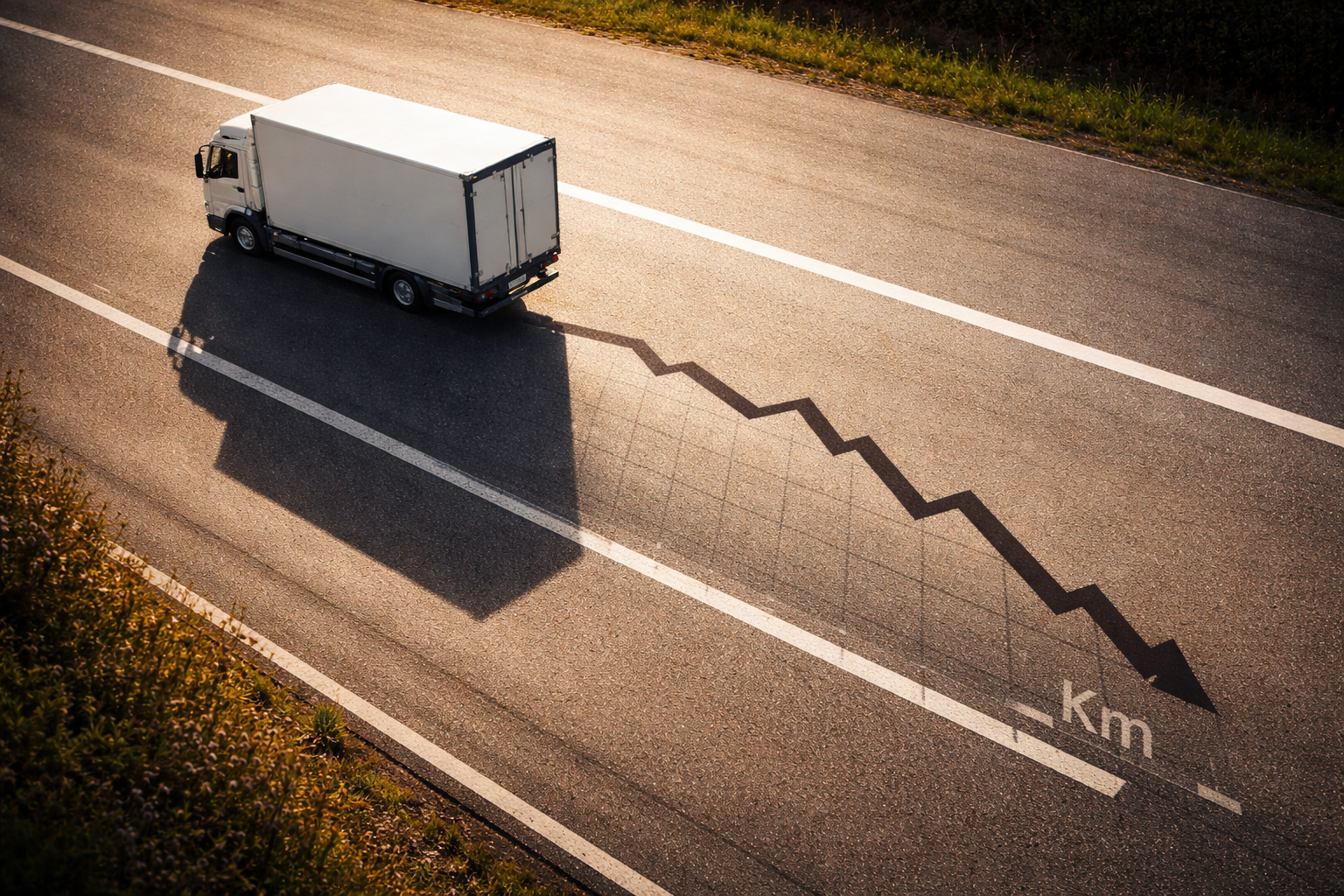
The route that invoices the most can make you lose money (and you don’t even know it)
There’s a question that almost no HORECA wholesaler asks themselves honestly:
Do I really know how much money each of my routes makes or loses?
Most answer quickly: “Yes, of course. That route sells a lot”.
But selling a lot doesn’t mean making money.
And this is where the problem starts.
In many distributors, routes are analysed by turnover. As if volume were a guarantee of profitability. It isn’t. Especially in coastal areas, where seasonality masks reality for several months a year.
The only serious way to measure a route is to calculate its real net margin. Every month.
What is a route’s profitability, really?
It’s not the commercial margin.
It’s not growth.
It’s not the number of customers.
The formula is this:
Real net invoicing
– real cost of goods
– direct route costs
– allocated indirect costs
= real net margin
If this calculation doesn’t exist, the business is making decisions blind.
the first common mistake: using gross invoicing
Profitability is calculated using real net invoicing minus:
– discounts
– rebates
– credit notes
– returns
the second mistake: forgetting what it costs to serve
A route doesn’t only cost fuel.
It costs:
– driver’s salary
– social security contributions
– maintenance
– vehicle lease or depreciation
– insurance
– tolls
– per diems
And it also consumes overhead:
– warehouse
– picking
– traffic / warehouse manager
– administration
– sales organisation
– inventory financing cost
– shrinkage
If these costs aren’t allocated, profitability is accounting fiction.
Seasonality distorts everything
For coastal distributors (very typical in Spain), it’s even more critical.
In summer:
-
-
- invoicing spikes
- frequency increases
- urgent orders multiply
- fuel consumption rises
-
In winter:
-
-
- density drops
- many kilometres remain the same
- average ticket falls
- cost per order spikes
-
A route can look excellent in August and be loss-making for six months a year. That’s why it’s not enough to analyse a good month. You have to look at:
-
-
- monthly profitability
- annual average
- the difference between high and low season
-
The indicators that separate those who make money from those who merely survive
If a wholesaler wants to control real profitability, they should start measuring:
-
-
- euros invoiced per kilometre
- euros invoiced per stop
- average gross margin per order
- logistics cost per order
- number of orders per customer per month
-
When the average gross margin per order is lower than the logistics cost per order, every delivery destroys value.
And this happens more often than it seems.
The real levers to make a route profitable
It’s not just about selling more. It’s about selling better.
-
-
Increase density
More invoicing per kilometre.
More customers concentrated.
Eliminate scattered customers that consume time and overhead. -
Increase the average ticket
Set minimum order values.
Reduce micro-orders.
Bundle purchases. -
Adjust frequencies
Many distributors deliver too often.
Cutting one delivery per week can change the profitability of the entire route. -
Segment conditions
Not all customers can have the same frequency or the same terms. -
Adapt structure to seasonality
On the coast, you can’t have the same structure in January as you do in August.
-
Final reflection
In today’s HORECA environment, the wholesaler who invoices the most doesn’t win.
The winner is the one who knows exactly which routes generate net margin and which ones destroy it.
Because an unprofitable route isn’t fixed by selling more.
It’s fixed by measuring better and making uncomfortable decisions.
And that’s where the difference begins between surviving and building a solid business.