
From the Perfect Deal to the Perfect Disaster: Why Buying Well Starts Long Before Negotiating the Price
Some deals seem impossible to turn down.
A distributor finds a fast-moving consumer goods (FMCG) stocklot at an exceptional price. The numbers make sense. The margin is excellent. The supplier appears trustworthy, and everything suggests this will be one of those purchases that makes weeks of searching worthwhile.
The deal is closed.
A few days later, the phone starts ringing.
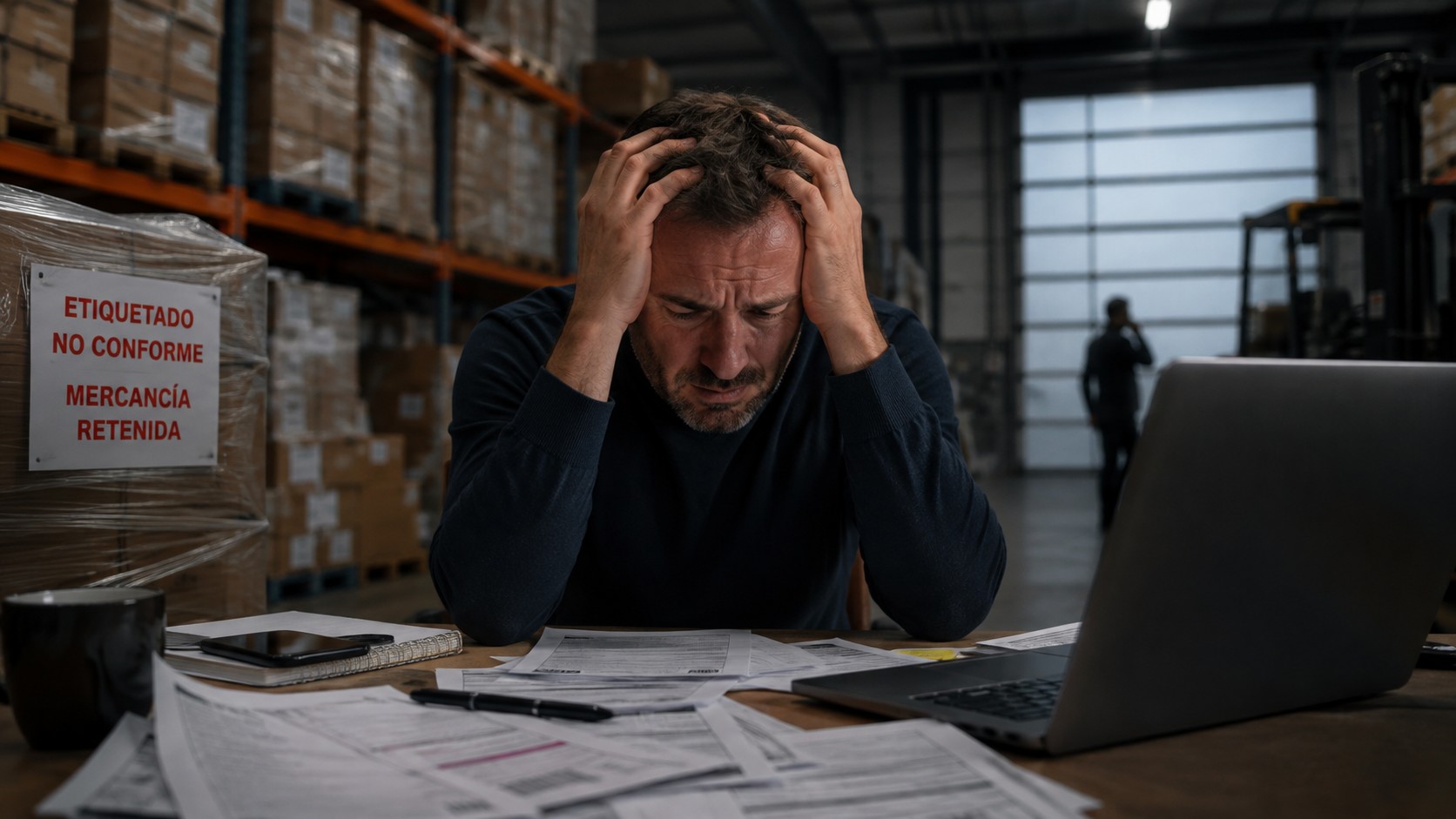
The payment is put on hold because concerns arise about the seller’s company. When the goods finally arrive, the labeling does not comply with the destination country’s regulations, and distribution comes to a standstill.
Suddenly, what looked like the perfect bargain doesn’t seem like such a great deal anymore.
And the worst part is that this story is far from unusual.
Problems Rarely Appear During the Negotiation
The FMCG parallel market offers opportunities with margins that are difficult to achieve through traditional channels.
But it is also an environment where risks are rarely obvious.
Most of them appear only after the money has changed hands or the goods are already in transit.
Over the years, we have seen the same patterns repeat themselves time and again:
-
-
- Companies whose financial reliability was not what it seemed.
- Documentation issues that delay payments or deliveries.
- Labeling problems that force an operation to stop at the last minute.
- Tax authority inquiries resulting from unknowingly trading with companies involved in VAT fraud.
-
None of these situations starts out as a major problem.
They all begin as a small detail that nobody noticed in time.
The Cost That Almost Nobody Calculates
When people talk about the cost of a transaction, they usually think about the purchase price, transport costs or the expected margin.
However, there is another cost that is far less visible: the cost of a deal that goes wrong.
Hours spent resolving unexpected issues.
Payments frozen.
Customers waiting for goods that never arrive.
Difficult conversations.
Documentation that has to be reviewed months later.
And above all, opportunities that are never pursued again because nobody wants to repeat the same experience.
That is why many distributors prefer to walk away from an attractive opportunity rather than take on uncertainty they cannot control.
And that is a perfectly rational decision.
The Value of Good Intermediation
When a transaction involves tens or even hundreds of thousands of euros, the real question is not how much professional intermediation costs.
The real question is how much it can cost to do without it.
Good intermediation does not exist simply to introduce buyers and sellers.
It exists to reduce uncertainty.
To identify risks before they become losses.
To make sure that a deal which looked profitable at the beginning still looks profitable after the truck has unloaded the goods and the payment has safely reached its destination.
Most of this work goes unnoticed.
Precisely because, when it is done properly, problems never have the chance to appear.
Our Way of Understanding Red Paralela
At Red Paralela, we do not want to become just another marketplace where companies meet.
We want to be the partner that brings confidence and peace of mind to every transaction.
We act as an intermediary because we believe trust is an essential part of doing business.
We support every transaction because we know that real value lies not only in finding the right opportunity, but in making sure it reaches a successful conclusion.
It may sound like a subtle difference.
For anyone who has experienced a defaulted payment, a documentation issue or a blocked transaction, it is anything but.
Because the best deals are not the ones that promise the highest margins.
They are the ones that, weeks later, are still remembered as successful ones.