

- Shipped
- Reading
- 3 min
How we built our DeCA solution in 4 hours with AI (and saved €2,000)
The blasted DeCA: how we saved €2,000 and built our own solution in 4 hours
For the past few weeks we had been tormented by the wretched DeCA (Spain's electronic administrative control document for excise goods) application. We kept receiving invitations to webinars presenting the integration with the management software we use every day, Sage 200.
It all sounded great until we got to the numbers: they were asking for a set-up fee of nearly €2,000, plus, of course, a recurring subscription.
At Red Paralela we stopped for a moment to think and asked ourselves the million-dollar question: is it really worth paying such an outrageous amount?
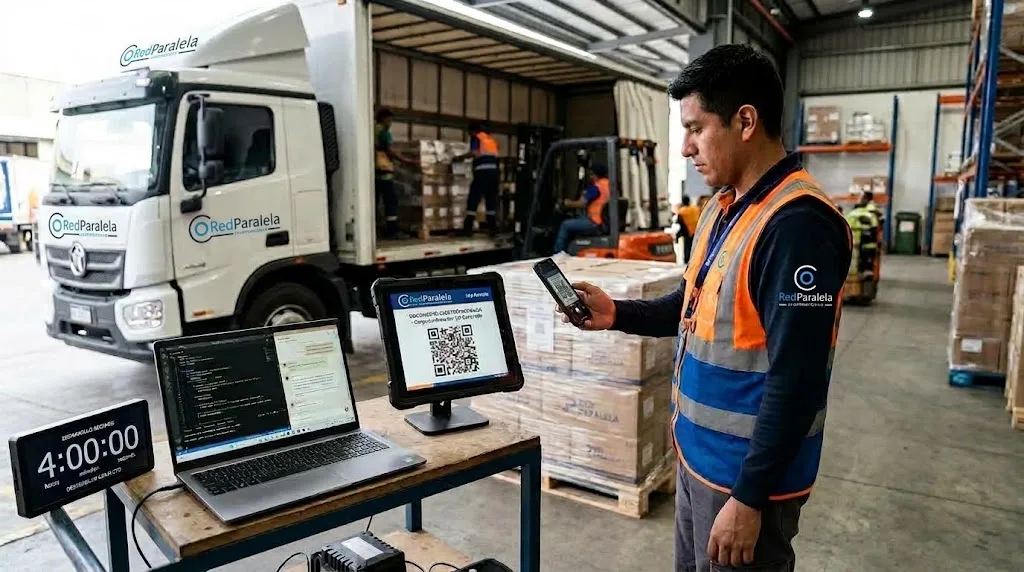
When we analysed the problem coolly, getting down to the purely technical side, we realised that the solution we needed was in the end much simpler than what they wanted to sell us: we needed to generate a QR code from certain specific data right at the moment the goods are loaded. Nothing more.
From idea to reality: the power of AI and the cloud
With the need clearly defined, we decided to put the problem to our friend Claude Code. Within minutes, it came back with a perfect outline of how to build it.
We had a head start, it's true: for other in-house applications we already have a cloud server and use our own GitHub repository to develop them. The foundations were in place. On paper, integrating this new function looked a bit more complex than usual, but we got down to it and the timings spoke for themselves:
- The first 2 hours: We used them to set up a test solution and check whether the system and the data flow worked. In just those couple of hours we were able to build the entire technical base of our own QR generator.
- 2 more hours: We spent them on real tests in our environment and on reviewing the code carefully to fine-tune it so it fitted exactly the particular way we work at Red Paralela.
The result: In a total of 4 hours on the clock, we had the DeCA QR generation system running at full capacity and fully integrated into our workflow.
The moral? Custom solutions are within anyone's reach
What do I mean by this? That the paradigm has changed. Today, with intermediate knowledge of cloud environments and Claude Code, and relying on artificial intelligence for application development, any company that has someone handy with computers can deliver projects 100% tailored to its needs.
It is no longer necessary to always depend on very expensive external integrations for functions that, deep down, are simple. We see it all the time in the sector:
- There are companies that have built their own custom CRM in a couple of days.
- There are companies that have created invoicing programs in a single day, taking advantage of open-source components that help you structure them.
- And we have solved a mandatory requirement like the QR code at loading time in just one afternoon.
I don't know whether your company is already moving in this direction and you are starting to lose your fear of building your own tools, or whether this article will simply open your eyes to the possibilities in front of you.
Let's hope it's the latter. The rules of the game have changed: make the most of it.