

- Shipped
- Reading
- 3 min
Is Amazon preparing to enter HORECA distribution?
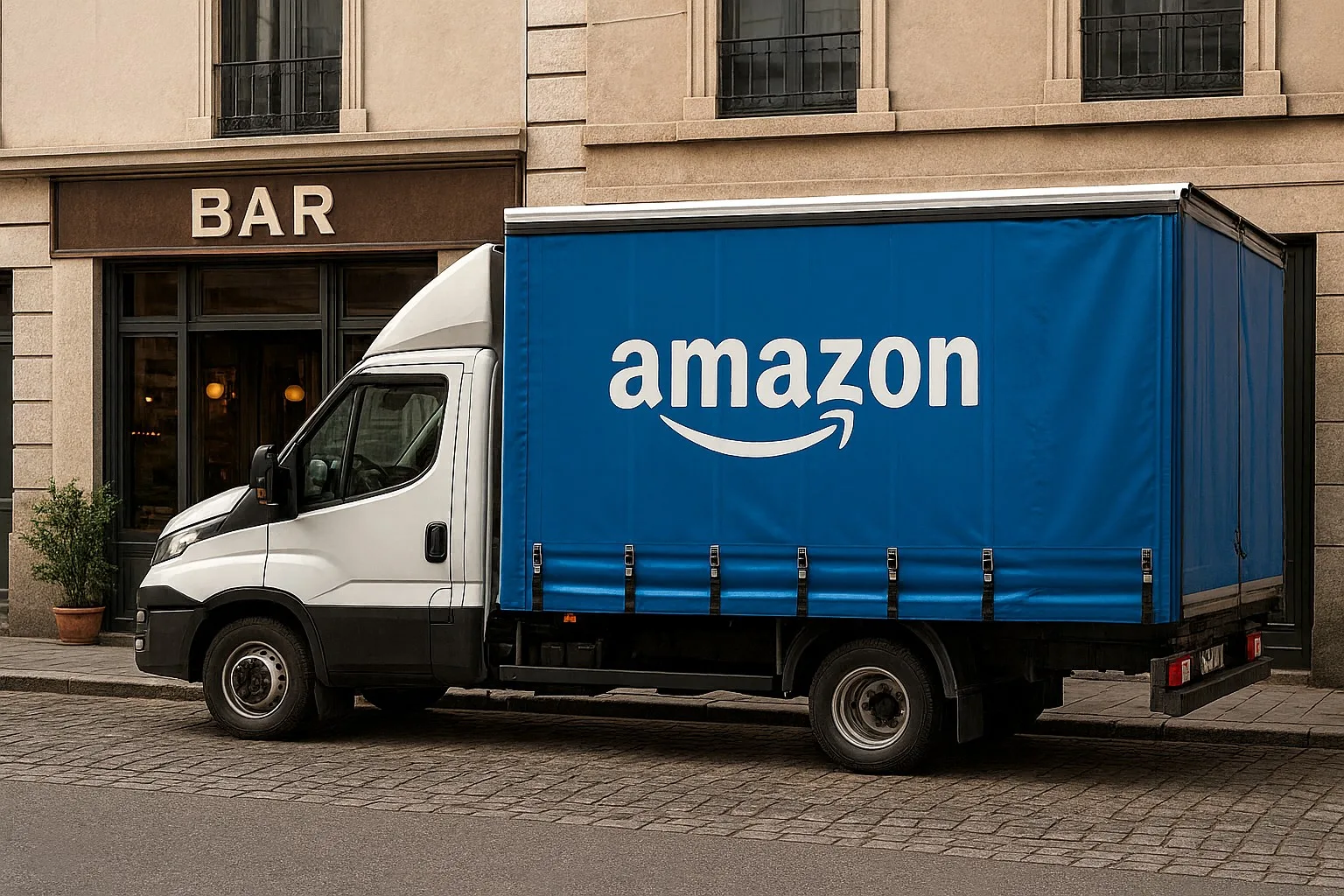
For years, HORECA distribution has been a world of its own: personal relationships, stable routes, trust built order by order.
But the market is moving, and there are clear signs that Amazon is looking at this channel.
Today, in Spain, Amazon does not act as a wholesale distributor of drinks or food for the hospitality trade, but in countries such as the United Kingdom and the United States it has already started doing so, offering B2B prices, fast delivery and volume discounts in categories very close to those of the professional channel. Could it happen here? Yes. And the sensible thing is not to fear it, but to prepare well in advance.
🔍 What is happening abroad?
In the UK and the US, Amazon Business already offers a catalogue tailored to the professional sector: drinks, consumables and cleaning products; utensils and small kitchen equipment; fast delivery and visible prices. The big change is not the product, but buying habits: bars and restaurants getting used to ordering directly online, without talking to their usual distributor. For now, the trend is concentrated on easy-to-handle products (soft drinks, water, disposables), but it is a clear sign of where the next steps may come from.
⚙️ Why is Spain still different?
Several factors are delaying Amazon's direct entry into the Spanish HORECA channel: alcohol regulations and traceability, which require specific licences and tax controls; cold-chain logistics and pre-delivery service, which are complex and expensive to replicate; and the strength of the local distributor, whose relationships of trust count for more than price. All this slows the trend down, but does not stop it. Amazon usually comes in through the simplest categories first… and gains ground little by little.
💡 What should you do as a HORECA distributor?
This is the time to reflect, not to react. Here are some key strategies that can make the difference when the change arrives.
1. Strengthen your customer relationships. Know their habits, listen to what they really value and look after the personal touch. A bar might try Amazon once out of curiosity, but it will stay loyal to whoever solves its problem at eight in the morning.
2. Focus on efficiency and stock turnover. You don't need to sell cheaper, you need to sell better: control stock, optimise routes, avoid tied-up inventory and work with products that move consistently.
3. Make online ordering easy, but with you. If the bar wants digital convenience, give it to them before Amazon does. A simple web or app ordering system doesn't replace the personal relationship: it complements it. It lets the customer order whenever they like, knowing there is a person behind it who knows them and looks after them.
4. Diversify your range and add value. Expand your lines, include complementary products and anticipate the end customer's needs. Amazon sells standard; the distributor wins by offering tailored solutions.
5. Invest in communication and visibility. Show professionalism in the digital space too: an up-to-date catalogue, fast service, clear communication. A bar that sees its distributor as a modern partner feels no need to look for alternatives online.
🗒️ In short
Amazon does not yet sell drinks wholesale in Spain, but the model will arrive. And when it does, the distributor that has already adapted its processes, combining personal service with digital agility, will have the game won.
The future is not about choosing between traditional and digital, but about bringing both worlds together.
The distributor that understands this in time will remain indispensable in the HORECA channel, even when Amazon comes knocking.