

- Shipped
- Reading
- 3 min
Marketing for the HORECA distributor: effective commercial segmentation
How to use your database for segmented campaigns that generate real sales
Most HORECA distributors have a database of customers and prospects, but very few use it strategically. The result: generic campaigns with no impact, offers that reach the wrong people and enormous wear and tear on the sales team.
The good news is that with basic segmentation and smart use of communication channels, you can multiply the effectiveness of your sales activity.
1. Organise and clean up your database
A messy list is impossible to make use of. Before thinking about campaigns, make sure your database is up to date:
- Remove duplicates.
- Fill in the essential details (venue name, type of business, contact person, email/phone).
- Update inactive or closed customers.
👉 A clean database is worth more than a huge one full of noise.
2. Define relevant segmentation criteria
Not all HORECA customers are the same. The most useful criteria are usually:
- Type of venue: bar, restaurant, hotel, nightclub…
- Purchase volume: large, medium or small customers.
- Seasonality: customers who are strong in summer (terraces, beach bars) vs. winter (mountain hotels).
- Key products: beer, soft drinks, spirits, wines…
👉 Segmenting means tailoring the message to each group.
3. The pre-sales rep: the backbone of communication
In HORECA, the pre-sales rep (the sales rep who visits customers and takes orders) is the main relationship channel. Nobody questions their importance: they are the ones who build trust, take orders and spot needs day to day.
But the mistake is to rely on them alone. Today's customers expect immediacy and different ways of getting in touch. This is where segmentation becomes even more valuable, because it lets the pre-sales rep lean on other channels to reach customers with more targeted messages.
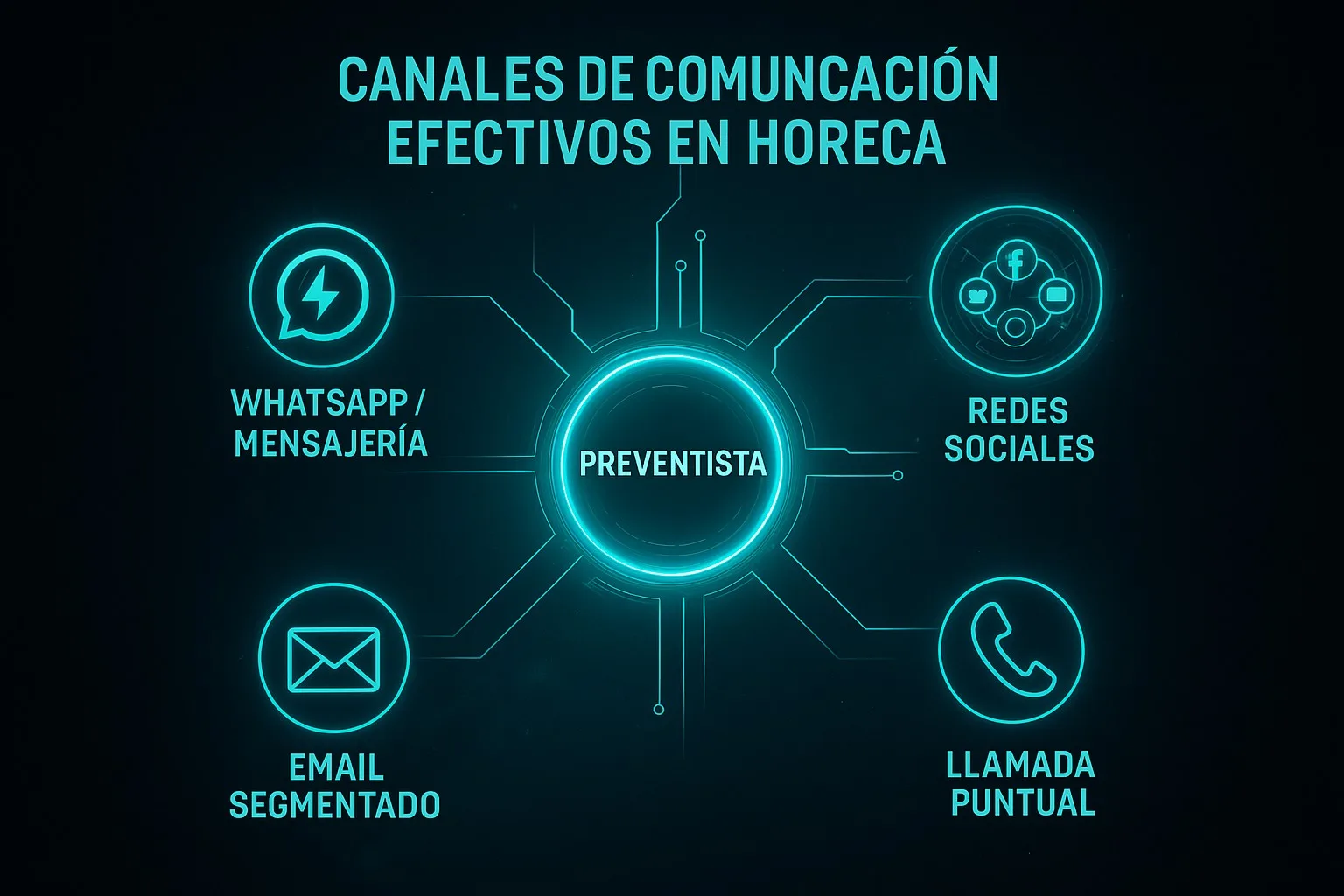
4. Channels that complement the pre-sales rep
WhatsApp / direct messaging
- Ideal for confirming orders, sending urgent promotions or keeping the contact alive.
- Very effective because hospitality owners check it constantly.
- Recommendation: don't overdo it; use personalised messages, coordinated with the pre-sales rep.
Segmented email
- Perfect for reinforcing campaigns: digital catalogues, seasonal new products, reminders.
- Less intrusive than WhatsApp, and it serves as a written record.
- Works best when linked to clear segments (e.g. "winter hotels").
Occasional phone calls
- Useful for medium-sized or small customers who aren't visited often.
- Trigger purchases at key dates (before a long weekend, local festivals or the high season).
Social media
- Not a direct sales channel, but a positioning one.
- Reinforces the distributor's image, gives brands visibility and builds trust in the market.
👉 The key is to combine all the channels: the pre-sales rep as the backbone, WhatsApp and phone as fast support, email as reinforcement, and social media as a shop window.
5. Create campaigns tailored to each segment
Instead of sending the same offer to everyone, adapt your proposal:
- For cocktail bars: weekend promotions on spirits.
- For restaurants: wine and beer packs designed to pair with their menus.
- For hotels: special terms for events or the high season.
👉 A real example: a summer beer promotion sent only to venues with a terrace generated 40% more orders than the previous year's mass mailing.
6. Use your CRM as an ally, not an archive
A CRM (or even a well-built spreadsheet) lets you:
- Tag customers by segment.
- Schedule reminders for sales contacts.
- Measure the response to each campaign.
👉 The key isn't having data, but using it to decide how, and through which channel, to communicate.
7. Measure results and improve every time
After each campaign:
- Which segment responded best?
- Which channel was most effective?
- Which message generated the most orders?
👉 Only by measuring can you refine the next action and make it more profitable.
Conclusion
Commercial segmentation isn't an extra task: it's the smartest way to sell more without spending more. The pre-sales rep will remain the engine of your business, but if you support them with segmented digital channels, every visit and every contact will have far greater impact.