

- Shipped
- Reading
- 4 min
Deposit return in Spain: what will happen to imported drinks when it arrives
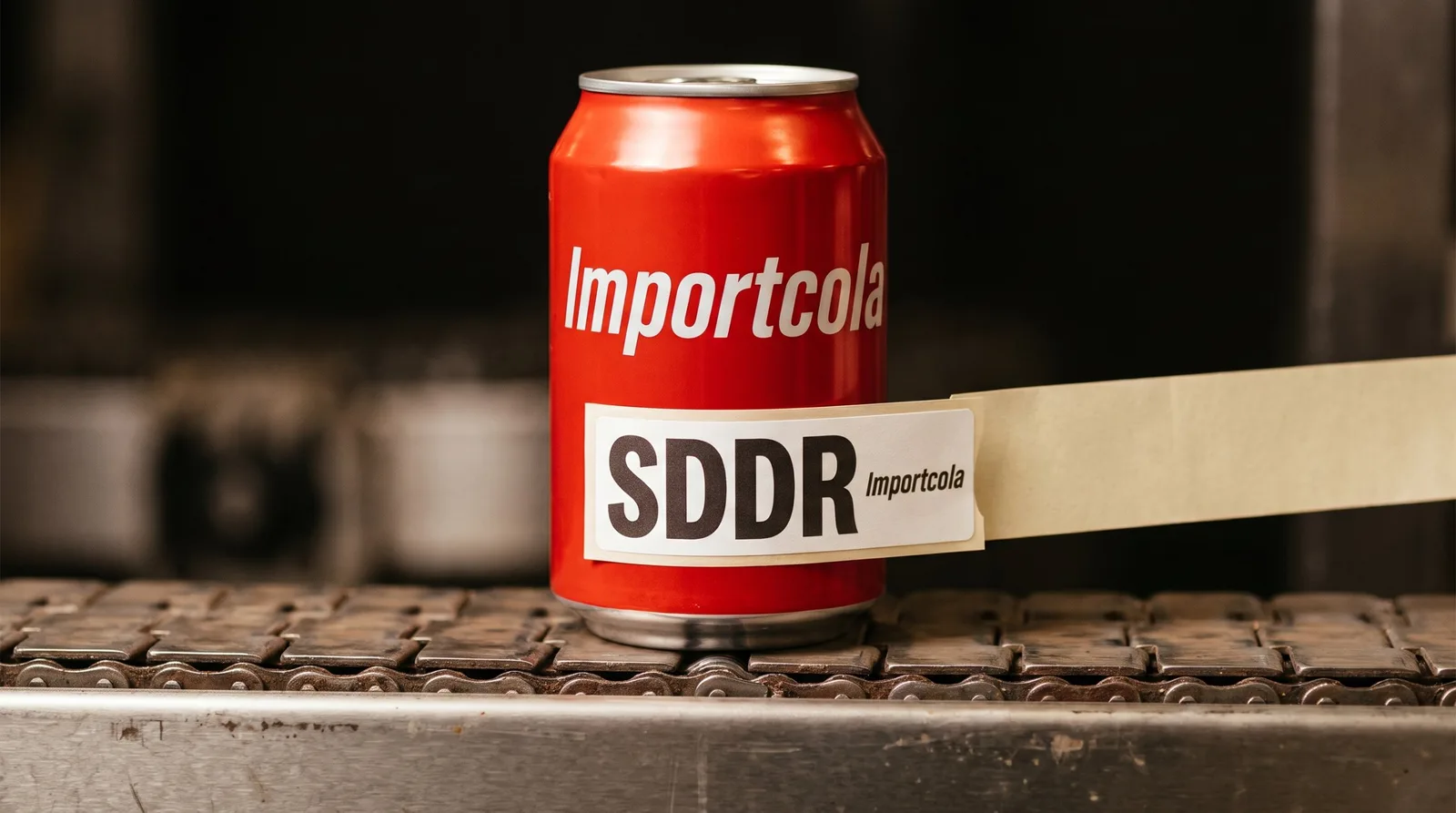
This Sunday, 22 November, Spain should have its deposit return scheme for beverage containers up and running (known in Spain as SDDR). It won't. And that is exactly why this is a good moment to think about something hardly anyone has stopped to consider: what will happen to imported products.
The 22 November that isn't coming
The date comes from Royal Decree 1055/2022. If Spain failed to reach 70% separate collection of plastic bottles, producers would have two years to launch the deposit scheme. The Ministry's audit put collection at 41.3%, and the clock started ticking in November 2024.
Two years later:
- No operator has been authorised. There are four candidates (Ecoembes, Asociación SDDR para España, Procircular and CorePET), and their applications are still pending in the Community of Madrid.
- The implementing rules are missing. The Ministry is preparing a new royal decree to align with the EU Packaging Regulation (known as PPWR), which has applied since 12 August.
- A change of political cycle is coming. With a general election on 29 November, the Asociación SDDR para España itself warns that the rules could take longer.
The deposit scheme in two minutes
- Which containers: single-use plastic bottles, cans and cartons for drinks up to 3 litres. That is: water, soft drinks, juices, energy and sports drinks, beer…
- How much: a minimum deposit of €0.10 per container, which consumers get back when they return it.
- How the money flows: the deposit is charged at every link in the chain, from the manufacturer or importer to the consumer. It isn't a price rise: it's money paid up front and recovered.
- What does cost money: the fee the operator will charge per container, and the work of marking them.
- Hospitality: the sector is asking for no deposit on drinks consumed on the premises, as the EU regulation allows.
Another country's symbol doesn't count
This is the consequence that matters most to anyone working with imported products. Each national scheme has its own symbol and its own product register. A German can that already carries the German deposit logo from the factory is no use in another country. In Austria, for example, since 1 January 2026 containers without the Austrian logo cannot be sold, even if they carry another country's.
Who will have to apply the Spanish symbol? In Spain, when the foreign manufacturer has no authorised representative, the first distributor based in Spain takes on the producer's obligations. In other words, the importer.
Portugal, which launched its scheme (Volta) on 10 April 2026, gives a good idea of what it might look like:
- Prior registration. The importer joins the scheme at least 30 days before selling and registers each product reference (€50 per reference in Portugal).
- Marking. Each container must carry the symbol and a registered barcode, which can be the original international one.
- Sticker labels. Allowed as an exception, with prior authorisation. They must be single-use security labels identifying who applies them. They can also include the mandatory consumer information, and must cover any messages that don't apply in the country, such as another scheme's deposit logo.
- Germany is stricter: there, the labels can only be printed by certified printers.
A likely timeline (with every caveat)
Nobody has announced it. This is a reasoned hypothesis:
- 2027: new royal decree, authorisation of the operator or operators, and publication of the marking rules.
- 2028: product registration, label testing and roll-out of return machines. Portugal needed four years between approval and launch.
- 1 January 2029 at the latest: the date by which the EU regulation requires a deposit scheme for plastic bottles and cans in countries that miss the collection targets.
- After launch: a transition period to sell old stock. In Portugal it was four months; in Austria, a year.
What to start preparing
There's no need to invest anything yet. But it's worth thinking about:
- Your affected references: which cans, plastic bottles and cartons you import, from where and in what volume.
- Who the producer of each one is: if your supplier has no representative in Spain, it will be you.
- Your cash flow: for every container you'll have to pay the deposit up front until you charge it to your customer.
- Your invoicing: the deposit will go on a separate line of the invoice, and your software needs to handle it.
- Your labelling: if you already relabel to translate product information, consider whether your label could include the symbol once the rules are known.
- Your stock: once the date is announced, plan your rotation so you're not left with unmarked products.
- Your hospitality customers: they will need space for empty containers and to know how to get their money back.
Our take
The deposit scheme won't close the door to imported products, but it will change how they come in and what they cost. Those who think it through early will have the advantage.
For more practical tips for your distribution business, stay connected with Red Paralela.
Sources: Spanish Ministry for the Ecological Transition (Royal Decree 1055/2022 and circular on the definition of producer), European Commission (guidance document on Regulation (EU) 2025/40, June 2026), El Español (SDDR delay, 15/11/2026), El Salto (candidates to run the SDDR), SDR Portugal (technical marking specifications and producers page), Austrian Economic Chamber, WKO (sale of containers without the logo, January 2026), Verpackungsregister (Germany) and Hostelería de España.